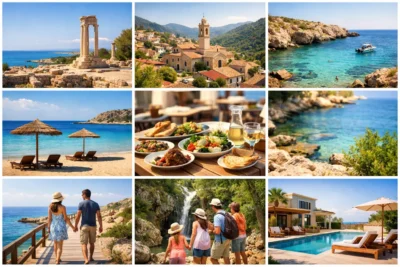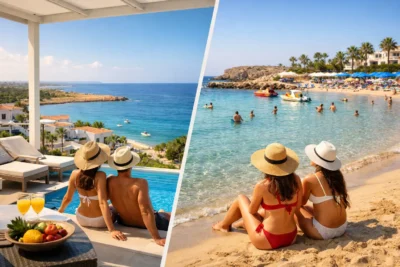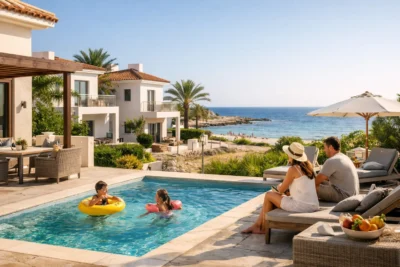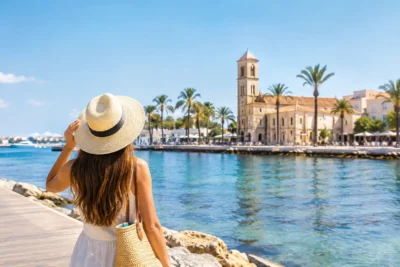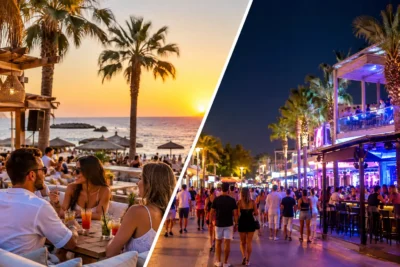

The first thing to know in this Ayia Thekla beach guide is that this is not the busy, music-filled side of Ayia Napa. Ayia Thekla is where you come for a slower beach day: pale sand underfoot, clear water in front of you, and enough space to settle in without feeling surrounded by sunbeds.
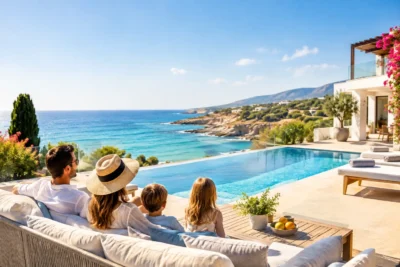
Set just west of Ayia Napa, this coastal area suits families, couples and groups who want to stay close to the resort’s restaurants and attractions while sleeping somewhere more peaceful. It is particularly appealing if your ideal Cyprus holiday includes lazy mornings by the pool, an easy walk or short drive to the sea, and relaxed evenings rather than a late-night party scene.
What Ayia Thekla Beach is really like
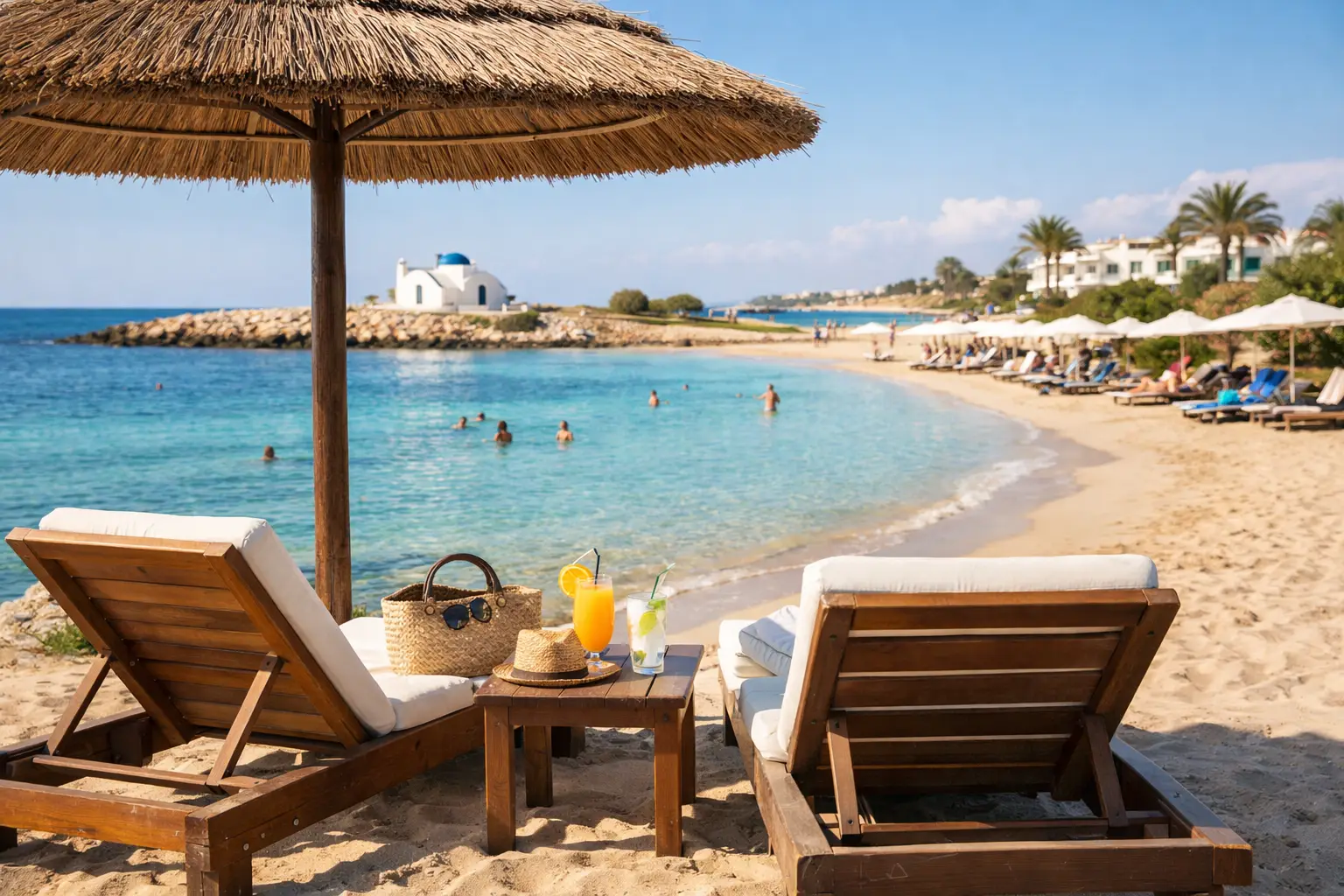
Ayia Thekla Beach is a small sandy bay with shallow, beautifully coloured water and a natural, low-key feel. The coastline here is less built up than central Ayia Napa, although it is still easy to reach shops, cafés and larger beaches by car or taxi. A small white chapel, Agia Thekla, gives the area its name and is a lovely landmark when you are walking along the shore.
The sand is generally soft and golden, but this is a natural coastline, so you may find rocky patches around the bay edges and when entering the water in certain spots. Sea shoes are useful for young children, anyone with sensitive feet, and visitors who enjoy snorkelling around the rocks. They are not essential for everyone, but they can make getting in and out of the sea more comfortable.
The water is usually calm and inviting in summer, with a gradual entry that makes the beach a sensible choice for families. Conditions can change when the wind picks up, especially outside the high summer months, so always take a quick look at the sea before deciding where to swim. Choose the supervised area when lifeguards are present and keep an eye on children, even in shallow water.
Why stay near Ayia Thekla?
Ayia Thekla makes a good base for people who do not need to be in the centre of Ayia Napa every evening. You get more of a residential holiday atmosphere, with detached villas, quiet lanes and open views towards the coast. It is a strong choice for a family reunion, a couple looking for privacy, or friends who want a proper outdoor space rather than a hotel room.
The trade-off is simple: you will get more from the area if you hire a car. Ayia Napa’s centre, Nissi Beach and the larger supermarkets are close enough for a short drive, but not close enough to treat as a casual stroll in the heat. Taxis are readily available in season, and local buses can be helpful, but a car gives you the freedom to visit different beaches and dine out without planning your whole day around transport.
For a villa or flat close to this quieter stretch of coast, ElloCyprus lets you book directly with a local team, without unnecessary guest booking fees or a distant middle layer. It is especially useful when travelling as a group and wanting practical details about the home, the neighbourhood and what is nearby before you arrive.
Facilities and what to bring
During the main holiday season, you can usually expect sunbeds, umbrellas and basic beach facilities around the main section of Ayia Thekla Beach. Availability and opening dates can vary with the season, so do not rely on every service being open in April, early May or late October.
There are places for refreshments in the wider area, but Ayia Thekla is not a beach where every few metres brings another café. That is part of its appeal. Bring plenty of drinking water, especially if you are visiting with children, and pack snacks if you plan to stay from morning until late afternoon.
Parking is one of the area’s practical advantages. There is parking close to the beach, though spaces fill earlier on weekends and during the school holiday period. Arriving before 10.00 is a good habit in July and August, when the strongest midday sun also makes a longer walk with bags less pleasant.
A simple beach bag should include sun cream, hats, water, sea shoes, a cover-up for lunch and something to keep children entertained when they need a break from the water. Cyprus sun is intense from late morning onwards, even when there is a welcome sea breeze.
The best time to visit Ayia Thekla Beach
For classic swimming weather, June through September brings warm sea temperatures and long, dry days. July and August are the busiest and hottest months, so early mornings and late afternoons are the most comfortable times to be on the sand. If you are travelling with a baby or very young children, this timing makes a noticeable difference.
May, early June, late September and October are often the sweet spot for visitors who prefer a quieter beach. The sea stays pleasant well into autumn, while the air is less fierce and roads are easier to navigate. Spring can be lovely for walks and sightseeing, although the water may feel cool for a long swim.
Winter visitors should treat Ayia Thekla as a place for fresh coastal walks, bright days and peaceful views rather than a guaranteed beach-swimming holiday. Some facilities operate on reduced hours or close entirely, but the calm of the area has its own charm.
A family-friendly beach day here
Ayia Thekla works well for families because it does not demand much planning. Set up near the main sandy section, keep the children within the shallower water, and break the day into swims, shade, snacks and a short wander along the coast. The small scale makes it easier to keep everyone together than on the largest beaches in Ayia Napa.
That said, it depends on what your family enjoys. Teenagers looking for watersports, lively beach clubs and lots of action may prefer a day at Nissi Beach or Makronissos Beach, then return to Ayia Thekla for a quieter evening. Families with toddlers, grandparents or children who simply want to paddle and build sandcastles may find Ayia Thekla more relaxing from the start.
Avoid the temptation to stay in direct sun all day. A long beach lunch, a return to your accommodation for a rest, then a late-afternoon swim is a very Cyprus way to organise the day and keeps everyone in better spirits.
Swimming, snorkelling and staying safe
The clear water around Ayia Thekla is good for an easy swim, and the rockier sides of the bay can be interesting for a gentle snorkel. Keep expectations realistic: this is coastal snorkelling rather than a major marine site, but a mask can add a little adventure for children and adults alike.
Do not jump from rocks or swim too close to them when there is any swell. Wet limestone can be slippery, and waves can push swimmers towards the shore faster than expected. If the sea looks unsettled, use the sandy central area or choose another activity for the afternoon.
Check flag warnings where they are displayed, avoid swimming alone late in the day, and drink more water than you think you need. These small habits matter more than having the perfect beach itinerary.
Where to eat after the beach
For an easy lunch, choose a nearby casual spot and keep it simple: grilled fish, a Greek salad, souvlaki, halloumi or a plate of meze shared around the table. In high summer, booking ahead is sensible for an evening meal if you have a larger group.
If you have a car, the fishing harbour area at Potamos Liopetri is a worthwhile option for a relaxed seafood meal, particularly around sunset. Ayia Napa also offers far more choice, from family-friendly tavernas to international restaurants, but returning to Ayia Thekla afterwards feels noticeably calmer.
Self-catering is another good fit here. Pick up local fruit, bread, cheese and cold drinks before heading back to your villa or flat, then make the most of a balcony, garden or poolside table. Some of the best holiday evenings are the uncomplicated ones.
Combine Ayia Thekla with nearby beaches
One advantage of staying in Ayia Thekla is that you do not have to choose only one beach for the week. Spend your first day here to settle into a gentler pace, then explore Makronissos for its wider sweep of sand or visit Nissi Beach when you want a more energetic atmosphere. Each has a different character, and your preference may change depending on the wind, the time of day and who is travelling with you.
Cape Greco is another rewarding outing for dramatic coastal scenery, sea caves and walking routes. Go earlier or later in the day during summer, as there is much less shade than at a developed beach. Take water, sensible footwear and time to enjoy the views rather than trying to fit every stop into one afternoon.
Ayia Thekla is at its best when you let it be what it is: a peaceful place to swim, slow down and enjoy the Cyprus coast without rushing on to the next attraction.