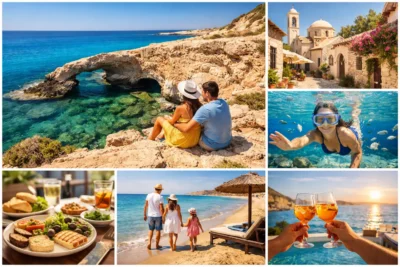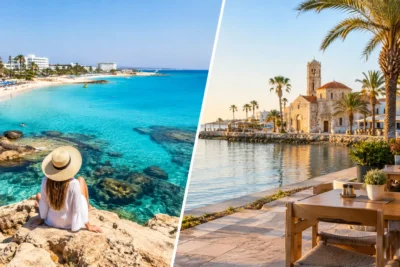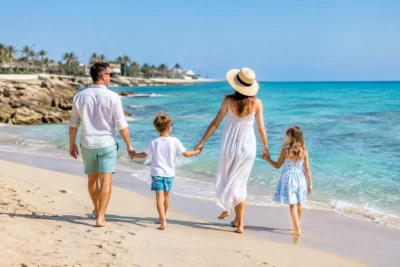

A toddler building castles at Fig Tree Bay, older children snorkelling in clear shallows, and dinner outside long after sunset: this is the sort of family holiday Cyprus does very well. But is Cyprus safe for children? For most families visiting the Republic of Cyprus, the answer is yes, provided you take the same sensible precautions you would on any sunny coastal holiday – and pay particular attention to heat, water and road safety.
Cyprus is generally relaxed, welcoming and easy to navigate with children. In popular resort areas such as Protaras, Pernera, Kapparis and Ayia Napa, you will find supermarkets, pharmacies, family restaurants and beaches with facilities close by. The key is choosing the right base and not letting the easy-going holiday mood make you careless around pools, balconies or a hot midday sun.
Is Cyprus safe for children on holiday?
The Republic of Cyprus is widely considered a comfortable destination for family travel. Violent crime affecting visitors is uncommon, and the main concerns are usually practical rather than alarming: keeping valuables out of sight, supervising children around water, and driving carefully on unfamiliar roads.
Resorts can be busy in peak summer, especially around the livelier parts of Ayia Napa. That does not make them unsuitable for families, but location matters. A villa or flat in Protaras, Pernera, Ayia Triada, Kapparis or Ayia Thekla can offer a calmer setting while keeping beaches, cafés and activities within easy reach.
As anywhere, teach children what to do if they become separated from you. For younger children, a wristband or card with a parent’s phone number is useful at busy beaches, water parks and evening promenades. Older children should know the name of their accommodation and be clear about where they may go independently.
The biggest family safety issue: sun and heat
Cyprus sunshine is one of the reasons families return year after year, but it is also the risk most visitors underestimate. From late spring through early autumn, the middle of the day can be intensely hot. July and August are particularly demanding for babies, toddlers and children who are determined to keep playing long after they are tired.
Plan beach time for the morning or later afternoon, with a proper break indoors or in deep shade between roughly 11am and 4pm. A sun hat, high-factor sunscreen, UV-protective swimwear and a refillable water bottle are holiday basics, not extras. Reapply sunscreen after swimming, even if the bottle says it is water resistant.
Watch for quieter signs of overheating: unusual tiredness, headache, dizziness, irritability, nausea or a child who suddenly stops wanting to play. Move them into shade or air conditioning, offer small drinks of water and seek medical advice if symptoms are severe, persistent or worrying. Babies and very young children need especially close attention because they can overheat quickly.
A practical local habit is to check the pavement, sand and poolside tiles before small feet run across them. They can become painfully hot by lunchtime. Beach shoes are helpful not only for hot sand but also for occasional rough or rocky patches at the water’s edge.
Beaches, sea conditions and pools
Many Cyprus beaches are excellent for children, particularly those with soft sand and gently shelving water. Fig Tree Bay in Protaras is popular with families for good reason, while Pernera and Ayia Triada have smaller, more sheltered-feeling bays. Even at a calm-looking beach, however, sea conditions can change with wind, boats and seasonal currents.
Choose a beach with lifeguards when possible, follow flag warnings, and never assume inflatable toys keep a child safe. Inflatables can drift faster than expected when the breeze picks up. Keep non-swimmers within arm’s reach, and remember that clear water can make deeper sections look deceptively close.
Private pools are often the feature children remember most, but they need the clearest rules. One responsible adult should actively supervise whenever children are in or beside the pool. That means no scrolling, reading or relying on older siblings. Remove toys from the water after swimming so toddlers are not tempted to reach in, and make sure children understand that running on wet tiles is not allowed.
When selecting accommodation, ask about pool access, depth, gates and whether the pool can be seen from the main living area. If you are travelling with a crawling baby or a confident young explorer, also check balconies, stairs, terraces and any changes in level. A well-managed family home makes these everyday details much easier to handle.
Driving safely with children in Cyprus
Cyprus drives on the left, which feels familiar to UK visitors, but there are still a few adjustments. Holiday roads can include roundabouts, unfamiliar junctions, parked cars and pedestrians heading to the beach. Rural lanes may be narrow, and some coastal routes become busier at sunset when everyone is going out for dinner.
Book the correct child seat with your hire car well ahead of arrival, or bring one if that suits your family better. Check that it is fitted securely before you leave the car park and do not be rushed into accepting a seat that is unsuitable for your child’s age or size. Children should not travel unrestrained, even for what looks like a very short journey to the supermarket.
Keep journeys short during the hottest part of the day, carry water in the car and never leave a child inside a parked vehicle. If you are staying in a walkable area near the beach and restaurants, you may find you need the car far less than expected. That is often the easiest option for families with pushchairs, tired little legs and early bedtimes.
Food, taps and everyday health
Family meals in Cyprus are usually straightforward. Most restaurants are used to children, and simple dishes such as grilled chicken, pasta, potatoes, rice, fresh fruit and pita bread are easy to find. Tavernas often serve generous portions, so it is perfectly normal to share dishes or ask for an extra plate.
Tap water quality is generally good, although many visitors prefer bottled water because of the taste and mineral content. Whatever you choose, make hydration part of the routine, especially after swimming. Pack any essential medicines in your hand luggage, along with plasters, antiseptic wipes, antihistamine and children’s pain relief that your family already knows how to use.
Pharmacies are common in resort towns and staff are often helpful, but opening times can vary outside the busiest areas. For anything serious, call 112 for emergency assistance. UK families should also travel with suitable insurance and carry the relevant healthcare documentation, such as a GHIC where applicable. Neither replaces the need for proper travel insurance.
Mosquitoes can be irritating in the evenings, particularly near gardens or still water. Repellent suitable for your child’s age, light clothing after dusk and closed windows or air conditioning can make bedtime much easier. Do not let a few bites spoil a lovely evening outside.
Choosing a child-friendly place to stay
The right accommodation can remove many of the small stresses that make travelling with children harder. Space for naps, a kitchen for familiar breakfasts, a washing machine, reliable air conditioning and somewhere safe for children to play all matter more than a flashy lobby.
For families, a villa can be ideal when you want a private pool and outdoor space, while a well-located flat may be better if you prefer to walk to the beach, bakery and evening restaurants. Before booking, look beyond the photographs. Check whether there are internal stairs, open balconies, unfenced pools, steep driveways or a road between the property and the beach.
ElloCyprus offers carefully selected villas and flats across the Republic of Cyprus, with the benefit of booking directly and having a local team behind your stay. If you have a specific concern – a cot, stair gates, pool safety or a quiet location – it is worth asking before you book rather than hoping it will work out on arrival.
A calmer way to enjoy Cyprus with children
The safest family holidays are rarely the ones packed from breakfast to bedtime. In Cyprus, leave room for a slow start, a swim before the heat builds, a restful afternoon and an early evening walk for ice cream. Keep a close eye on the sun, sea and pool, choose an area that suits your children’s ages, and you can spend less time managing logistics and more time enjoying the moments they will talk about at home.