
Planning your first trip to Cyprus comes with more questions than most travellers expect. From weather and beaches to transport, safety, and costs, knowing the right details before you arrive can completely shape your experience.
Cyprus is one of the easiest Mediterranean destinations to visit, but only if you understand how the island works. Different regions offer very different experiences, and small decisions like where you stay or whether you rent a car can make a huge difference.
This guide answers 100 essential Cyprus travel questions, plus 20 important questions about Northern Cyprus, so you can plan your trip with confidence and avoid common mistakes.
Planning Your First Trip to Cyprus
Before you book flights or accommodation, understanding the basics of Cyprus travel helps you make better decisions. This section covers timing, entry requirements, currency, and the practical details that affect every visitor.
When Should You Visit Cyprus?
The best time to visit Cyprus is May, June, September, and October when temperatures are warm but not extreme. Summer months bring intense heat, while winter offers mild coastal weather and cooler mountain conditions.
What Travel Documents Do You Need for Cyprus?
EU and UK travellers do not need a visa for short stays of up to 90 days. Cyprus uses the euro, and credit cards are widely accepted, although carrying some cash is useful for small shops and beach services.
Which Cyprus Airport Should You Choose?
You should fly into Larnaca Airport for Protaras and Ayia Napa, or Paphos Airport if you are staying on the west side. Both are internationally recognised airports in the Republic of Cyprus. Flights take around 4 hours 30 minutes from the UK, 2 to 3 hours from Central Europe, and about 1 hour 40 minutes from Greece.
General Cyprus Travel Questions
1. Is Cyprus worth visiting?
Yes, Cyprus is worth visiting because it combines beaches, history, food, and one of the safest travel environments in Europe.
2. When is the best time to visit Cyprus?
The best time to visit Cyprus is May, June, September, and October when temperatures are warm but not extreme.
3. How hot does Cyprus get in summer?
Cyprus gets very hot in summer, with temperatures often reaching 35°C to 40°C in July and August.
4. What is Cyprus like in winter?
Winter in Cyprus is mild, with temperatures around 15°C to 20°C on the coast and cooler in the mountains.
5. How many days do you need in Cyprus?
You need about 7 days in Cyprus to explore beaches, towns, and nearby attractions comfortably.
6. Which airport should I fly into in Cyprus?
You should fly into Larnaca for Protaras and Ayia Napa, or Paphos Airport if you are staying on the west side.
7. Are Larnaca and Paphos the official airports in Cyprus?
Yes, Larnaca and Paphos are the only internationally recognised airports in the Republic of Cyprus.
8. How long is the flight to Cyprus?
Flights take around 4 hours 30 minutes from the UK, 2 to 3 hours from Central Europe, and about 1 hour 40 minutes from Greece.
9. What currency is used in Cyprus?
The currency used in Cyprus is the euro, and all prices are displayed in euros.
10. Can I pay by card in Cyprus?
Yes, credit and debit cards are widely accepted in restaurants, shops, and hotels.
11. Do I need cash in Cyprus?
Yes, small shops, kiosks, and some beach services prefer cash, so carrying some euros is useful.
12. Is Cyprus expensive for tourists?
Cyprus is moderately priced, offering good value compared to Western European destinations.
13. Do people tip in Cyprus?
Yes, tipping around 5% to 10% in restaurants is common when service is good.
14. What language is spoken in Cyprus?
Greek is the main language, but English is widely spoken, especially in tourist areas.
15. Do I need a visa for Cyprus?
No, EU and UK travellers do not need a visa for short stays of up to 90 days.
16. Can I drink tap water in Cyprus?
Yes, tap water is safe to drink, but many visitors prefer bottled water due to taste.
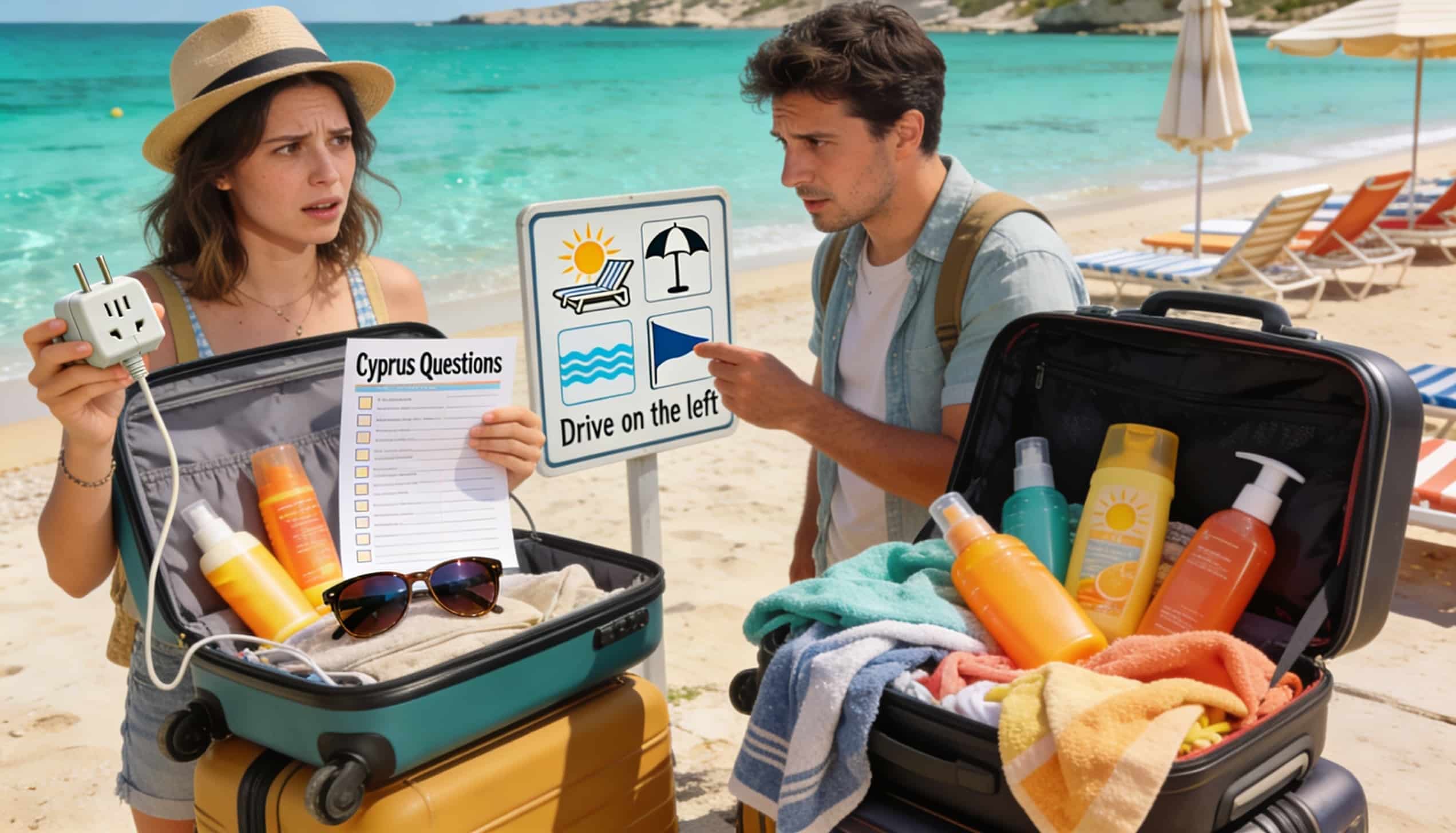
17. What plug sockets are used in Cyprus?
Cyprus uses Type G plug sockets, the same as the UK, with 230V supply.
18. Do I need an adapter in Cyprus?
Yes, unless you use UK plugs, you will need a Type G travel adapter.
19. Is Cyprus safe for tourists?
Yes, Cyprus is considered one of the safest destinations in Europe with low crime rates.
20. Is crime common in Cyprus?
No, crime is generally low, although petty theft can occur in busy tourist areas.
21. Are taxis safe in Cyprus?
Yes, taxis are safe, but you should use licensed taxis or apps and confirm fares when possible.
22. Is there Uber in Cyprus?
No, Uber is not widely available, but local taxi apps and private transfers are commonly used.
23. Do I need a car in Cyprus?
Yes, renting a car is recommended if you want to explore beyond your immediate area.
24. Is driving in Cyprus easy?
Yes, driving is straightforward, but remember that traffic moves on the left side of the road.
25. Are roads good in Cyprus?
Main roads and highways are modern and well maintained, while rural roads can be narrower.
26. Is public transport good in Cyprus?
Public buses are available, but services are limited compared to other European countries.
27. Are there trains in Cyprus?
No, Cyprus does not have a train or metro system.
Best Areas, Beaches, and Swimming in Cyprus
28. Which area in Cyprus is best for beaches?
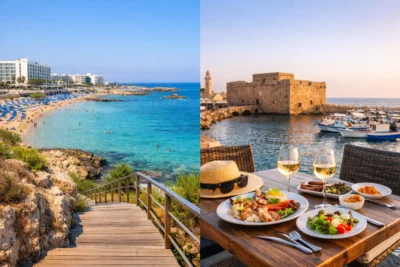
Protaras and Ayia Napa offer the best beaches with sandy shores and clear water. You can explore available villas in these areas on ElloCyprus.
29. Which Cyprus area is best for families?
Protaras is ideal for families with calm beaches, safe swimming, and family-friendly facilities. You can view family-friendly accommodation here: family villas in Cyprus.
30. Which area in Cyprus is best for nightlife?
Ayia Napa is the main nightlife destination with clubs, bars, and beach parties.
31. Which Cyprus area offers the most culture?
Paphos is best for culture with archaeological sites, museums, and historical landmarks.
32. Are beaches sandy in Cyprus?
Yes, especially on the east coast, where beaches are sandy and ideal for swimming.
33. Where is the clearest water in Cyprus?
Fig Tree Bay and Nissi Beach are known for crystal-clear water.
34. Are beaches safe for swimming in Cyprus?
Yes, most beaches have calm waters and lifeguards during peak season.
35. What do beach flags mean in Cyprus?
Green means safe, yellow means caution, and red means dangerous conditions.
Food, Nightlife, and Packing for Cyprus
36. Is food good in Cyprus?
Yes, Cyprus offers fresh Mediterranean cuisine with local and international options.
37. What food should I try in Cyprus?
Try halloumi, souvlaki, kleftiko, and traditional meze.
38. Is Cyprus good for nightlife?
Yes, especially in Ayia Napa, while other areas are more relaxed.
39. What should I pack for Cyprus?
Bring light clothing, sunscreen, sunglasses, and insect repellent.
40. Is WiFi good in Cyprus?
Yes, WiFi is widely available in hotels, villas, and restaurants.
Weather, Health, and Practical Safety in Cyprus
41. Is Cyprus humid?
Humidity is moderate but can feel higher near the coast in August.
42. Does it rain in Cyprus in summer?
Rain is extremely rare during summer months.
43. Is Cyprus windy?
There is usually a light breeze, especially in coastal areas.
44. Can you swim all year in Cyprus?
Swimming is best from April to November when the sea is warmer.
45. Is the sea warm in Cyprus?
Yes, sea temperatures are warm from June to October.
46. Are mosquitoes common in Cyprus?
Yes, especially in summer evenings, so repellent is useful.
47. Do I need insect repellent in Cyprus?
Yes, particularly if staying near water or greenery.
48. Are pharmacies easy to find in Cyprus?
Yes, pharmacies are available in all towns and tourist areas.
49. Is healthcare good in Cyprus?
Yes, both public and private healthcare services are reliable.
50. Do I need travel insurance for Cyprus?
Yes, travel insurance is strongly recommended for all visitors.
Restaurants, Shopping, and Daily Life in Cyprus
51. Are restaurants expensive in Cyprus?
Restaurants are moderately priced, with meals costing around €10 to €25 per person.
52. Do restaurants speak English in Cyprus?
Yes, English is widely spoken in restaurants.
53. Is seafood fresh in Cyprus?
Yes, especially in coastal areas where seafood is caught daily.
54. Are portions large in Cyprus?
Yes, portions are generous, especially in traditional restaurants.
55. Do I need reservations in Cyprus?
Yes, during summer evenings in popular areas.
56. Are shops open on Sundays in Cyprus?
Some shops are open in tourist areas, but many close or have shorter hours.
57. What time do people eat in Cyprus?
Dinner is usually between 7:30pm and 10pm.
Family, Couples, Solo Travel, and Transport in Cyprus
58. Is Cyprus family friendly?
Yes, it is one of the most family-friendly destinations in Europe.
59. Is Cyprus good for couples?
Yes, especially for beach and villa holidays.
60. Is Cyprus good for solo travellers?
Yes, it is safe and easy to navigate.
61. Is public transport reliable in Cyprus?
It works but is limited, especially outside cities.
62. Are taxis expensive in Cyprus?
Short trips are affordable, but longer journeys can be costly.
63. Is parking easy in Cyprus?
Yes, parking is usually free or low cost.
64. Are there toll roads in Cyprus?
No, there are no toll roads.
65. Is fuel expensive in Cyprus?
Fuel prices are similar to other EU countries.
Accommodation, Connectivity, and Safety in Cyprus
66. Are villas better than hotels in Cyprus?
Villas offer more space and privacy, making them ideal for families and groups.
67. Are apartments common in Cyprus?
Yes, apartments are widely available in all tourist areas.
68. Do accommodations have air conditioning in Cyprus?
Yes, most properties include air conditioning.
69. Are towels provided in Cyprus?
Yes, bath towels are usually provided.
70. Are beach towels provided in Cyprus?
Not always, so it is best to check in advance.
71. Is Cyprus good for digital nomads?
Yes, especially outside peak summer, with good internet and infrastructure.
72. Is mobile data expensive in Cyprus?
No, EU roaming applies for most visitors.
73. Can I use my phone in Cyprus?
Yes, mobile coverage is excellent.
74. Are scams common in Cyprus?
No, scams are rare but basic awareness is advised.
75. Is pickpocketing common in Cyprus?
No, but it can happen in crowded areas.
Nature, Beaches, and Local Rules in Cyprus
76. Are there dangerous animals in Cyprus?
No, there are no dangerous animals that affect tourists.
77. Is the sun strong in Cyprus?
Yes, UV levels are very high in summer.
78. Do I need sunscreen in Cyprus?
Yes, SPF 30 or higher is recommended.
79. Are beaches crowded in Cyprus?
Yes, especially in July and August.
80. Are beaches free in Cyprus?
Yes, all beaches are public.
81. Are sunbeds paid in Cyprus?
Yes, sunbeds usually cost around €2.50 to €5 each, and umbrellas cost a similar amount.
82. Are beaches clean in Cyprus?
Yes, many beaches have Blue Flag status.
83. Are there lifeguards on beaches in Cyprus?
Yes, during the main tourist season.
84. Is nightlife loud in Cyprus?
Only in certain areas like Ayia Napa.
85. Is Cyprus quiet?
Yes, outside nightlife areas it is very peaceful.
86. Can you drink alcohol freely in Cyprus?
Yes, but drinking and driving laws are strict.
87. Is smoking common in Cyprus?
Yes, although restricted indoors.
88. Are there dress rules in Cyprus?
Yes, modest dress is required in religious sites.
89. Is Cyprus religious?
Yes, mainly Greek Orthodox.
90. Are locals friendly in Cyprus?
Yes, locals are welcoming and helpful.
Activities, Experiences, and First Time Travel in Cyprus
91. Is Cyprus good for kids?
Yes, with safe beaches and family resorts.
92. Is Cyprus crowded?
Mainly during summer peak months.
93. Is it easy to explore Cyprus?
Yes, especially if you stay in central locations. Explore ideal locations using the ElloCyprus Discover Guide.
94. Are there mountains in Cyprus?
Yes, the Troodos Mountains.
95. Can you hike in Cyprus?
Yes, many trails are available.
96. Is Cyprus good for beach holidays?
Yes, it is one of the best in Europe.
97. Is Cyprus good for culture?
Yes, especially in Paphos.
98. Is Cyprus good for food?
Yes, with rich Mediterranean cuisine.
99. Is Cyprus easy for first time travellers?
Yes, it is simple and safe to visit.
100. Is Cyprus a good first destination?
Yes, it is ideal for first-time travellers.
20 Important Northern Cyprus Questions
101. Is Cyprus divided?
Yes, Cyprus has been divided since 1974 into two parts.
102. Is Northern Cyprus internationally recognised?
No, it is not recognised by the EU or most countries.
103. Can tourists enter Cyprus through Northern Cyprus?
No, this is not considered a legal entry route.
104. What is the Green Line in Cyprus?
A UN buffer zone separating north and south.
105. Is crossing to Northern Cyprus allowed?
Yes, only through official checkpoints.
106. Are laws the same in Northern Cyprus?
No, laws and systems differ significantly.
107. Is insurance valid in Northern Cyprus?
No, separate insurance is required.
108. Is healthcare equal in Northern Cyprus?
No, it is more limited.
109. Are hotels regulated the same in Northern Cyprus?
No, not under EU standards.
110. Can embassies help in Northern Cyprus?
Support is limited.
111. Are there legal risks in Northern Cyprus?
Yes, especially with property and entry.
112. Is Northern Cyprus recommended for first time visitors?
No, it is not recommended.
113. Why stay in the Republic of Cyprus?
It offers better safety, infrastructure, and protection.
114. Are there entry restrictions in Cyprus?
Yes depending on entry route.
115. Is car insurance valid in Northern Cyprus?
No, extra insurance is needed.
116. Is transport easy in Northern Cyprus?
More limited than the south.
117. Are roads the same quality in Northern Cyprus?
Generally lower quality.
118. Are services reliable in Northern Cyprus?
Less consistent overall.
119. Should you book accommodation in Northern Cyprus?
Not recommended for first-time visitors.
120. Where should tourists stay in Cyprus?
In the Republic of Cyprus for the best experience.
Frequently Asked Questions About Cyprus Travel
What is the cheapest month to visit Cyprus?
The cheapest months to visit Cyprus are November through March, when flight and accommodation prices drop and tourist numbers are lower.
How much money should I budget per day in Cyprus?
Budget around €50 to €80 per day per person for meals, transport, and activities, excluding accommodation.
Can I rent a car with a UK or EU driving licence in Cyprus?
Yes, UK and EU driving licences are valid for renting and driving cars in Cyprus without additional permits.
What should I avoid doing in Cyprus?
Avoid entering through Northern Cyprus airports, taking photos near military zones, and leaving valuables visible in parked cars.
Are there jellyfish in Cyprus waters?
Jellyfish are rare but can appear occasionally in summer. Most beaches warn swimmers when they are present.
Planning your trip becomes much easier when you have clear answers to the most important Cyprus travel questions. From choosing where to stay to understanding how the island works, these Cyprus travel questions help you avoid mistakes and travel with confidence.