
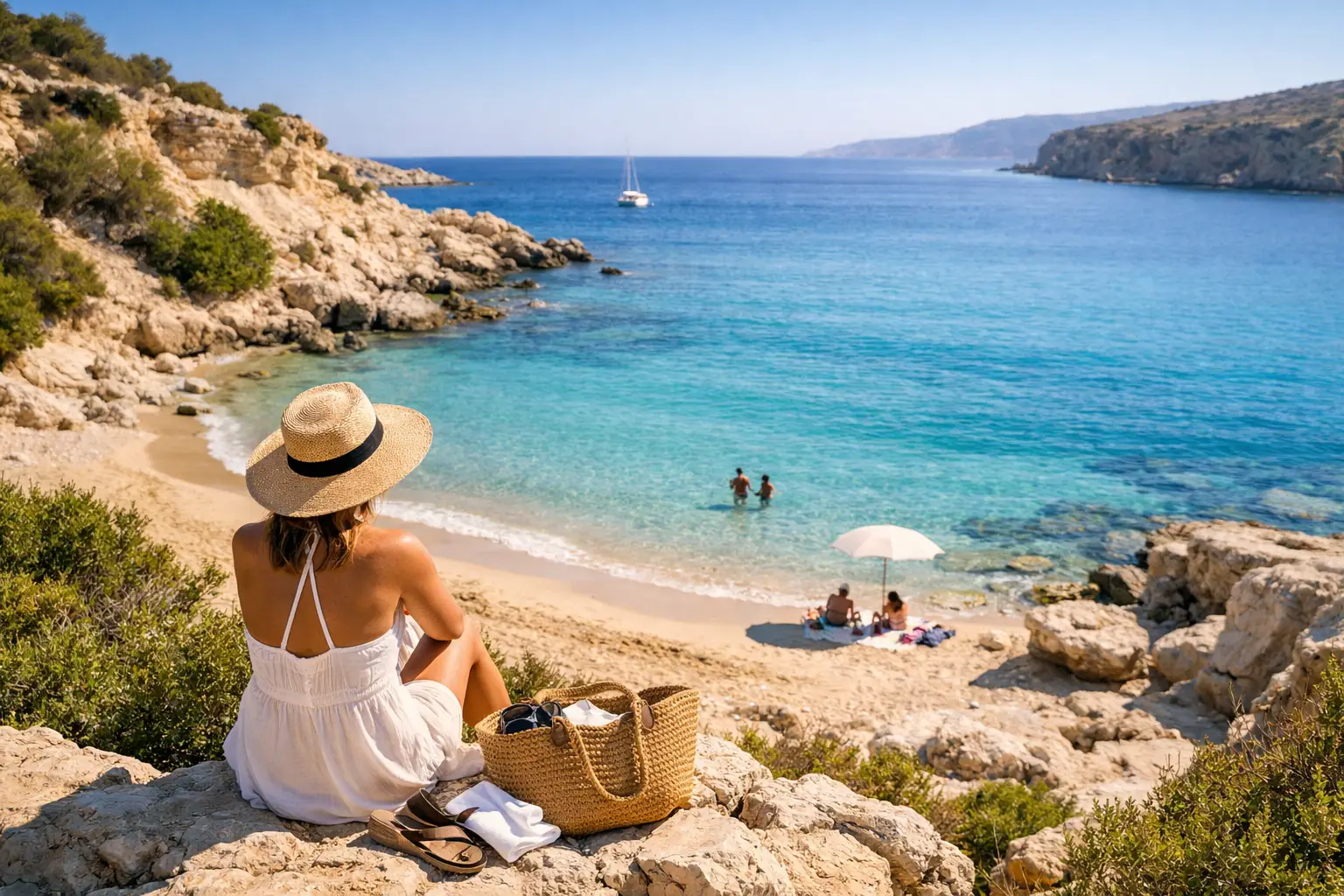
The difference between a busy beach day and a peaceful one in Cyprus can be as simple as turning left instead of right at the coastal road. If you are working out how to find quiet beaches in Cyprus, do not only search for the most beautiful names on a map. Look at the time of day, the season, parking, nearby hotels and how far people need to walk from their car.
Cyprus has famous sandy bays that deserve their reputation, particularly around Protaras and Ayia Napa. But the island also has small coves, less obvious stretches of coast and calmer corners where you can swim, read and hear the water rather than a row of beach speakers. A little planning makes all the difference.
How to find quiet beaches in Cyprus
The first rule is simple: do not judge a beach by its photographs alone. The clearest water and softest sand often attract the largest crowds, especially from late morning onwards. A beach may look empty online because the photos were taken in April, at sunrise or after a windy day.
Instead, think about what makes a beach convenient for lots of visitors. A large car park, frequent buses, a promenade, several cafés and sunbeds right to the water’s edge usually mean a livelier atmosphere. None of that is a bad thing – it can be ideal for families with young children or anyone who wants facilities close by – but it is not normally the formula for peace and quiet.
For a calmer day, choose a smaller cove, a beach just beyond the main resort centre, or a coastal spot that requires a short walk. Check the coastline rather than only the town name. In the Protaras area, for example, the space between the headline beaches can be surprisingly relaxed, particularly outside school-holiday peak weeks.
Let the clock do some of the work
In July and August, arrive early if a quiet swim is your priority. Between about 8.00am and 10.00am, even well-known beaches feel more spacious, the sea is often beautifully still and the sun is less intense. It is also the best time for a walk along the shore before settling in.
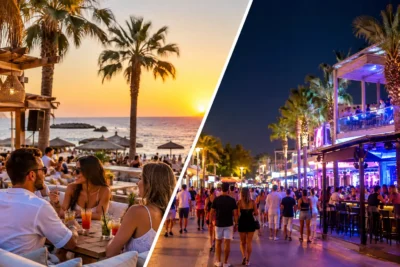
Late afternoon is another good option. Many visitors leave for lunch, a rest or a shower before dinner, and the light softens from around 4.30pm onwards. The busiest period is usually late morning to mid-afternoon, when day-trippers and families are all on the sand at once.
May, June, September and October are the easiest months for a quieter beach holiday. The sea is warm enough for most swimmers, while the resorts are less full than in the height of summer. In winter, you may find near-empty beaches, although the water is cooler and some seasonal facilities are closed.
Choose the right part of the coast
No area is quiet all day, every day, but some give you better odds than others. It depends whether you want easy access, natural scenery, shallow water or a true escape from resort crowds.
Cape Greco for coves and open views
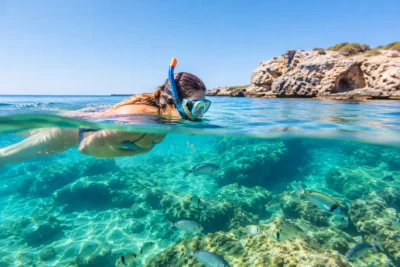
Cape Greco National Forest Park, between Protaras and Ayia Napa, is one of the best places to start. The coastline is rocky in parts, with clear-water coves and swimming spots rather than one long, packed resort beach. Konnos Bay is stunning but can be busy in summer, so do not assume it will be tranquil at midday.
For more breathing room, explore the wider Cape Greco coast early in the day. Some spots have uneven ground, rocks or steps, so proper water shoes can be useful and this area is less suited to anyone needing easy buggy or mobility access. Stay within marked, safe access points, take drinking water and avoid climbing down unmarked cliffs simply to reach an empty-looking inlet.
Ayia Thekla for a slower beach day
West of Ayia Napa, Ayia Thekla often feels more relaxed than the resort’s central beaches. The beach is broad, the pace is slower and there is usually more room to spread out, especially if you walk a little away from the main access point.
It is a sensible choice for travellers staying in a villa or flat nearby who would like an unhurried morning by the sea without giving up soft sand and shallow water. On weekends and public holidays, local families also head to the coast, so weekday mornings remain your best bet.
Pernera, Ayia Triada and Kapparis for smaller bays
The coastline around Pernera, Ayia Triada and Kapparis has a mix of organised beaches and smaller sandy pockets. The popular bays close to restaurants can fill up, yet a short coastal walk often reveals a less busy alternative. This is where staying locally is particularly useful: you can visit the beach before breakfast, notice which cove suits you, then return when it feels right.
Ayia Triada’s beach is known and well used, but its surrounding coastline offers quieter moments outside the busiest hours. In Kapparis, look beyond the first beach you reach from the road. Small coves may have fewer facilities, so bring water, shade and snacks rather than expecting a beach bar at every stop.
Larnaca’s coast when you want space
Larnaca’s main seafront is convenient and sociable, not secluded. For a less crowded feel, look beyond the central promenade towards the wider beaches south of the city, including the Meneou and Pervolia direction. These beaches tend to feel more open, with fewer resort-style crowds, though the character is different from the bright turquoise coves of the east.
This coast is a good fit if you prefer a long walk, plenty of sand and a more local rhythm. Wind can affect conditions, so check the forecast and be flexible. A beach that feels sheltered on one day may be choppy the next.
Use maps wisely, but do not chase every pin
Maps are helpful for spotting public access points, car parks and the distance between beaches, but they do not tell you how a place feels at 1.00pm in August. Look for the practical clues: a beach beside a major hotel zone will be busier than one reached via a quiet residential road; a cove with only a few parking spaces may stay calmer, but it can also mean arriving earlier.
Recent visitor photos can show whether a beach has sand, pebbles, rocks or sunbed rows. They are more useful than heavily edited promotional images. Still, treat them as a guide, not a guarantee. Seaweed, wind direction and seasonal weather can change the look of a beach quickly.
Avoid the temptation to drive down every narrow track marked near the coast. Some roads are rough, private or lead to unsuitable parking. In summer, leave your car legally and do not block driveways or access roads. A short walk from a proper parking area is usually safer and more pleasant than trying to park on the shoreline.
Match the beach to your idea of quiet
For some travellers, quiet means no music and plenty of personal space. For others, it means a sheltered, shallow beach where children can paddle without the pressure of a large crowd. Be honest about what your group needs before choosing the most remote-looking place.
Families may prefer a calmer hour at a beach with lifeguards, toilets and shade nearby, rather than an isolated cove with difficult access. Couples and confident swimmers might enjoy the rocky Cape Greco coast, while groups of friends may want a beach near enough to a taverna for an easy lunch. Peaceful does not have to mean inconvenient.
If you are staying in the Protaras, Pernera, Kapparis or Ayia Thekla area, a local base gives you the freedom to follow the weather and go when the coast is at its best. ElloCyprus offers carefully selected villas and flats that can make those early swims and late-afternoon beach walks wonderfully simple, with direct booking and support from a local team.
One final local habit is worth adopting: keep one beach day unscheduled. Pick a direction after breakfast, stop where the water looks inviting, and be prepared to move on if a bay is busier than you hoped. Cyprus rewards the travellers who leave a little room for the coast to surprise them.