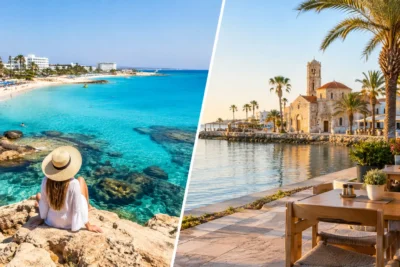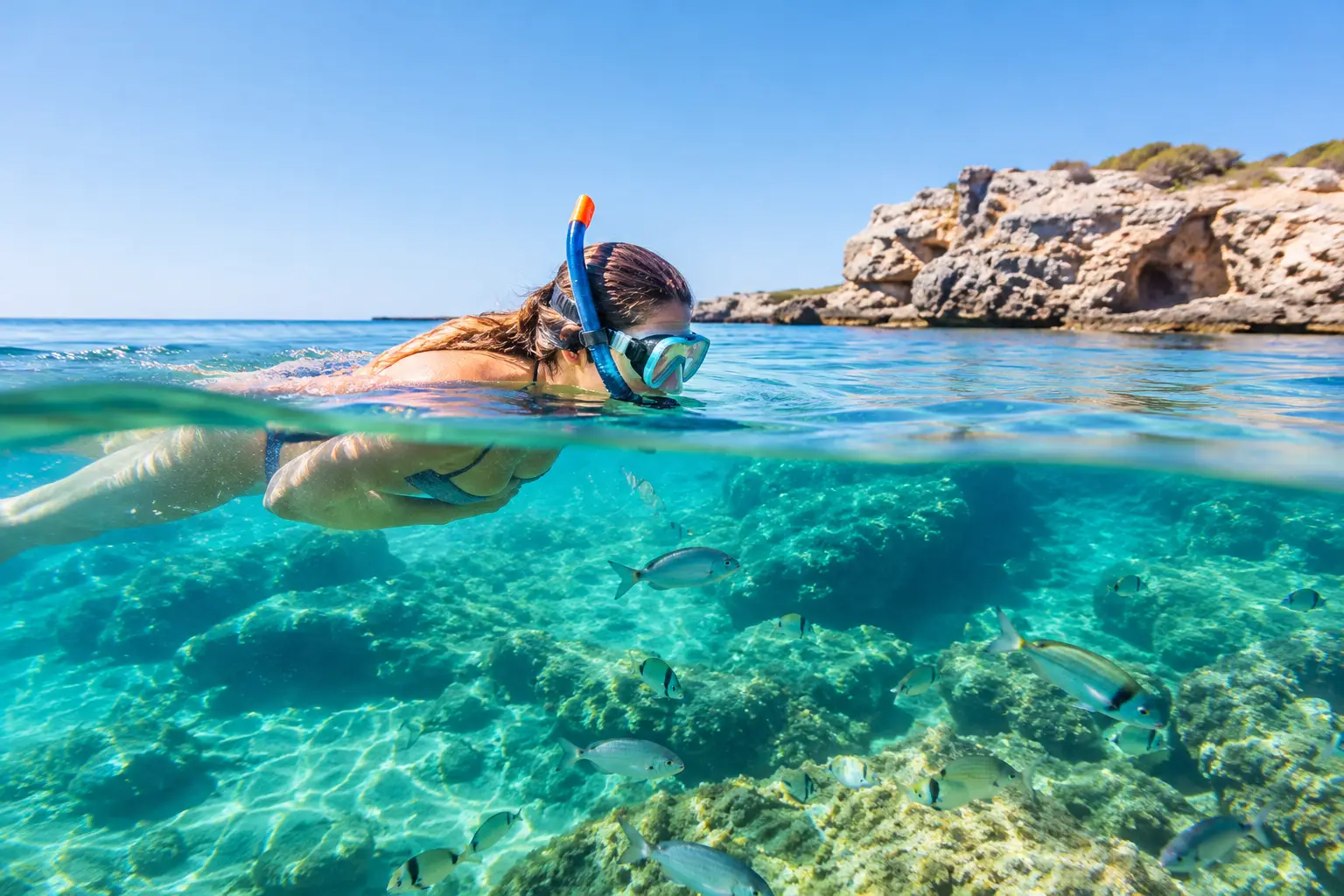
The water can look almost unreal from the shore in Protaras: pale sand, bright turquoise shallows and darker patches where the rocks begin. That contrast is exactly what makes a good snorkel here. This Protaras snorkelling guide will help you choose the right bay, spot more fish and enjoy the sea without turning a relaxed holiday swim into a complicated expedition.
You do not need to go far offshore or join a boat trip to see plenty. The best moments are often a few metres from the beach, following the edge where sand meets rock. Go early, when the sea is quieter and the light is still soft, and allow yourself time to float rather than constantly swim.
Where to snorkel in Protaras
Protaras has several easy-access beaches, but not every beautiful bay offers the same underwater experience. Sandy beaches are ideal for settling in with children and confident first-time snorkellers, while rocky coves usually provide more shelter for small fish. Conditions change with the wind, so treat these as reliable starting points rather than guarantees.
Green Bay
Green Bay is one of the most popular choices for snorkelling near Protaras, particularly for families and beginners. The bay is relatively sheltered, with clear water and rocky sections around the sides where fish gather. Enter gradually from the beach, then work your way towards the edges rather than heading straight into deeper water.
You may see schools of small silver fish, wrasse moving around the rocks and the occasional sea bream. It is also a good place to practise using a mask and snorkel properly before trying a more open cove. In high season, arrive early or later in the afternoon for a little more space.
Fig Tree Bay
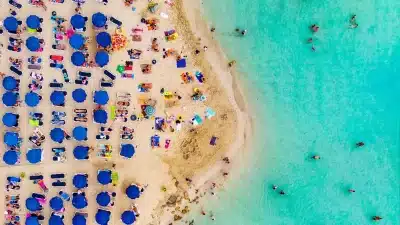
Fig Tree Bay is one of Protaras’ best-known beaches and a very easy place to spend the day, especially if your group includes non-snorkellers. The main swimming area is mostly sandy, so it is not the most dramatic snorkelling spot in the area. However, the rocks towards the sides of the bay and around the small offshore islet can be rewarding when the water is calm.
The trade-off is that Fig Tree Bay can be busy, with swimmers, paddleboards and other beach activity. It works best for a gentle snorkel close to shore, followed by a long swim or lunch nearby, rather than a quiet underwater session. Keep well away from boat activity and never swim out to the islet if the sea is choppy.
Konnos Bay
Just south of Protaras, close to Cape Greco, Konnos Bay combines a sandy beach with clear water and rocky headlands. It is a lovely option for confident swimmers who want a little more variety than a wide, open beach provides. The edges of the bay are the place to look, where the seabed becomes more textured and fish have somewhere to shelter.
Konnos can feel calm on one day and noticeably livelier on another, depending on the wind and boat traffic. If you are travelling with younger children, stay in the shallower central area and save the rocky fringes for adults who are comfortable in the water. The walk back up from the beach is steep, so pack lightly and bring water.
Cape Greco coves
Cape Greco is where the coastline becomes wilder, with limestone cliffs, small inlets and beautifully clear blue water. The coves around the national forest park can offer excellent visibility and interesting rock formations, but they are better suited to capable swimmers than complete beginners.
Avoid treating every cove as a snorkelling beach. Some access points are rocky, waves can push into narrow inlets, and the water deepens quickly. Choose a calm day, use established entry points, wear water shoes and stay close enough to shore that you can return easily. The scenery is superb, but the best decision is sometimes to admire a cove from land and snorkel at a gentler beach instead.
What you might see underwater
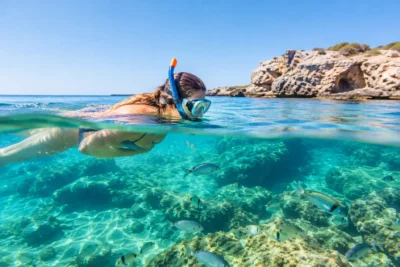
The Mediterranean around Protaras is not a tropical reef, so it helps to set the right expectations. You are unlikely to find huge coral gardens or a constant parade of colourful large fish. What you do get is remarkably clear water, fascinating rock shelves and plenty of small marine life if you slow down and look carefully.
Common sightings include damselfish, wrasse, mullet, sea bream and small shoals flashing above the sand. Look into cracks in the rock for tiny blennies and crabs, but do not put your hands into holes or try to move stones. Sea urchins are also common around rocky areas, which is one reason water shoes are useful.
The best viewing is usually along rocky edges in water shallow enough to stand in comfortably. Move slowly, keep your arms close to your body and let the fish become used to you. Chasing them tends to produce nothing except a quick swim away.
Protaras snorkelling guide: what to pack
A basic mask, snorkel and fins are enough for most people, though fins are optional in calm, shallow water. A well-fitting mask matters more than expensive equipment. Test it before you enter: it should seal gently against your face without being painfully tight. If it constantly fills with water, adjust the strap or try another size.
For a comfortable beach bag, bring reef-friendly sun protection, drinking water, a rash vest or T-shirt for extra sun coverage, and water shoes for rocky entry points. A bright inflatable swim buoy is useful for stronger swimmers in quieter coves, as it makes you easier to see and gives you something to hold while resting. It is not a substitute for good judgement or supervision.
For children, keep the plan simple. A full-face mask may feel easier at first, but only use equipment they have already practised with and make sure an adult stays close by. A standard mask and snorkel can be a better choice for children who are confident in the water, as they can clear the mask and remove the snorkel easily if needed.
Simple sea safety that makes a difference
The sea in Protaras is often calm, but it still deserves respect. Check the water before getting in. If there are waves breaking over rocks, a strong onshore breeze, poor visibility or a red flag, choose another activity that day. Cyprus has plenty of good beach days, so there is no need to force a snorkel in unsuitable conditions.
Snorkel with someone else, especially around Cape Greco or outside the main beach areas. Tell a family member where you are going, keep children within arm’s reach in deeper water and do not rely on inflatable toys as flotation aids. Alcohol and snorkelling are a poor combination, even when the water appears flat.
Take care around boats, jet skis and paddleboards. Stay within designated swimming areas where available, and do not cross open water to reach a rock, cave or small island. From the shore, distances can be deceptive. The return swim is always harder if the wind changes or you have spent too long in the sun.
Make a morning of it
A good Protaras snorkelling day does not need an over-planned schedule. Aim for an early swim at Green Bay or Konnos, when the water is usually clearest and the beach is less crowded. Afterwards, dry off slowly, find shade and enjoy a late breakfast or a relaxed lunch rather than rushing onwards.
If you are staying locally, choosing a villa or flat close to the coast makes these spontaneous sea mornings much easier. ElloCyprus offers carefully selected homes in and around Protaras that can give families and groups the space to rinse off, relax and head back out when the temperature eases, all with the reassurance of booking directly with a local team.
Leave the fish, shells and sea urchins where they are, take only photographs and give yourself permission to keep the plan flexible. On the right calm morning, a mask, a quiet rocky edge and ten unhurried minutes in the water are more than enough.