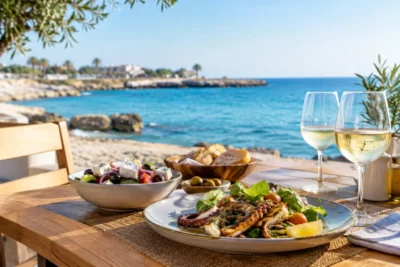

Cyprus has a famously generous table. The food is an expression of the island’s agricultural heritage, warm hospitality, and love of sharing. On the Greek side, visitors will often find simple but beautiful ingredients at the centre of the table: fresh tomatoes, cucumbers, olives, feta, crusty bread, olive oil, herbs, grilled meats, local cheeses, and seasonal vegetables.
Meals in Cyprus are rarely rushed. Lunch can stretch into the afternoon, dinner can last for hours, and food is often served in the middle of the table for everyone to share. This Cyprus food guide introduces the flavours locals love, the dishes first time visitors should try, and the best food in Cyprus to look for during your holiday.
Understanding Cypriot Meze
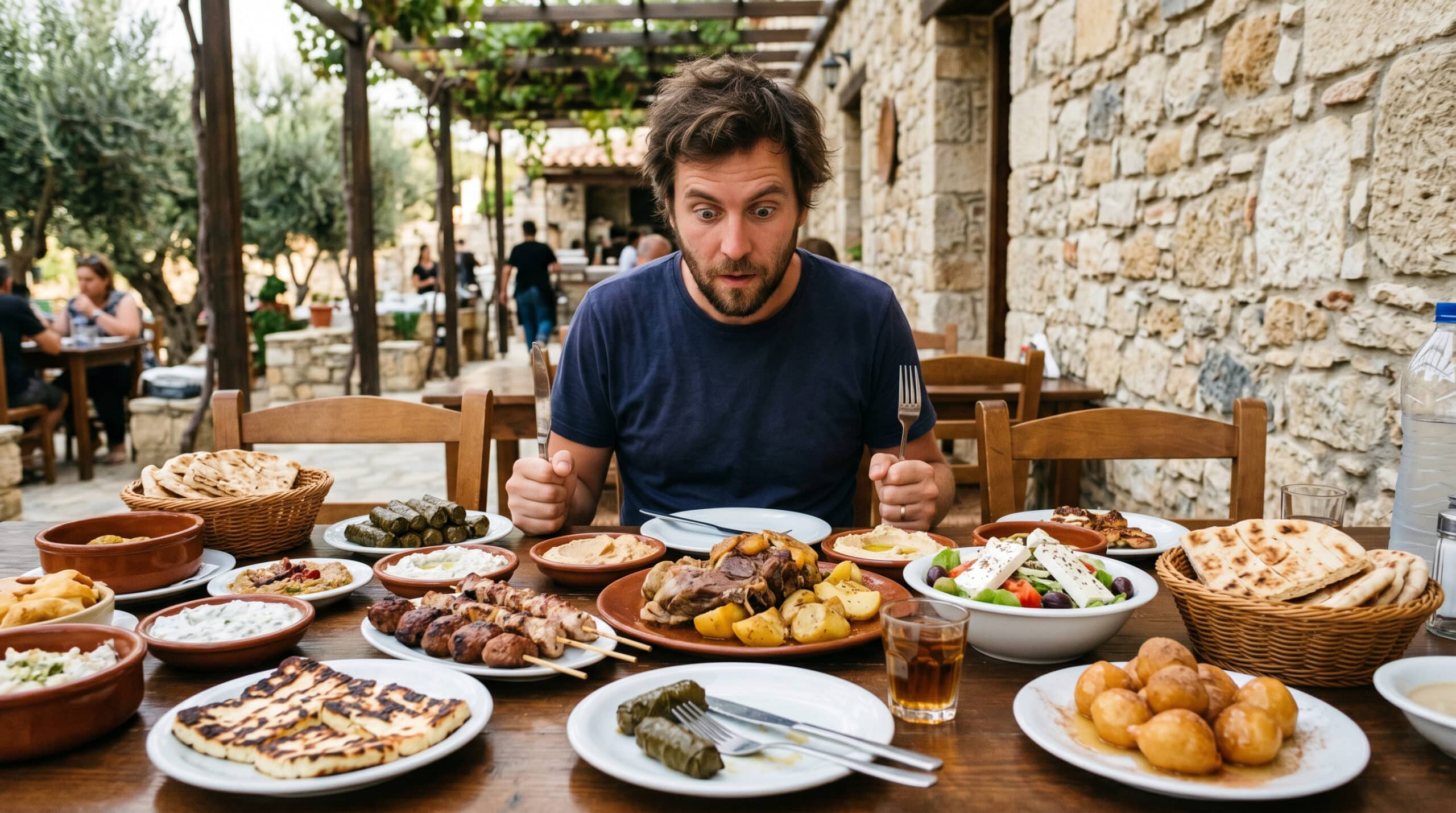
One of the most memorable dining experiences in Cyprus is Cypriot meze. Many first time visitors imagine meze as a light starter before the main course, but in Cyprus, meze is usually the meal itself.
A traditional meze can include twenty or more small dishes, served gradually over the course of the meal. It is not just about eating. It is about sitting together, sharing, talking, and enjoying the slower rhythm of Cypriot dining.
A meze usually begins with dips, salads, bread, and small appetisers. You may be served tzatziki, tahini, taramasalata, olives, village salad, grilled halloumi, fried zucchini, wild greens, koupepia, lountza, and other small plates. As the meal continues, larger dishes arrive, such as sheftalia, souvlaki, village sausages, slow cooked lamb, grilled meats, or fresh fish depending on the type of meze you ordered.
By the end, you may be offered fruit, small sweets, or a traditional dessert.
How to Approach a Cypriot Meze
The golden rule with meze is simple: pace yourself.
A proper Cypriot meze unfolds slowly. Do not fill up on the first few dips and salads, tempting as they may be. Try a little of everything, leave space for the grilled dishes, and enjoy the experience as locals do.
Most tavernas offer different types of meze. A meat meze usually includes grilled meats, sausages, sheftalia, souvlaki, and sometimes kleftiko. A fish meze may include fresh fish, calamari, octopus, prawns, sardines, and other seafood dishes. Some places also offer vegetarian friendly meze options, especially in areas popular with travellers.
If you are visiting Cyprus for the first time and want to understand local food culture quickly, ordering Cypriot meze is one of the best ways to do it.
Essential Dishes to Try in Cyprus
Halloumi: Cyprus’s Famous Cheese
Halloumi is one of the most famous foods in Cyprus, and for good reason. This firm, salty cheese is traditionally made from goat’s and sheep’s milk, and it has the special ability to hold its shape when grilled or fried.
You will find halloumi served in many ways. It may arrive grilled as part of a meze, tucked into warm pita bread, paired with lountza, added to salads, or served with watermelon during the summer. Some tavernas also serve it with honey, sesame, or fresh herbs.
For many visitors, grilled halloumi is the first dish that makes them fall in love with Cypriot food.
Kleftiko: Slow Cooked Lamb with History
Kleftiko is one of the great comfort dishes of Cyprus. It is usually made with lamb, slowly cooked with garlic, lemon, herbs, and olive oil until the meat becomes incredibly tender.
Traditionally, the meat is cooked for hours in a clay oven, allowing it to soften slowly and absorb all the flavours. When done well, kleftiko should almost fall apart with a fork.
It is a hearty dish, often served with potatoes, salad, or vegetables. If you enjoy slow cooked meat, kleftiko is one of the best food in Cyprus experiences to seek out.
Souvlakia
Souvlakia are small pieces of pork, chicken, or lamb, skewered and grilled over charcoal. In Cyprus, souvlakia are often served inside warm pita bread with tomato, cucumber, onion, parsley, cabbage, lemon, and sometimes yoghurt sauce or tzatziki.
This is one of the easiest and most satisfying casual meals to find across the island. It is simple, filling, affordable, and loved by locals.
A good souvlakia pita is not fancy, but it is exactly the kind of food you will remember after your trip.
Sheftalia
Sheftalia are a Cypriot favourite, especially for meat lovers. They are small parcels of seasoned minced pork or lamb, wrapped in caul fat and grilled over charcoal.
The outside becomes slightly crisp while the inside stays juicy and full of flavour. Sheftalia are often served in pita bread, alongside souvlakia, or as part of a meat meze.
If you are trying Cypriot grill food for the first time, order a mixed pita with souvlaki and sheftalia. It is a classic.
Koupepia: Stuffed Vine Leaves
Koupepia are vine leaves stuffed with rice, herbs, tomato, and sometimes minced meat. They are gently cooked until tender and are usually served as part of a meze or homemade style meal.
They are similar to dolmades, but the Cypriot version often has its own local character, with tomato, lemon, cinnamon, or allspice adding warmth and depth.
Koupepia are one of those dishes that feel especially homely, the kind of food many Cypriots associate with family kitchens.
Kolokythokeftedes: Zucchini Fritters
Kolokythokeftedes are zucchini fritters made with grated zucchini, herbs, cheese, and sometimes onion or garlic. They are shaped into small patties or balls and fried until golden.
The outside is crisp, while the inside stays soft and fragrant. They are usually served with tzatziki, yoghurt, or lemon.
They are a great vegetarian option and a lovely dish to order when sharing several small plates.
Louvi me Lahana: Black Eyed Beans with Greens
Louvi me lahana is a simple, nourishing dish made with black eyed beans and leafy greens such as chard or wild greens. It is usually finished with olive oil and lemon.
This is not a flashy dish, but it is deeply traditional and very Cypriot. It shows the lighter, more humble side of the island’s cuisine.
Order it with village bread, olives, and salad for a simple local meal.
Trahanas Soup with Halloumi
Trahanas soup is especially popular during the cooler months. Trahanas is made from a dried mixture of cracked wheat and fermented milk or yoghurt. When cooked into soup, it becomes tangy, creamy, and comforting.
In Cyprus, diced halloumi is often added to the soup, giving it a salty richness. Some versions are simple and rustic, while others include chicken broth, vegetables, or egg for extra depth.
If you are visiting Cyprus in winter, this is one of the most traditional dishes to try.
Anari Cheese
Anari is a mild, fresh cheese made from whey, often after halloumi production. It has a soft, creamy texture and a gentle flavour.
Fresh anari can be eaten for breakfast with honey, carob syrup, or fruit. A firmer version is sometimes grated over pasta or used in savoury dishes.
Anari is also used in sweet pastries, especially bourekia me anari, which are small pastries filled with sweetened anari and dusted with icing sugar.
Moussaka
Moussaka is loved across Cyprus and is often found in tavernas and traditional restaurants. It is usually made with layers of eggplant, potatoes, minced meat, and creamy bechamel sauce.
The Cypriot version can feel rich, comforting, and very satisfying. Vegetarian versions are also common, especially in restaurants with a wider menu.
It is a good choice if you want something filling, familiar, and deeply comforting.
Gemista
Gemista are vegetables stuffed with rice, herbs, and sometimes minced meat. Tomatoes, peppers, zucchini, or eggplants are commonly used.
The vegetables are baked slowly until soft, allowing the rice to absorb the juices and herbs. This is another dish that feels very homemade and is often enjoyed as part of a relaxed lunch.
Vegetarian and Vegetable Based Options in Cyprus
Cyprus offers plenty of vegetable based dishes, especially in traditional tavernas. While grilled meats are popular, local cuisine also makes wonderful use of beans, greens, grains, herbs, vegetables, cheese, and olive oil.
Look out for:
- Village salad: A fresh mix of tomatoes, cucumbers, onions, olives, feta, herbs, and olive oil.
- Anari with carob syrup: A simple local cheese served with sweet carob syrup or honey.
- Spanakopita: Spinach pie made with filo pastry, herbs, and cheese.
- Halloumoti: Bread filled with halloumi and mint, baked until golden.
- Grilled vegetables: Aubergine, peppers, mushrooms, courgettes, and seasonal vegetables are common side dishes.
- Wild greens: Often boiled and served with olive oil, lemon, and salt.
- Louvi: Black eyed beans served with greens, olive oil, and lemon.
If you are vegetarian, it is worth asking what vegetable dishes are available that day. Many traditional dishes change depending on the season.
Street Food and Quick Bites in Cyprus
Not every meal in Cyprus needs to be a long taverna feast. The island also has plenty of casual, filling foods that are perfect for lunch, beach days, or quick dinners.
- Souvlakia in pita: Grilled meat served inside pita bread with salad and lemon.
- Sheftalia in pita: Juicy Cypriot meat parcels served in warm pita bread.
- Halloumi sandwich: Grilled halloumi with tomato, cucumber, and bread.
- Loukaniko: Village sausages flavoured with red wine, garlic, coriander, and spices.
- Spanakopita: A spinach and cheese pastry found in many bakeries.
- Cheese pies: Small savoury pastries filled with cheese, perfect for breakfast or a snack.
- Olive pies: Savoury bakery pastries filled with olives, herbs, and sometimes cheese.
For an easy local lunch, visit a bakery in the morning or order a souvlakia pita from a neighbourhood grill house.
Traditional Cypriot Sweets and Desserts
Cypriot desserts are sweet, fragrant, and often made with syrup, nuts, pastry, fruit, cheese, or grape products. They are perfect after a long meal or with coffee.
- Portokalopita: A moist orange cake made with filo pastry and syrup.
- Loukoumi: Soft, chewy sweets flavoured with rosewater, citrus, or other aromas.
- Baklava: Layers of filo pastry, nuts, and syrup.
- Soutzoukos: Strings of nuts dipped in grape must or carob syrup and dried.
- Loukoumades: Small fried dough balls drizzled with honey or syrup.
- Pitta Satzis: Thin pastries filled with cinnamon, sugar, or honey.
- Bourekia me anari: Sweet pastries filled with anari cheese and dusted with icing sugar.
- Glyko tou koutaliou: Spoon sweets made from preserved fruits or nuts.
If you enjoy sweet flavours, try ordering a Cypriot coffee with loukoumi or spoon sweets after a meal.
What to Drink with Cypriot Food
Cyprus has its own wines, spirits, coffee traditions, and refreshing local drinks. Whether you are enjoying a long meze or a simple lunch by the sea, there is always something local to try.
Commandaria
Commandaria is one of Cyprus’s most famous wines. It is a sweet dessert wine made from sun dried local grapes and is usually enjoyed after a meal.
Its flavour is rich, sweet, and warming, with notes that can remind you of raisins, figs, honey, caramel, or dried fruit. It pairs beautifully with baklava, anari cheese, nuts, and syrup based desserts.
If you only try one traditional Cypriot wine, Commandaria is the one to remember.
Zivania
Zivania is a strong, clear spirit made from grape pomace. It is usually served in small quantities as an aperitif or digestif.
It has a powerful flavour and a high alcohol content, so it is best sipped slowly. In many villages, you may find locally produced zivania offered with nuts, dried fruit, or small meze plates.
Cypriot Coffee
Cypriot coffee is strong, rich, and served in a small cup. It is made by slowly heating finely ground coffee with water in a small pot, then pouring it carefully so the grounds settle at the bottom.
You can usually order it in three levels of sweetness:
- Sketo: Without sugar.
- Metrio: Medium sweet.
- Glyko: Sweet.
Cypriot coffee is not meant to be rushed. It is the kind of drink you enjoy slowly, often with conversation, a glass of cold water, and maybe something sweet on the side.
Fresh Lemonade
Fresh lemonade is a lovely choice on warm days, especially when made with local citrus fruit. It pairs well with light lunches, seafood, salads, and grilled halloumi.
Herbal Teas
Herbal teas are also common, especially after dinner or during cooler months. Look for teas made with mountain herbs such as sage, thyme, oregano, mint, or chamomile.
Tips for Ordering Like a Local
- Order meze when you are hungry: It is a full meal, not a small starter.
- Share dishes: Cypriot food is made for the middle of the table.
- Ask what is fresh: Fish, vegetables, greens, and specials often change by season.
- Do not rush: A good Cypriot meal is slow, social, and relaxed.
- Try village tavernas: Family run places often serve some of the most authentic dishes.
- Leave room for the later plates: Meze usually gets heavier as the meal continues.
- Ask for local wine: Many tavernas can suggest a Cypriot bottle to match your food.
Where to Try Traditional Food in Cyprus
You can find traditional Cypriot food across the Cyprus, from coastal resort towns to mountain villages and family run tavernas.
In popular holiday areas such as Protaras, Ayia Napa, Paphos, Larnaca, and Limassol, you will find plenty of restaurants serving meze, souvlakia, grilled halloumi, fresh fish, and traditional cooked dishes.
For a more local experience, look towards village tavernas. These are often the best places to try kleftiko, koupepia, sheftalia, louvi, wild greens, homemade dips, and seasonal specials. Portions are usually generous, service is relaxed, and meals are designed to be shared.
If you are staying in a holiday villa or apartment, it is also worth visiting local bakeries, fruit markets, and small food shops. Fresh bread, halloumi, olives, tomatoes, pastries, fruit, and local sweets are easy to pick up and enjoy at your accommodation.
Best Food in Cyprus for First Time Visitors
If you only have a few days on the island, start with these dishes:
- Cypriot meze: The best way to sample many dishes in one meal.
- Halloumi: Cyprus’s most famous cheese.
- Kleftiko: Slow cooked lamb with garlic, lemon, and herbs.
- Souvlakia: Grilled meat in pita bread.
- Sheftalia: Juicy grilled meat parcels.
- Koupepia: Stuffed vine leaves with rice, herbs, and tomato.
- Louvi: Black eyed beans with greens, olive oil, and lemon.
- Trahanas soup: A warming traditional soup with halloumi.
- Loukoumades: Sweet fried dough balls with honey or syrup.
- Commandaria: A sweet Cypriot dessert wine.
These dishes give you a delicious introduction to the flavours, traditions, and hospitality behind Cypriot food.
Final Thoughts on This Cyprus Food Guide
Cypriot food is about more than individual dishes. It is about generosity, seasonality, conversation, and the pleasure of sharing a table.
From grilled halloumi and souvlakia to slow cooked kleftiko, fresh village salads, Cypriot meze, loukoumades, and Commandaria, every dish tells part of the island’s story. The best food in Cyprus is often simple, local, and served with warmth.
Whether you are eating at a seaside restaurant, a village taverna, a bakery, or your holiday home terrace, let the food be part of the experience. Take your time, order for the table, try something new, and enjoy Cyprus the way locals do: slowly, generously, and with plenty of good food in front of you.
Frequently Asked Questions
Cyprus is most famous for halloumi, souvlakia, sheftalia, kleftiko, koupepia, Cypriot meze, village salad, Commandaria wine, and traditional sweets such as loukoumades and baklava.
A traditional Cypriot meze is a long, shared meal made up of many small dishes. It usually starts with dips, salad, bread, olives, and halloumi, then continues with grilled meats, sausages, stuffed vine leaves, vegetables, or seafood depending on the type of meze ordered.
Cypriot meze is usually a full meal. Although the dishes arrive in small portions, there are often many of them, so it can become very filling. It is best ordered when you are hungry and have time to enjoy a slow meal.
First time visitors should try grilled halloumi, souvlakia in pita, sheftalia, kleftiko, koupepia, village salad, louvi, loukoumades, and Commandaria. These dishes give a good introduction to the flavours and traditions of Cypriot food.
Halloumi is a firm, salty Cypriot cheese that can be grilled or fried without melting. It is popular because it is versatile, full of flavour, and deeply connected to local food culture. You will find it in meze, sandwiches, salads, and sometimes served with watermelon or honey.
Kleftiko is a traditional slow cooked lamb dish, usually prepared with garlic, lemon, herbs, and olive oil. The meat is cooked until very tender and is often served with potatoes, salad, or vegetables.
Souvlaki is made from small pieces of meat grilled on skewers, while sheftalia are seasoned minced meat parcels wrapped in caul fat and grilled over charcoal. In Cyprus, both are often served together inside warm pita bread.
Koupepia are stuffed vine leaves filled with rice, herbs, tomato, and sometimes minced meat. They are usually served as part of a meze or homemade style meal and are one of the most traditional Cypriot dishes.
Yes, Cypriot food can be very good for vegetarians. Look for dishes such as grilled halloumi, village salad, louvi, kolokythokeftedes, gemista, spanakopita, wild greens, anari with honey, and vegetable based meze dishes.
Vegetarian visitors should try kolokythokeftedes, louvi me lahana, gemista, village salad, grilled halloumi, spanakopita, halloumoti, wild greens, and anari cheese with carob syrup or honey.
One of the most popular street foods in Cyprus is souvlakia in pita. It is made with grilled meat, salad, lemon, and sometimes yoghurt sauce or tzatziki, all wrapped in warm Cypriot pita bread.
If it is your first visit, order a Cypriot meze to try a variety of dishes. If you prefer something simpler, choose souvlakia, sheftalia, kleftiko, grilled halloumi, village salad, or fresh fish depending on the restaurant.
A fish meze is a shared meal made up of several seafood dishes. It may include dips, salad, grilled fish, calamari, octopus, prawns, sardines, and other fresh seafood depending on the taverna and the day's catch.
Popular Cypriot desserts include loukoumades, baklava, bourekia me anari, portokalopita, loukoumi, pitta satzis, soutzoukos, and spoon sweets made from preserved fruits or nuts.
Commandaria is a sweet Cypriot dessert wine made from sun dried local grapes. It is usually served after a meal and pairs well with baklava, nuts, anari cheese, and syrup based desserts.
Cypriot coffee is strong, rich, and served in a small cup. It is made slowly in a small pot with finely ground coffee and is served unfiltered, so the grounds settle at the bottom of the cup.
You can order Cypriot coffee sketo if you want it without sugar, metrio if you want it medium sweet, or glyko if you prefer it sweet. It is usually served with a glass of cold water.
For a local style breakfast, try fresh bread with halloumi, anari cheese with honey or carob syrup, olives, tomatoes, eggs, pastries such as cheese pies or spanakopita, and Cypriot coffee.
You can find authentic Cypriot food in traditional tavernas, village restaurants, local bakeries, grill houses, and family run places across southern Cyprus. Village tavernas are especially good for meze, kleftiko, koupepia, louvi, and seasonal dishes.
To eat like a local in Cyprus, share dishes, order meze with friends or family, ask what is fresh, try village tavernas, take your time, and avoid rushing the meal. Cypriot food is as much about hospitality and conversation as it is about flavour.