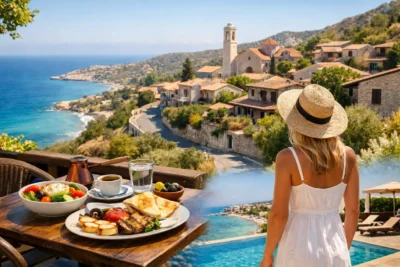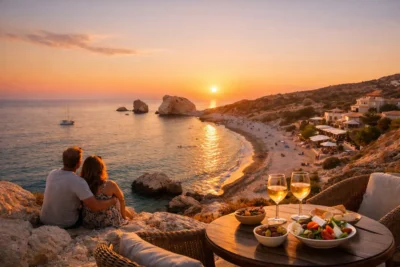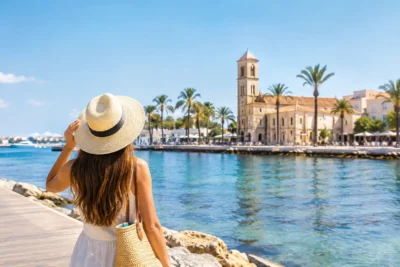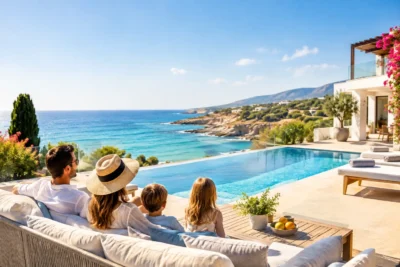

The eastern Mediterranean offers two very different holiday playgrounds just a short flight apart. Cyprus is a single island where visitors enjoy a long, hot summer and beaches with some of Europe’s clearest water. Greece is a mainland with roughly 3,000 islands and islets, 227 of which are inhabited. Each destination boasts its own history, cuisine and travel rhythms. This guide compares Cyprus and Greece across beach conditions, culture, food, logistics and cost to help you decide where to spend your next break.
Beaches & Weather
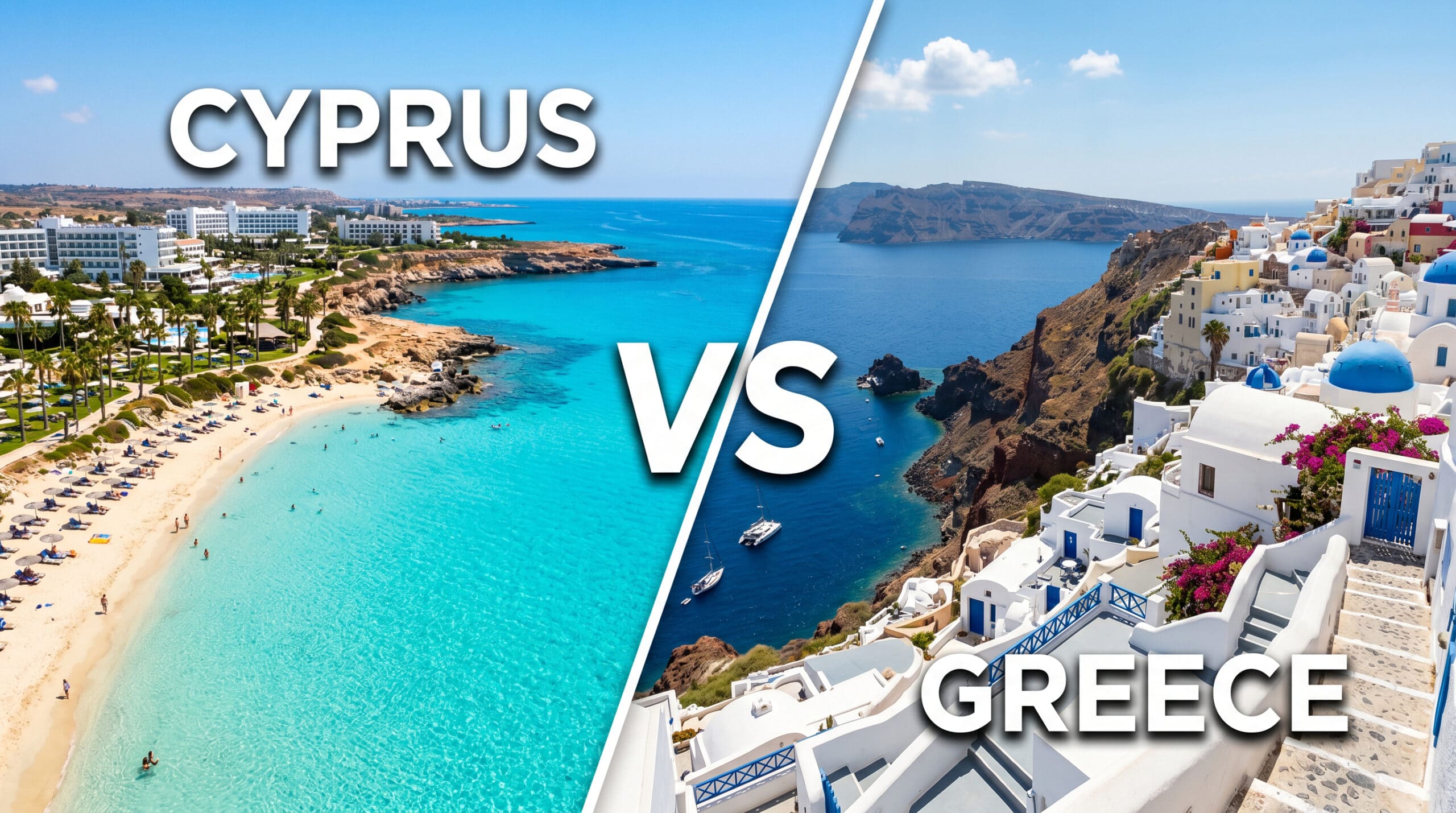
Cyprus sits further south than most Greek islands and enjoys a subtropical Mediterranean climate. Sunshine is abundant; between April and September bright sunshine lasts more than 12 hours per day and the warm season stretches from April to November. The island has pristine sands and calm turquoise water. In 2025 the international Blue Flag programme awarded Cyprus 56 beaches and two marinas and the European Commission rated 100 % of Cypriot bathing sites as “excellent” for water quality. Local favourites include Fig Tree Bay, Nissi Beach and Coral Bay.
Greece’s climate varies from island to island but generally has a Mediterranean pattern with hot, sunny summers and mild, rainy winters. On coastal islands January temperatures can be around 12.5 °C in Heraklion (Crete) but only 5.5 °C in northern Thessaloniki. Summer also brings the Meltemi, a strong north easterly wind that can roughen the Aegean Sea. Greece compensates with diversity: you can lounge on Crete’s Elafonisi pink sand beach or stare at Santorini’s volcanic cliffs.
Quick comparison of beach & weather highlights
Warm season: In Cyprus, the warm season lasts from April to November and includes long hot summers with abundant sunshine. Greece has hot summers but winters can vary.
Water and beaches: Cyprus boasts fine white sand beaches such as Fig Tree Bay and Nissi Beach, with many beaches awarded Blue Flag status. Greece offers diverse coastlines including pink sands and dramatic volcanic cliffs.
Sea conditions: The sea around Cyprus stays warm through October. In Greece the water can be cooler in some regions, and the Meltemi wind can create waves.
History & Culture
Cyprus
Cyprus has been fought over for millennia by Phoenicians, Persians, Greeks, Romans, Venetians and Ottomans, leaving an extraordinary archaeological legacy. The UNESCO listed archaeological park of Kato Paphos preserves the island’s Roman capital. Nea Pafos was founded at the end of the 4th century BC and later served as the administrative centre under Ptolemaic and Roman rule until earthquakes in the 4th century AD caused its decline. The site contains lavish villas with mosaics: the House of Dionysos built in the late second century covers about 2,000 m² and has 556 m² of mosaic floors depicting Dionysus and mythological scenes; the House of Orpheus contains mosaics showing Orpheus among animals and scenes of Heracles and an Amazon; and the Villa of Theseus has more than 100 rooms decorated with mosaics of Theseus fighting the Minotaur and of Poseidon with Amphitrite. Elsewhere the island showcases Bronze Age tombs, Crusader castles and Byzantine churches. Many visitors also appreciate that English is widely spoken in tourist areas.
Greece
Greece is the cradle of Western civilization. Its most famous monument, the Acropolis of Athens, stands on a limestone hill and dates back to the 5th century BCE. During the Classical period, the statesman Pericles rebuilt the site, erecting the Parthenon, Erechtheion and Temple of Athena Nike. The Acropolis later became a Roman religious centre, was converted into a Christian church in the Byzantine era and then a mosque under Ottoman rule. Beyond Athens, Greece offers hundreds of ancient temples, theatres and medieval monasteries scattered across the mainland and islands.
Food & Vibe
Cyprus cuisine
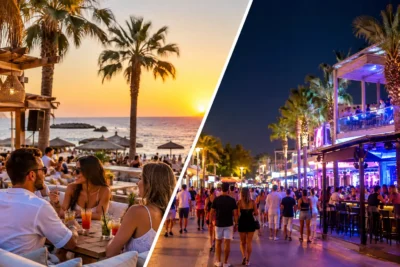
Cypriot dishes draw on Greek, Middle Eastern and Turkish traditions. The Cyprus Mail traces halloumi cheese back to 1554, noting that the semi hard sheep and goat cheese can be grilled and is often eaten with watermelon or stuffed into pita bread. Eating out usually means meze, a procession of small plates including tzatziki, hummus, tahini, grilled meats such as souvlaki and souvla, sheftalia sausage, kleftiko (slow cooked lamb), afelia (pork with red wine and coriander), macaroni tou fournou (baked pasta with halloumi), stuffed vine leaves (koupepia), okra stew (bamies) and much more. Meals typically end with zivania, an aniseed scented brandy, strong Greek coffee and sweets like loukoumades (doughnuts with honey) or fruit preserves. The atmosphere on the island is relaxed and resorts are geared toward English speaking families; nightlife centres on bars and tavernas rather than mega clubs.
Greek cuisine and nightlife
Greek food is famous for its fresh produce, olive oil and convivial sharing. Traditional meals begin with mezedes, or small plates of tzatziki, Greek salad with tomatoes, cucumbers and feta, feta filled pies like spanakopita (spinach) and tiropita (cheese), saganaki (fried cheese sometimes flambéed with ouzo), dolmadakia (stuffed grape leaves), fava (split pea purée) and keftedes (meatballs). Main dishes include moussaka and pastitsio (layered pasta and meat), souvlaki (skewered meat served on a plate or in pita with salad and tzatziki), gyros (spit roasted meat wrapped in pita with fries and sauce) and fresh fish or grilled octopus seasoned simply with olive oil, lemon and herbs. Dessert might be loukoumades drizzled with honey, baklava (layers of pastry, nuts and syrup) or galaktoboureko (custard pie). Dining often runs late into the night, especially in cities and on nightlife heavy islands like Mykonos or Ios. Tavernas spill onto squares and harbour fronts where live music and dancing continue past midnight.
Logistics & Convenience
Language
In Cyprus the official languages are Greek and Turkish, but English is extensively spoken in tourist areas, making communication easy for visitors. Greeks also speak English widely because it is taught as a mandatory second language in schools, so travellers should have little difficulty in cities and tourist regions. In rural Greek villages, however, fewer people are fluent; learning a few Greek phrases will be appreciated.
Getting around
Cyprus is a single island with a modern road network; visitors drive on the left. Hiring a car allows easy day trips between resorts, mountain villages and archaeological sites. Drivers should keep valuables hidden and follow local rules; horns are discouraged in residential areas. Crossing into the northern part of Cyprus may require additional insurance.
Greece consists of a mainland and numerous island groups (Ionian, Cycladic, Dodecanese, Saronic, Sporades and more). Planning a multi island trip requires coordination because different ferry companies operate varying schedules, and sailings can be cancelled due to weather. Flights between islands exist but are more expensive. On the mainland, public transport is reasonable but renting a car can provide flexibility.
Currency and visas
Both Cyprus and Greece use the euro; ATMs and card payments are widely accepted. Greece is part of the Schengen Area; Cyprus (as of 2026) is outside Schengen but allows entry on double or multiple entry Schengen visas. Travellers should always check current requirements.
Costs
According to cost of living data, Cyprus is about 16 % more expensive overall than Greece, with restaurants costing roughly 22 % more, groceries 19 % more and housing 31 % more. Visitors looking for a budget holiday or extended backpacking trip may find their money goes further in Greece, while Cyprus tends to offer higher end resort experiences.
Verdict: Which to Choose?
Selecting between Cyprus or Greece depends on priorities:
Beach lovers and families will appreciate Cyprus’ long hot summer, calm turquoise water, Blue Flag certified beaches and all inclusive resorts. Driving is easy and English is widely spoken, making it stress free for first time visitors.
History enthusiasts and culture seekers may lean toward Greece. The Acropolis of Athens, Delphi, Epidaurus and hundreds of archaeological sites trace the origins of Western architecture and philosophy. Island hopping allows you to experience ancient temples, medieval castles and monasteries.
Foodies and night owls will be happy in both countries. Cyprus offers a mellow meze culture with Middle Eastern spices and local halloumi, while Greece serves up a parade of mezedes, souvlaki, gyros and fresh seafood alongside lively tavernas and beach parties.
Adventurers who love exploring remote beaches, sailing between islands and discovering diverse landscapes will favour Greece’s varied archipelagos. Those seeking a single island base with easy road trips may prefer Cyprus.
Ultimately there is no objective “better”. Choose based on the experiences that matter most to you.