
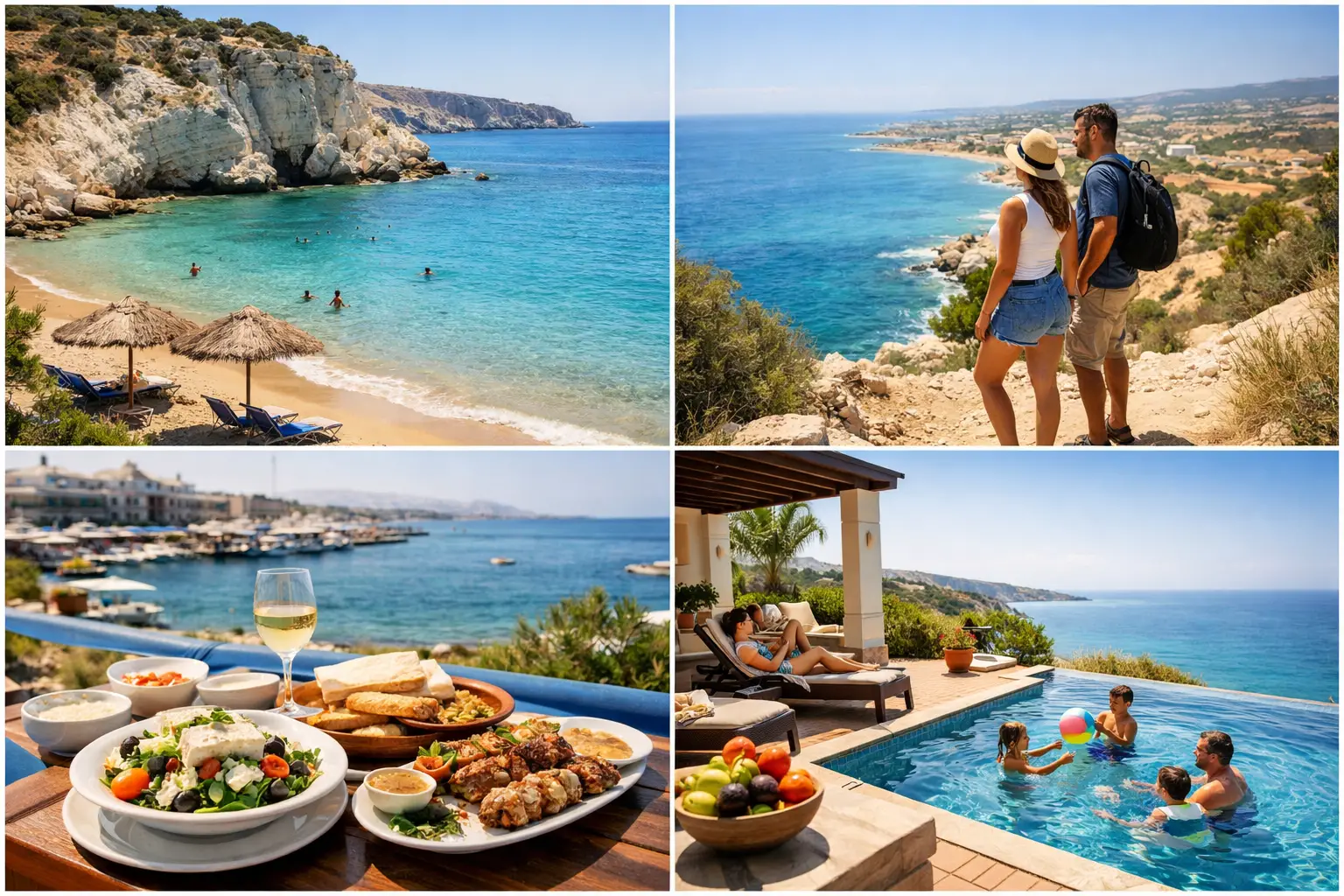
The best Cyprus holidays are rarely about seeing the whole island in one week. They are about choosing the right stretch of coast, leaving enough time for slow beach mornings and taverna evenings, and picking a home that suits the people you are travelling with. A family with young children will want something quite different from a couple planning long lunches, coastal walks and a few lively nights out.
Cyprus is wonderfully straightforward once you understand its different areas. The sea is a big part of the appeal, but there is plenty beyond the sun lounger: village food, archaeological sites, mountain air, harbour walks and days that can be as busy or as quiet as you like. Here is how to shape a holiday in the Republic of Cyprus around what you actually enjoy.
Choose the coast that suits your holiday
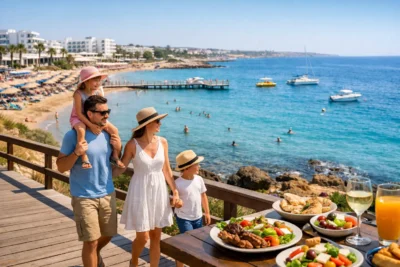
The east coast is a strong choice if clear water and easy beach days are high on your list. Protaras is known for sandy bays, calm swimming spots and a relaxed, family-friendly feel. Fig Tree Bay is popular for good reason, though smaller coves nearby can be a better fit when you want a quieter afternoon. It works particularly well for families, couples and groups who want restaurants and shops close by without staying in the middle of a party resort.
Pernera, Ayia Triada and Kapparis offer a more laid-back base nearby. These areas have a neighbourhood feel, with seafront paths, local places to eat and plenty of self-catering convenience. They are a sensible option for travellers who like to cook some meals at home, walk out for dinner and keep a car close for exploring.
Ayia Napa has more than its nightlife reputation suggests. Its beaches are among the island’s finest, from the wide sands at Nissi to the coves around Makronissos, while the harbour and sculpture park offer gentler ways to spend an evening. Stay slightly outside the busiest centre if you want access to the beaches and restaurants without the late-night noise.
For a quieter east-coast stay, Ayia Thekla is worth considering. It is less built up, with a more open shoreline and a peaceful pace. It suits couples, families and groups who value a private villa stay and do not mind driving a little for a bigger choice of restaurants or attractions.
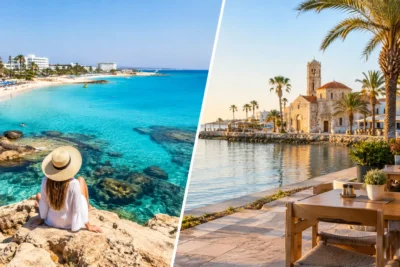
Larnaca is a good all-rounder for shorter breaks and for travellers who prefer a working coastal city to a purpose-built resort. The palm-lined seafront, marina, cafés and salt lake give it more everyday life, while the airport is conveniently close. It may not be the first choice for a classic resort holiday, but it is an easy base for a few days of eating out, sightseeing and beach time.
Further west, Limassol brings city energy, a long promenade and a good restaurant scene. Paphos combines a resort atmosphere with ancient sites, harbour views and access to the Akamas area. Both are better choices if you want beaches alongside broader sightseeing, although the east coast generally wins for soft sand and bright turquoise water.
When to go on Cyprus holidays
The long sunny season is one of Cyprus’s great strengths, but the best month depends on how you like to spend your days. May and June are excellent for warm weather without the full intensity of high summer. The sea is warming up, wild landscapes have not yet turned completely golden, and restaurants and attractions are open and lively.
July and August are for proper summer heat. This is when families tied to school holidays arrive, pools become essential and early beach starts make sense. If you are travelling at this time, choose accommodation with good outdoor shade, air conditioning and space to relax during the hottest part of the day. Busy beaches are at their fullest, so a short walk to a smaller cove can be worthwhile.
September is often a favourite with regular visitors. The sea is beautifully warm after summer, the heat is usually more manageable, and the mood softens as the school-holiday rush eases. October can also be lovely for swimming, coastal walks and eating outside, though evenings may call for a light layer.
Winter is not beach weather every day, but it has its own rewards. Coastal towns are quieter, archaeological sites are easier to enjoy and the Troodos mountains can even see snow. It is a better season for a touring break than a sun-and-sea week, particularly if you are happy with changeable weather.
Plan beach days with a little flexibility
Cyprus has famous beaches, but the most enjoyable day is not always at the busiest one. On the east coast, arrive early at popular bays in summer, especially if you need parking or prefer a particular spot in the shade. The water is generally calm and clear, but always keep an eye on flags, conditions and children near the shore.
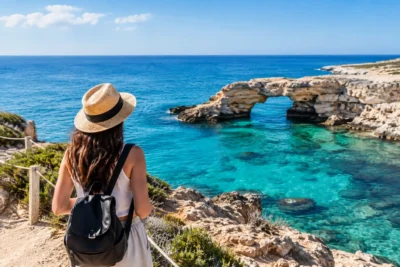
Cape Greco is ideal when you want a break from sand. The national forest park has sea caves, viewpoints and paths above the water, with dramatic scenery between Protaras and Ayia Napa. Take water, sun protection and suitable footwear. It is beautiful, but exposed, and the rocky coastline is not the place for risky jumps or swimming in rough conditions.
For families, mix headline beaches with easier days close to your accommodation. A morning swim, lunch at home, a pool afternoon and an early dinner is often more enjoyable than trying to fill every hour. Cyprus runs at a slower pace in the heat, and there is no prize for an over-planned itinerary.
Make room for food, villages and the inland side of Cyprus
A holiday based on the coast should still include at least one day away from it. The Troodos region is a refreshing change, especially in summer, with cooler air, stone villages and tavernas where a long lunch feels entirely appropriate. The drive takes time from the eastern resorts, so treat it as a full day rather than trying to squeeze it in between beach plans.
For a shorter outing, Paralimni offers a glimpse of local life beyond the resort strip. Larnaca’s old town and salt lake make an easy combination, while Paphos has archaeological sites that reward even visitors who are not usually keen on history. Ancient mosaics, forts and old churches tend to be more memorable when balanced with a relaxed lunch rather than rushed from one landmark to the next.
Food is best approached with curiosity and a little patience. Order a meze when you have time to linger, but remember that it is a generous, gradual meal rather than a quick starter. Look for seasonal vegetables, grilled halloumi, village sausages, fish by the coast and slow-cooked dishes such as kleftiko. In popular areas, some restaurants cater heavily for visitors, so a place with local families at the tables is often a promising sign.
Pick accommodation around the way you travel
Where you stay affects the rhythm of the whole week. A hotel can suit a short break when you want everything on site, but a villa or flat gives families and groups more room to settle in. A kitchen helps with breakfasts and easy lunches, separate bedrooms make afternoons calmer, and a private pool can transform a hot summer day.
Location matters as much as the home itself. Being walking distance from a bakery, supermarket, beach or evening restaurant can save more holiday time than having a long list of facilities. On the other hand, a quieter villa slightly outside a resort may be perfect if you have a hire car and value privacy. Cyprus drives on the left, which many British visitors find reassuring, but allow time for unfamiliar roads and avoid treating mountain drives as quick detours.
Booking directly can also make the choice clearer. ElloCyprus offers carefully managed villas and flats in popular areas of the Republic of Cyprus, with local support and no unnecessary guest booking fees added by a middle layer. It is a practical way to find a holiday home while dealing with a team that knows the area around it.
A simple rhythm for a week in Cyprus
For a first visit, do not try to cover every region. Give yourself three or four beach-focused days, one day for Cape Greco or a boat trip where conditions allow, and one inland or cultural day. Keep another day free. It can become your second visit to a favourite beach, a late breakfast followed by the pool, or the evening you finally book the taverna you noticed on your first walk.
That breathing room is what makes a Cyprus holiday feel easy. Choose a base that matches your pace, plan just enough to avoid missing the places that matter to you, and leave space for the unexpectedly good swim, sunset walk or long dinner that will probably become the part you remember most.