
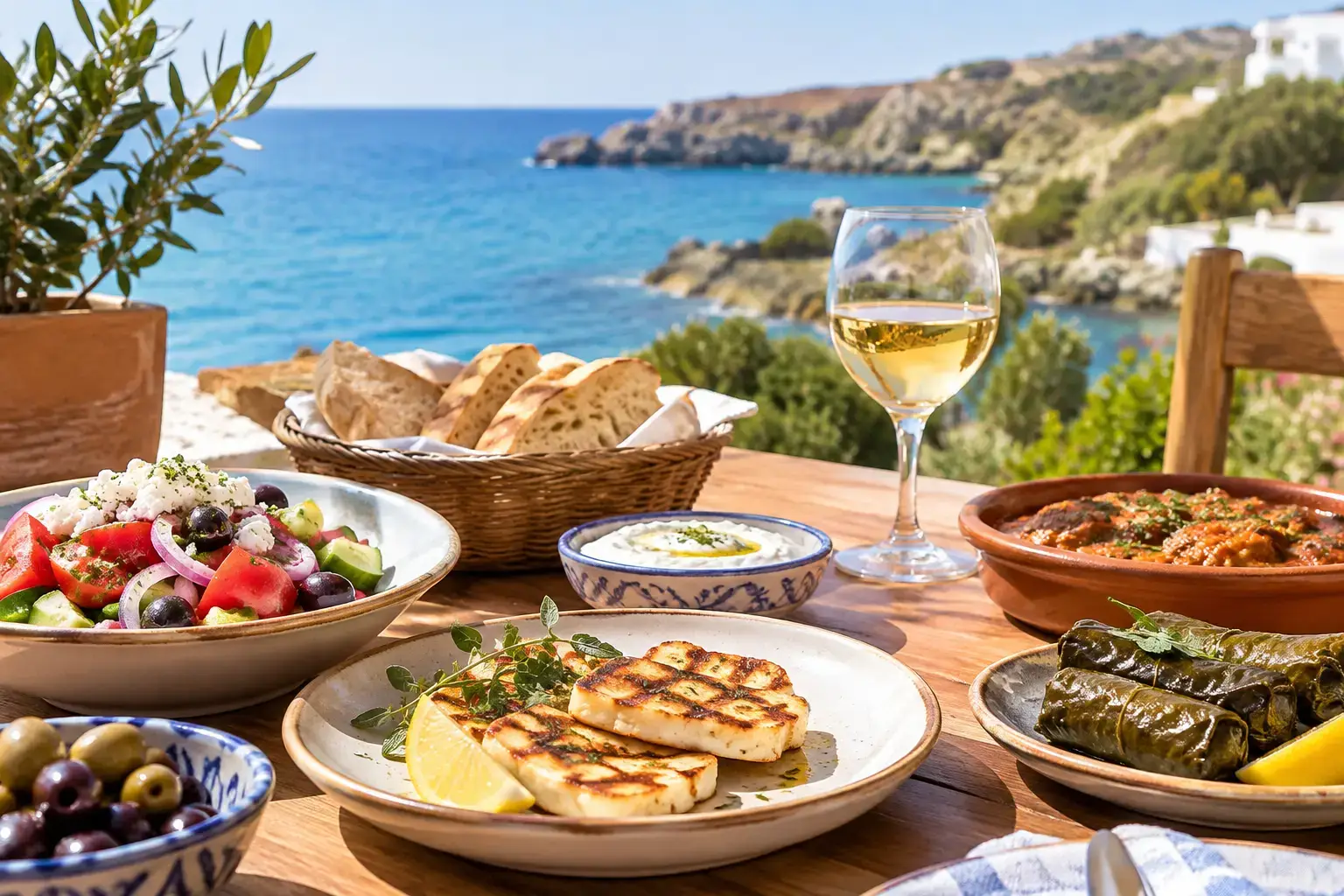
A Cyprus meal is rarely about rushing through one dish. It is about grilled halloumi arriving before you have chosen a main, bread ready for mopping up olive oil, and a table that somehow keeps finding room for one more plate. The best local foods Cyprus offers are comforting, generous and tied closely to the island’s villages, family kitchens and long summer evenings.
You will see plenty of familiar Mediterranean dishes on menus, but the details matter. Cyprus cooking has its own character: pork marinated with coriander, cheese made for the grill, vine leaves filled with fragrant rice, and slow-cooked meat that falls away from the bone. Here is what to look for, where it is most likely to shine, and how to order with confidence.
Start with halloumi, but order it properly
Halloumi is Cyprus’s best-known food for good reason, but a holiday here is the moment to try it beyond the supermarket version. Fresh halloumi is mild, springy and lightly salty, often served with watermelon in summer or sliced into a village salad. Grilled halloumi has a golden crust, a soft centre and enough saltiness to work beautifully with lemon.
At a traditional taverna, look for halloumi cooked on charcoal or served with lountza, the island’s smoked and cured pork loin. The combination is simple but very Cypriot. In the mountain villages, you may also come across anari, a softer fresh cheese that can be eaten savoury with olive oil or sweet with honey and nuts.
If you are travelling with children or fussy eaters, halloumi is usually an easy first order. Ask for it grilled rather than fried if you prefer something lighter on a hot day.
Kleftiko is worth planning a meal around
Kleftiko is slow-roasted lamb, traditionally cooked in a sealed clay oven with potatoes, herbs and lemon. The name is linked to the old practice of cooking meat secretly in the ground, but what matters at the table is the texture: tender lamb, soft potatoes and all the flavour that has collected during hours of cooking.
Good kleftiko cannot be hurried. Some tavernas make it only on certain days or serve it until it sells out, so it is worth asking when booking a table. It is a particularly satisfying choice in the cooler months, or after a day exploring the Troodos villages. In coastal areas such as Protaras, Pernera and Larnaca, it also makes a lovely change from fish and grilled food.
For another slow-cooked pork dish, try afelia. Cubes of pork are braised in red wine with crushed coriander seeds, giving the sauce a warm, aromatic flavour rather than a sharp spice. It is commonly served with bulgur wheat or potatoes.
The best local foods in Cyprus for a shared table
A Cypriot meze is not one fixed dish. It is a sequence of small plates that can begin with dips and salad, move through vegetables, cheese and grilled meats, then finish with fruit or a little dessert. It is one of the best ways to taste local cooking, especially on your first few nights.
A good meze may include tahini, taramosalata, tzatziki, olives, village salad, fried courgettes, mushrooms, sausages, sheftalia, souvlaki and seasonal vegetables. Fish meze follows the same generous idea but centres on the day’s catch, calamari, prawns and small fried fish.
The trade-off is quantity. A full meze is designed for lingering and can be far more food than expected, particularly at lunch in the heat. It is often best shared by the whole table, with no need to order extra starters. Tell the taverna if anyone is vegetarian, does not eat pork or has an allergy before the meal begins, as many plates are chosen by the kitchen.
Sheftalia and souvlaki
Sheftalia is a Cyprus favourite that deserves its own mention. It is seasoned minced pork, sometimes mixed with lamb, wrapped in caul fat and grilled over charcoal. The outside turns crisp while the centre stays juicy. It is usually served in pitta bread with salad, lemon and sometimes a little yoghurt sauce.
Souvlaki in Cyprus is also charcoal-grilled, but it generally means cubes of meat on a skewer rather than the minced kebab some visitors expect. Pork is the classic choice, although chicken is widely available. For an informal lunch after the beach, a pitta with souvlaki or sheftalia is filling without requiring a long sit-down meal.
Do not miss koupepia and village comfort food
Koupepia are vine leaves wrapped around rice, minced meat, tomatoes and herbs, then gently cooked until tender. They are similar to dolmades found elsewhere in the eastern Mediterranean, but every Cypriot family has its preferred balance of filling, lemon and seasoning. They are especially good as part of a home-style lunch, alongside yoghurt and salad.
Another dish to seek out is yiouvetsi, meat cooked slowly with orzo in a rich tomato sauce. Stifado, usually rabbit or beef cooked with small onions, wine and spices, is another traditional option, though availability varies from one taverna to another. These are dishes that suit a village restaurant with a shaded terrace more than a quick seafront stop.
For a meat-free local plate, look for louvi. This simple black-eyed bean dish is often cooked with courgette, chard or other greens and served with lemon, olive oil and bread. It may not sound flashy, but when made well it is fresh, nourishing and exactly the sort of food Cypriots happily eat at home.
Seafood is best kept simple
Along the coast, fish is often at its best when it is treated with very little fuss. Grilled sea bream, sea bass, red mullet and swordfish may appear depending on the catch and season. Octopus is commonly grilled or braised in red wine, while calamari can be grilled or lightly fried.
Ask what was landed or delivered that day rather than assuming every fish on a large menu is local. A smaller selection can be a good sign. In Ayia Napa, Protaras, Pernera and Larnaca, a fish taverna near the water can be a relaxed choice for an early evening meal, but the view alone does not guarantee quality. Look for a menu that names the fish clearly and staff who can explain how it is cooked.
Seafood meze is ideal for groups who want variety, but it may include shellfish and fried items. If you prefer grilled fish and a quieter meal, ordering one whole fish with salad and potatoes can be the better choice.
Save room for Cyprus sweets and coffee
Cyprus desserts tend to be modest in size but generous in flavour. Loukoumades are small dough balls fried until golden and finished with syrup, honey, cinnamon or nuts. They are best eaten freshly made, when the outside is crisp and the middle is still warm.
For something more traditional, try glyko tou koutaliou, literally “spoon sweet”. Fruit, nuts or even vegetables are preserved in syrup and served in a small spoonful with a glass of water or coffee. Walnut, sour cherry, bergamot and grape are common choices. It is a lovely village treat rather than a large pudding.
Pastelli is another local sweet worth seeking out, especially around Lefkara. It is made from carob syrup and sesame, with a chewy texture and deep caramel-like flavour. Carob trees have long been part of Cyprus’s food heritage, so it makes a more distinctive souvenir than a standard box of sweets.
Finish with a Cyprus coffee if you enjoy strong, unfiltered coffee. It comes in a small cup, often sweetened to your preference, with grounds settling at the bottom. Do not drink the last mouthful. If you would rather have something cold, fresh lemonade and almond-based soumada are both refreshing alternatives.
How to find the food locals return for
The most memorable meals are often found slightly away from the busiest promenade. Look for tavernas with short, focused menus, seasonal specials and families sharing food at neighbouring tables. A handwritten list of the day’s cooked dishes can be more promising than a menu with pages of international options.
Lunch is a good time for village dishes such as afelia, koupepia and louvi, while evenings suit charcoal grills, meze and seafood. During peak summer, book popular traditional tavernas in advance, particularly if you are a larger family or group. Eating a little earlier can also make the experience calmer for young children.
A self-catering stay gives you another easy way to taste Cyprus. Pick up halloumi, local tomatoes, olives, village bread, seasonal grapes and a bottle of Cypriot wine for a simple balcony supper. When you book a carefully selected villa or flat directly with ElloCyprus, that extra space to cook, share and slow down can become part of the holiday itself.
Order the dish that sounds unfamiliar, ask what is homemade that day, and leave room for a spoon sweet with your coffee. Cyprus food is at its best when you give the table, and the evening, a little time.