
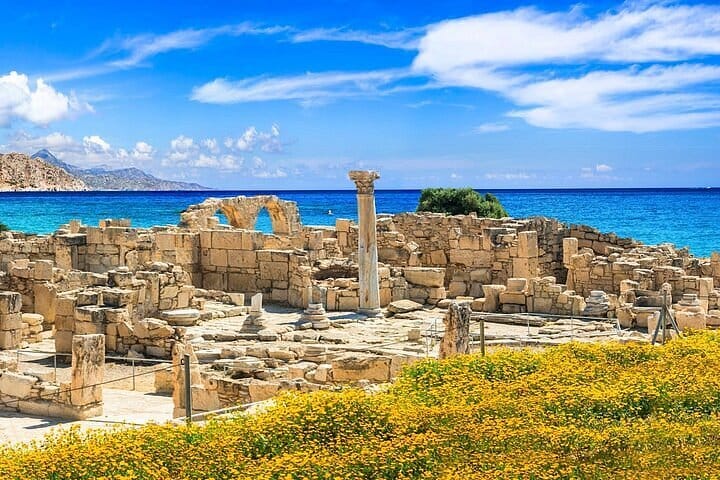
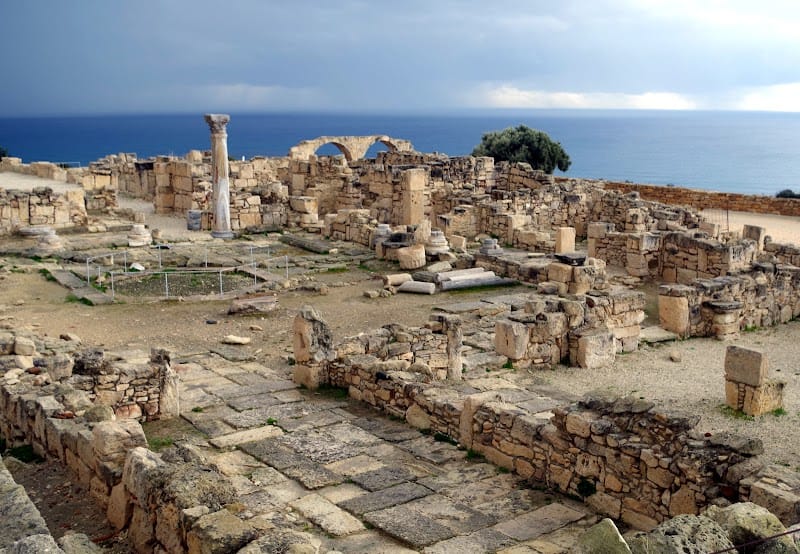
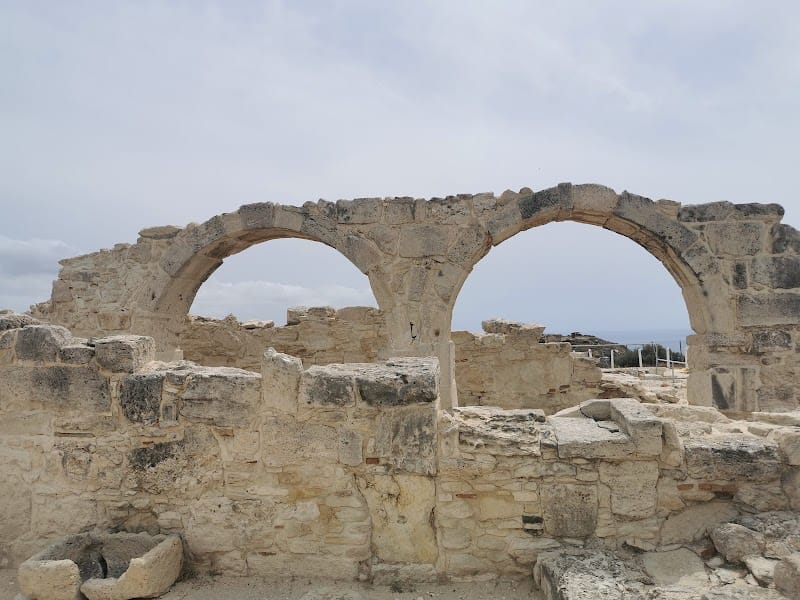
Kourion is one of the most impressive archaeological sites in Cyprus, and for good reason. Set on a dramatic hilltop above the fertile Kouris River valley, this ancient city kingdom once held an important place in the island’s history. Today, its remarkable ruins, sweeping coastal views, and beautifully preserved monuments make it one of the most memorable places to visit near Limassol.
What makes it special
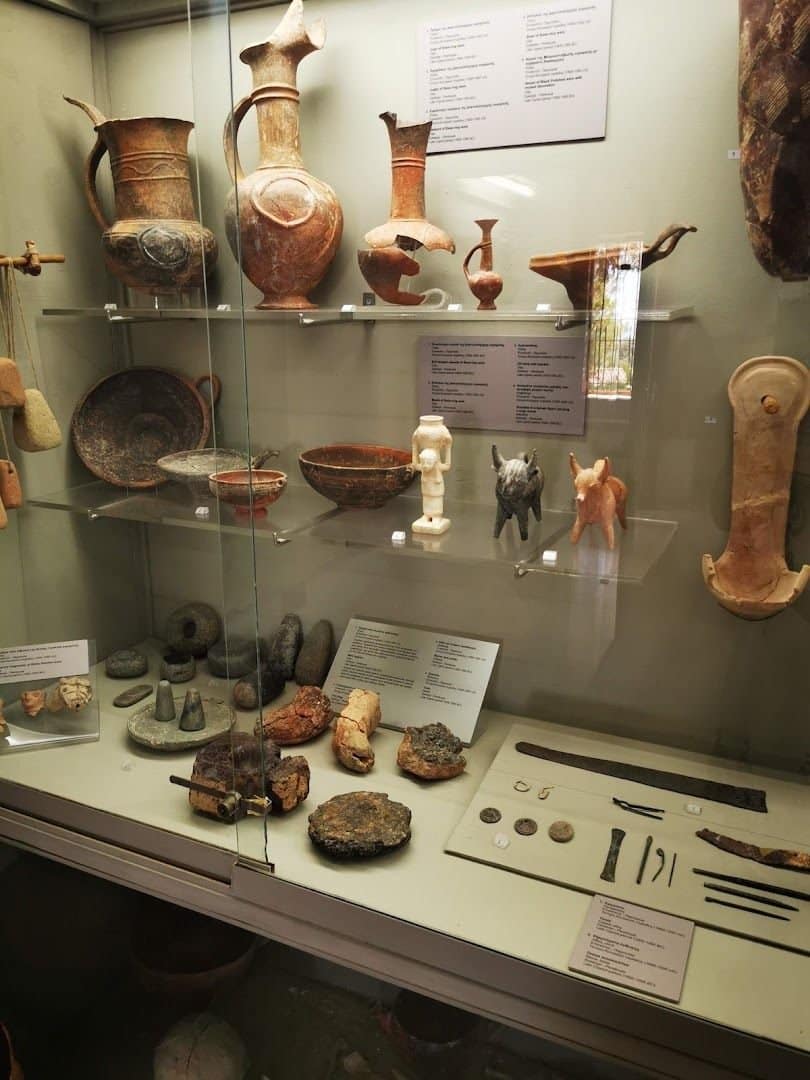
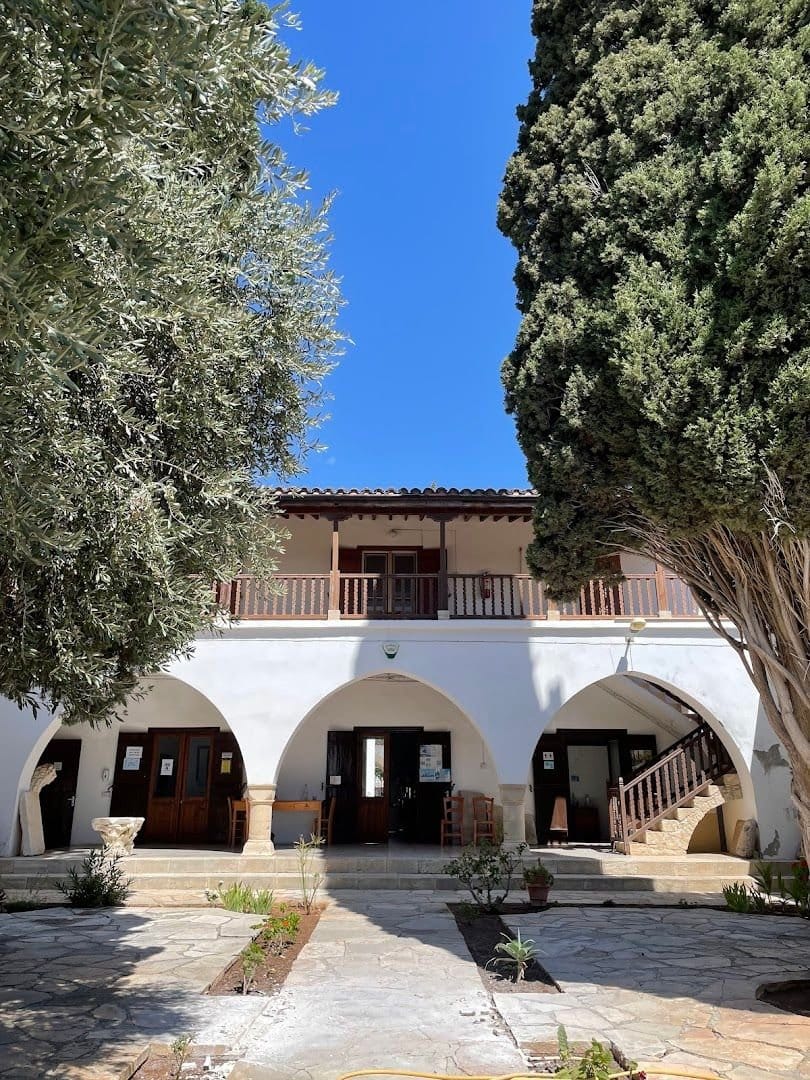
A key reason this place stands out is explore a small but qualitative collection displaying the history of Kourion through various artifacts.
A key reason this place stands out is the chance to a captivating view of Curion Beach from the museum location.
What stands out here is interact with friendly and knowledgeable staff who provide valuable insights into the site's history.
Archaeological evidence links Kourion to the Greek legend of Argos in the Peloponnese, and its ancient inhabitants believed they were descendants of Argean settlers. The city flourished for centuries before suffering major destruction in the earthquake of 365 AD, which marked the decline of this once thriving kingdom.
What to see at Kourion
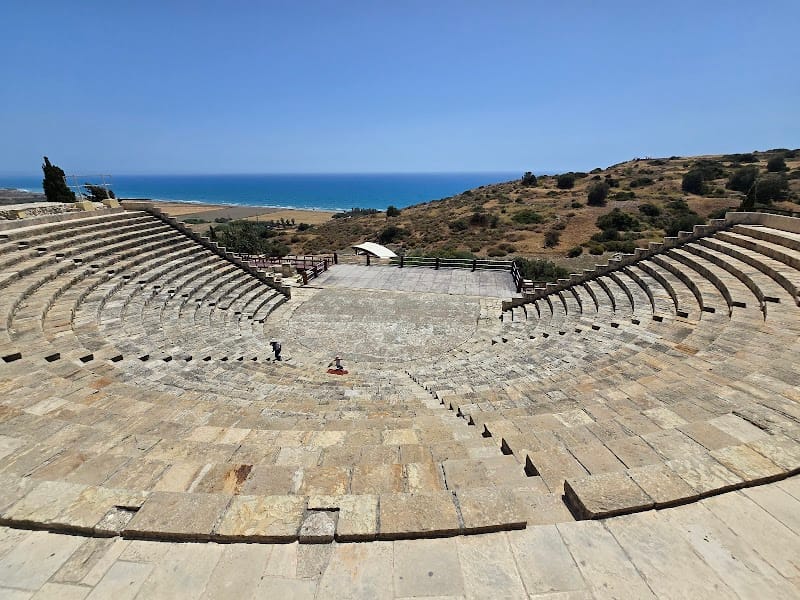
The most famous landmark at the site is the magnificent Greco Roman theatre. Originally built in the 2nd century BC and expanded during the 2nd century AD, it remains the centrepiece of Kourion. Fully restored, the theatre is still used today for open air concerts and performances during the summer, combining ancient history with one of the most spectacular cultural settings in Cyprus. It is also known for its excellent acoustics and breathtaking views over the coastline.
Just east of the theatre, you can explore the House of Eustolios, one of the most important buildings at Kourion. It began as a private villa and was later turned into a public recreation centre during the Early Christian period. Although modest in size, it was richly decorated and well equipped. Visitors can still see beautiful 5th century mosaic floors, along with the remains of its bathing complex.
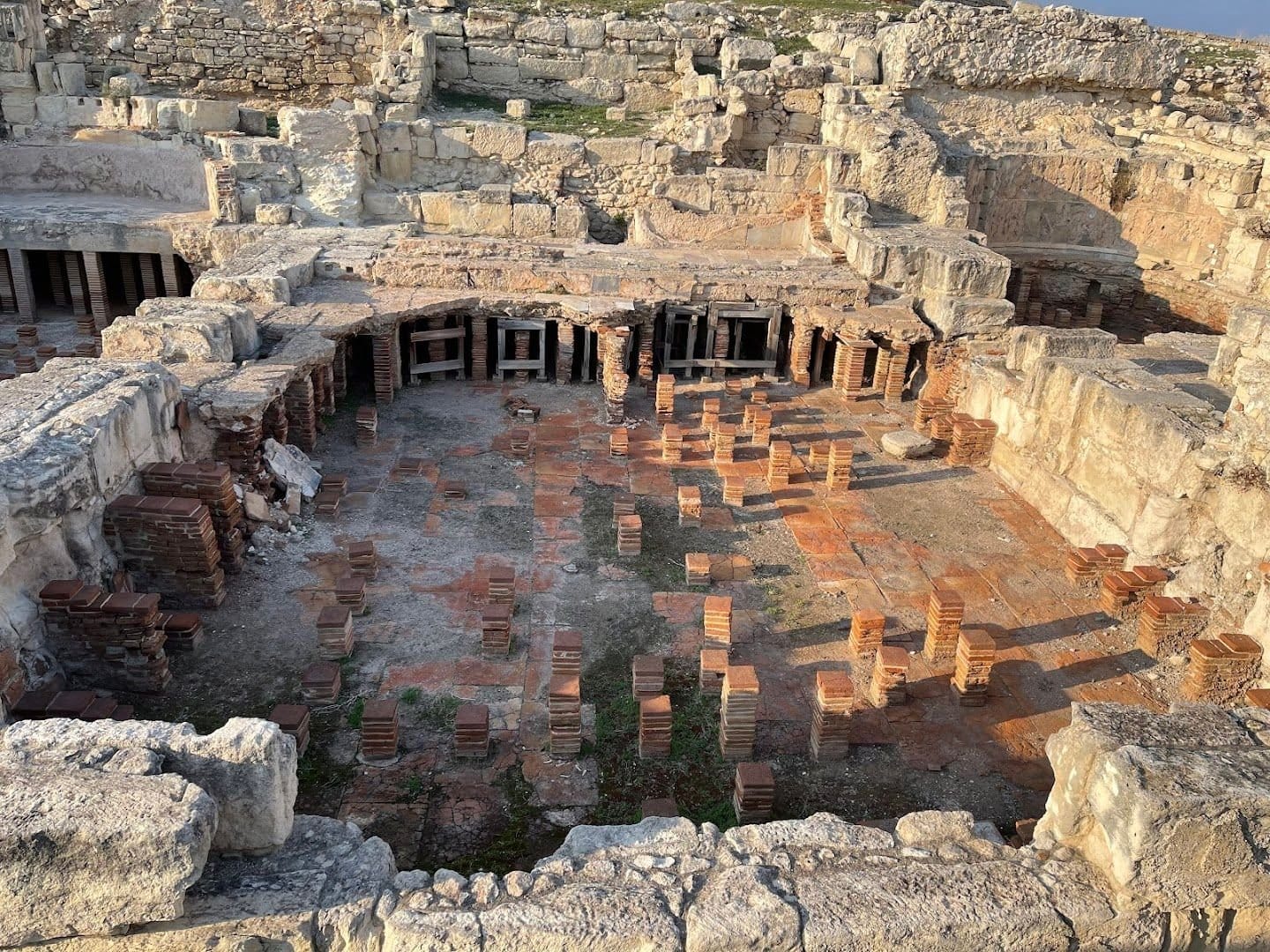
The bath area reveals how advanced Roman engineering was at the time. There were cold baths, a warm room, and a hot room, all supported by a hypocaust heating system that carried warm air beneath the floors and through channels in the walls. Built in basins for hot baths and parts of the firing chambers can still be seen today.
Other highlights of the site include the House of Achilles and the House of the Gladiators, both known for their striking mosaic floors and named after the scenes shown in their decoration. These villas offer another glimpse into the artistic and domestic life of ancient Kourion.
The remains of the Roman Agora are also worth seeing. Dating mainly to the early 3rd century, this central public space was built over earlier structures and later developed further during the Early Christian period. The agora was surrounded by porticos with marble columns, while nearby stood an impressive public bath and a small Nymphaeum dedicated to the water nymphs.
Elsewhere on the site, visitors can explore the remains of an early Christian basilica from the 5th century, complete with a separate baptistery on its northern side. Around 1 kilometre west of the main site, the Stadium of Kourion can also be visited on the road towards Paphos.
Why visit Kourion
Kourion is more than just an ancient ruin. It is one of the most iconic and photographed heritage sites in Cyprus, combining history, architecture, archaeology, and panoramic scenery in one place. From Roman baths and elegant mosaics to the famous theatre overlooking the sea, every part of the site tells a story of the island’s rich past.
It is an excellent choice for travellers who want to experience one of Cyprus’s most important historical attractions, whether you are interested in archaeology or simply looking for a place that feels truly unforgettable.
Know before you go
Kourion is located around 19 kilometres west of Limassol on the road towards Paphos. The site is open all year round, although it closes on Christmas Day, New Year’s Day, and Greek Orthodox Easter Sunday. Opening hours usually vary by season, with longer hours in summer. There is an entrance fee, and discounted rates are available for larger organised groups. Multi site entry cards for museums and ancient monuments may also be available through the Department of Antiquities.
Accessibility is partly available, though some areas may be uneven due to the nature of the archaeological remains. As opening times and ticket prices can change, it is best to check before visiting.
Kourion remains one of the true highlights of Cyprus and a place that deserves a spot on any island itinerary. For travellers exploring the island, it is one of those sites that easily lives up to its reputation.