The last thing anyone wants after landing in Larnaca or Paphos is a tired child, a queue at the car-hire desk and a car seat that does not fit properly. Understanding the Cyprus car seat rules before you travel makes the first drive to your villa or flat much calmer – especially if you are heading straight for Protaras, Ayia Napa or the coast with sleepy little ones in tow.
This is a practical family guide to the rules, the sensible safety checks and the small details that are easy to miss when hiring a car in the Republic of Cyprus.
The Cyprus car seat rules in simple terms
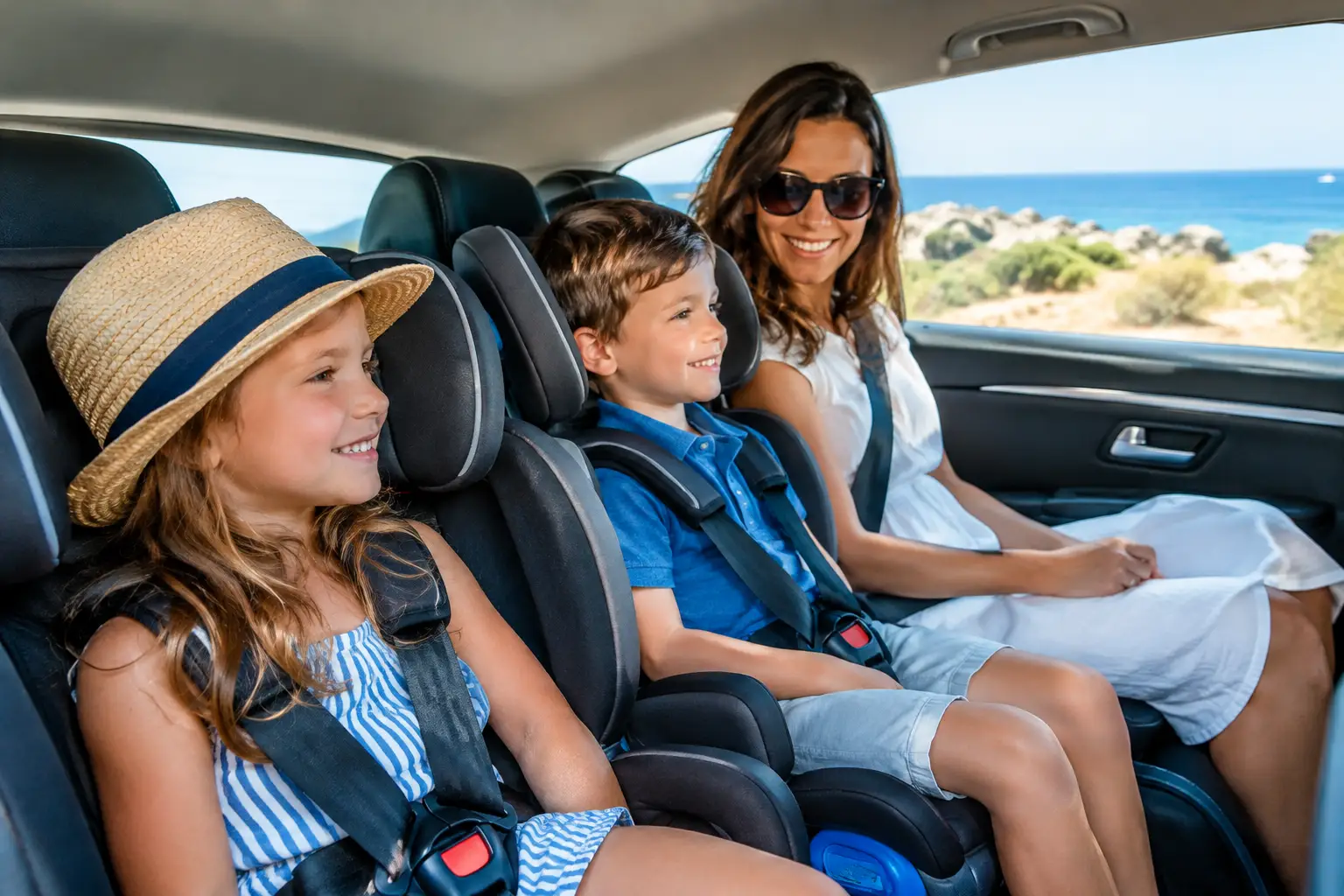
In the Republic of Cyprus, children under 150 cm tall must travel in a suitable child restraint. That means a properly fitted baby seat, child seat or booster seat chosen for the child’s size and weight, rather than simply their age.
The key point is height. A child may be old enough to seem independent, but if they are under 150 cm they still need the right restraint. Once a child is tall enough to use an adult seat belt safely, the belt should sit across the middle of the shoulder and low across the hips, not against the neck or stomach.
The driver is responsible for making sure young passengers are safely restrained. This applies whether you are in your own car, a hire car or a car borrowed from family or friends.
Car-seat standards and guidance can change, so it is sensible to check the latest position with your hire company before travelling, particularly if your child is close to the 150 cm threshold or has specific needs. But as a straightforward holiday rule: if your child normally uses a car seat or booster at home, plan for them to use one in Cyprus too.
Where should children sit in the car?
For most families, the rear seats are the simplest and safest place for children to travel. It also makes life easier when loading beach bags, water bottles and the inevitable collection of pool toys.
A rear-facing seat should never be used on a front passenger seat with an active front airbag. This is a serious safety risk. If a rear-facing seat must go in the front, the airbag needs to be switched off first, and you should confirm that the particular vehicle allows this arrangement.
Older children using a forward-facing seat or booster can sometimes travel in the front if the restraint is fitted correctly and the seat position is suitable. However, it is usually best to keep children in the back where possible. In a compact hire car, fitting three child seats across the rear bench may be difficult, so choose the vehicle around your family rather than just the number of suitcases.
Book the right seat with your hire car
Do not leave child-seat arrangements until you arrive. During busy school-holiday periods, demand is high and a hire company may have a limited choice of sizes. Request each seat when you book the vehicle and give the ages, weights and heights of your children where the booking form allows it.
There is a real difference between an infant carrier, a rear-facing toddler seat, a forward-facing child seat and a booster. A vague request for “one child seat” can leave room for misunderstanding. If your child is at an in-between stage, explain what they use at home and whether they need a harness or a high-backed booster.
It is also worth asking whether the car has ISOFIX points. Many modern vehicles do, but not every rear seating position will necessarily have them. If you are bringing your own ISOFIX seat, check both that it is approved for travel and that the base or connectors will suit the vehicle supplied.
Check the seat before you drive away
At collection, take a few quiet minutes to inspect the seat before setting off. This matters more than getting out of the airport car park quickly.
Check that the seat is appropriate for your child, has no obvious damage, and comes with the correct harness, buckle and inserts. Make sure it is installed tightly, following the seat instructions, and that the harness sits snugly over your child’s shoulders. Thick jackets should come off before fastening a harness, even in winter, as they can make the straps less effective.
If the seat feels loose, the buckle sticks or you cannot work out the fitting, ask a member of staff for help and do not feel rushed into accepting it. Take a quick photo of the installed seat if you need to remember its setup later in the holiday.
Should you bring your own car seat to Cyprus?
For a baby or a child who needs a particular seat, bringing your own can offer reassurance. You know its history, how it fits your child and how to adjust it properly. This can be especially helpful for very young babies, children who are small for their age, or anyone who needs a specialist restraint.
The trade-off is luggage. A car seat can be awkward to carry through an airport, and airline policies differ on whether it can be checked free of charge. Some parents use a protective travel bag, while others book a seat for the child and use an approved restraint on the flight. Check the airline’s rules well before departure.
Hiring a seat locally is often the easier option for families travelling light or staying for a short break. Just do not assume the supplied seat will be the exact make or style shown in a booking photo. Ask what category is guaranteed, then inspect the actual seat carefully at collection.
Driving in Cyprus with children on board
Cyprus drives on the left, as in the UK. For British families, that removes one major adjustment, although the summer heat, unfamiliar roads and holiday excitement can still make the first journey feel busy.
Plan a short stop if you have a longer transfer from the airport. Children can become uncomfortable quickly in the heat, particularly after a flight. Keep drinking water within reach, use window shades where appropriate and avoid leaving a child alone in a parked car for any length of time. Interiors heat up remarkably fast under the Cypriot sun.
If you are staying in Protaras, Pernera, Kapparis or Ayia Napa, many everyday journeys are short, but that does not make restraints optional. The drive to the supermarket, a beach a few minutes away or dinner in a nearby village still requires everyone to be correctly belted in.
Take extra care on rural roads and when driving after dark. Lighting can be limited outside built-up areas, and a relaxed evening meal can run later than expected with children. A properly fitted seat gives you one less thing to worry about.
Taxis, transfers and day trips
Do not assume a taxi or private transfer will automatically have a child seat. Arrange it in advance and be specific about your child’s needs. A transfer company may have seats available, but availability and suitability must be confirmed before the journey.
If you are travelling with an infant, taking your own seat can be the most straightforward choice for the airport transfer as well as the hire car. Families who plan to use taxis throughout their stay should discuss child restraints with each provider before booking rather than trying to solve it on arrival.
For a day out to Cape Greco, a water park, a mountain village or a beach beyond your local area, the same principle applies: the right seat is part of the journey, not an optional extra for long drives.
A quick family checklist before departure
Before you fly, confirm the child-seat booking with the hire company, note each child’s current height and weight, and decide whether to bring your own restraint. Pack a small towel or muslin too – useful for protecting a hot buckle or a sun-warmed seat while you get everyone settled.
When choosing a holiday home, think about the journeys you actually want to make. A well-located villa or flat can mean fewer car trips and more time by the pool, at the beach or walking out for dinner. ElloCyprus offers carefully selected homes across popular coastal areas, with direct booking and local support when you need practical help planning a family stay.
A safe, correctly fitted car seat may not be the most exciting part of a Cyprus holiday, but it is one of the easiest ways to begin it with confidence. Get it sorted before you land, then save your energy for the sea, the sunshine and the small family moments that make the trip yours.