
The answer to when to visit Cyprus coast depends less on whether the sun will be out – it usually is – and more on the kind of holiday you want. Are you picturing long, lazy beach days with warm evening swims? A quieter coastal break with walks around Cape Greco? Or a family week where the sea is comfortable, restaurants are open and the days are not too hot for little ones?
Cyprus has one of the longest holiday seasons in the Mediterranean, but each part of the year has its own character. The east coast around Protaras, Pernera, Kapparis, Ayia Napa and Ayia Thekla is at its liveliest in high summer, while spring and autumn bring gentler temperatures and more space on the sand.
When to Visit Cyprus Coast: The Short Answer
For classic beach weather and reliably warm sea, visit from late May to October. June and September are often the sweet spots: the weather is properly summery, the water is lovely for swimming, and the busiest school-holiday weeks have either not arrived or are beginning to ease.
Families tied to school holidays will find July and August excellent for a full-on beach holiday, as long as they are happy with high temperatures and busier resorts. Couples, walkers and visitors who prefer relaxed lunches over peak heat will usually enjoy April, May, late September and October most.
Winter is not beach weather in the usual sense, yet Cyprus can still be a rewarding choice for a peaceful coastal stay, especially for visitors who value sunshine, scenery and local life over swimming every day.
Spring: April and May for Sunshine Without the Intense Heat
Spring arrives early on the Cyprus coast. By April, days can feel pleasantly warm, particularly around sheltered bays in Protaras and Ayia Triada, though evenings may still call for a light layer. The countryside is greener than it will be later in the year, wild flowers are still visible in many open areas, and coastal paths are much more comfortable than in midsummer.
April suits active travellers, couples and families travelling outside the school break. You can explore the Cape Greco sea caves, take an unhurried walk by the water or enjoy a long lunch without feeling that the heat is dictating the day. Swimming is possible for the brave, but the sea can feel fresh after winter.
May is a real turning point. The days become warmer, beach facilities are more consistently open, and the sea starts to feel inviting rather than merely refreshing. It is a particularly good month for visitors who want a villa with a pool and the option of beach time, day trips and evenings outdoors. The trade-off is that sea temperatures are not yet as warm as they are from June onwards.
Summer: June to August for Proper Beach Holidays
June is one of the best all-round months on the coast. Days are hot and bright, rain is highly unlikely, and the sea is warm enough for long swims, snorkelling and paddling with children. Resorts have a cheerful energy, but the busiest part of the season is still ahead.
July and August are for sun lovers. Temperatures can rise well above 30°C, especially inland, and the middle of the day is best treated with respect. Plan beach time in the morning, retreat to a shaded terrace or pool after lunch, then head out again when the light softens in the late afternoon.
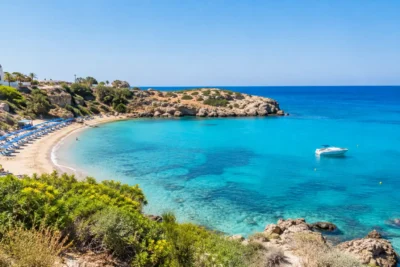
This is the right time for families who want everything close at hand: calm-water beaches, boat trips, ice creams, evening promenades and plenty of restaurant choice. Fig Tree Bay in Protaras, Pernera’s sandy coves and the beaches around Ayia Napa are at their most vibrant. Book early if you have a particular home, location or group size in mind, as well-managed coastal villas and flats are in greatest demand during the school holidays.
High summer also brings the warmest nights. That is wonderful for eating outdoors and evening strolls, although some visitors find that a central location can be noisier at this time of year. If quiet matters, consider a home a little outside the busiest strips, such as Ayia Triada, Kapparis or parts of Ayia Thekla, while keeping the coast within easy reach.
Autumn: September and October for Warm Sea and Easier Days
Ask many regular visitors for their favourite time, and they will say September. The sea has spent all summer warming up, so it is often at its best. The strongest peak-season crowds begin to thin after the school holidays, yet the atmosphere remains lively and most restaurants, shops and activities are still operating normally.
September is ideal for a couple’s escape, a friends’ holiday or families with pre-school children. You get the beach-first holiday experience without quite the same intensity as August. It is also a sensible choice for anyone who wants to mix a few lazy days by the water with trips to Larnaca, traditional villages or the Troodos mountains.
October can be wonderfully warm, particularly in the first half of the month. There are fewer people on the beaches, more availability in popular coastal areas and a slower rhythm at restaurants. The weather is usually excellent, but it is less predictable than July or August: an occasional cloudy or wet day is possible, and evenings become cooler as the month goes on.
For many visitors, that is not a drawback. October rewards those who like space, warm water and the freedom to make plans on the day. If your holiday depends on every attraction, beach bar and water sport operating at full summer pace, choose September instead.
Winter: November to March for a Quiet Coastal Break
Winter on the Cyprus coast is mild compared with Britain, but it is not a guaranteed sunbathing holiday. You may enjoy bright, warm afternoons, followed by cooler evenings and a few rainy days. The sea is generally too cool for most swimmers, although hardy locals and visitors still take a dip.
This is a good period for longer stays, walking, cycling, photography and simply enjoying a calmer side of the island. Cape Greco is particularly appealing outside the heat of summer, when you can explore the coastal landscape without rushing between patches of shade. It is also worth knowing that some seasonal beach businesses and restaurants reduce their opening hours, especially away from larger towns.
Choose winter if you are happy to trade guaranteed beach days for quieter roads, a more local feel and often better choice of accommodation. It is less suitable for travellers whose dream holiday is built around daily swimming, water parks and late-night resort life.
Choosing the Right Month for Your Travel Style
A family with school-age children will usually get the most from late June, July, August or the October half-term, depending on how much heat they enjoy. A private pool can make midday downtime much easier, while a short walk or drive to the beach keeps the day flexible.
For couples, May, June, September and October offer the best balance of warm weather, beautiful evenings and room to explore. These months are particularly good for staying in Pernera, Protaras or Kapparis, where you can combine beach time with coastal walks and relaxed meals without needing an over-packed itinerary.
Groups of friends often enjoy June or September, when the sea is warm and evenings have plenty of life without the absolute peak of August. If your group wants Ayia Napa’s restaurants and nightlife but not the constant bustle, staying in a nearby coastal area can offer a calmer base.
If swimming is the priority, aim for June through October. If walking and sightseeing matter just as much, April, May, late September and October are kinder to your energy levels. The simplest rule is this: choose high summer for heat, late spring or early autumn for balance, and winter for peace.
A Few Local Planning Tips
The Cyprus sun is strong earlier and later in the year than many first-time visitors expect. In summer, use the middle of the day for lunch, pool time or a rest indoors, and save sightseeing for the morning or evening. Bring proper sun protection, drink water regularly and do not assume a breezy beach means you are not catching the sun.
If you are travelling in July or August, accommodation location matters as much as the month. Being close to a beach, a small supermarket and a few places to eat can make family holidays far easier. For a more personal stay, ElloCyprus offers carefully selected villas and flats that can be booked directly, with local support and no unnecessary guest booking fees.
When you choose to come, leave a little room in the plan for an unplanned swim, a sunset walk or a long dinner by the sea. Cyprus is at its best when the holiday has space to slow down.