Explore the various regions that Cyprus has to offer for a perfect getaway.
Best Villages in Cyprus: 10 Beautiful Traditional Villages to Visit


When travellers search for ideas beyond sunlit beaches they often ask about authentic experiences, peaceful escapes and places where traditional crafts still flourish. Online forums and answer databases show queries such as “What are the best villages in Cyprus for local experiences?”, “Which tours go to the most picturesque villages?”, “Where can I taste wine and see lace making?”, “Is it possible to visit rural communities without a car?” and “Do villages have good tavernas?”. The following guide focuses on the south side of Cyprus, also known as the free area, and highlights ten villages that combine natural beauty, heritage and living traditions. Each entry summarises what makes the village special and includes tips to help you plan your visit. As you read, you will see why these destinations rank among the Best Villages in Cyprus.
These villages are grouped by the types of experiences they offer. Consider them when planning your itinerary:
Perched on the slopes of the Troodos Mountains, Kalopanayiotis draws visitors seeking thermal baths and heritage sites. The village is known for its sulphur springs and for Venetian bridges over the Setrachos River. A funicular connects the main road with the valley floor, making it easy to explore without climbing steep paths. At the bottom you’ll find the UNESCO listed Agios Ioannis Lampadistis Monastery complex, which contains three Byzantine churches . Travellers come here for spa treatments, to soak in the mineral rich water and to walk between orchards and stone houses. Local cafés serve mountain herbal teas and spoon sweets.
Planning tips: Visit in spring when the valley is green or in winter for misty views. Stay overnight in one of the restored guest houses and use the funicular to avoid steep climbs.
Fikardou feels as though time has stopped. The village was deserted in the nineteenth century and has been declared an Ancient Monument; restoration has preserved stone houses with wooden balconies and red tiled roofs . Two of these houses now function as ethnological museums showing traditional rural life . The quiet lanes and ageing fruit trees create a serene atmosphere.
Planning tips: Wear comfortable shoes as the paths are uneven. Bring snacks because there are limited services. Combine your visit with the nearby Machairas Monastery or a trip along the Pitsilia wine route.
High in the wine producing region of Limassol, Lofou is a maze of cobblestone alleys and red roofed cottages. The village has been inhabited since ancient times and its name dates to the Byzantine era . Visitors stroll past restored stone houses, shaded squares and tiny chapels . Two small museums, the Folk Art Museum and the Olive Press Museum, offer insight into rural traditions, and a one kilometre trail leads to the historic Elitji fountain built in 1842 . In late September the Grape Fest brings wine tastings and folk performances .
Planning tips: This village is best explored slowly; sample local wine at a family run tavern and follow the trail to the Elitji fountain for panoramic views.
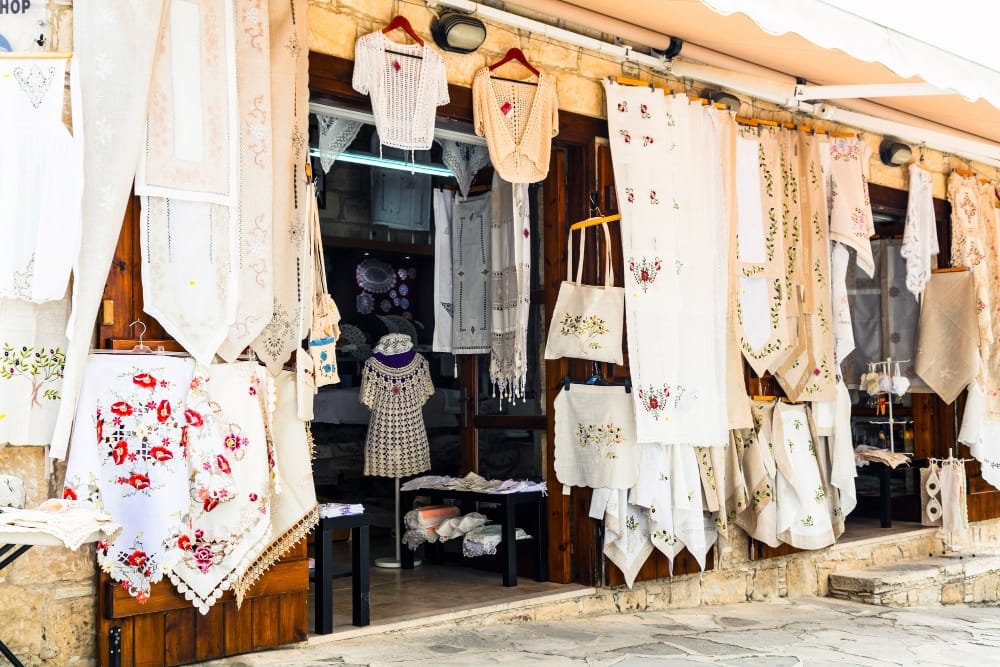
Perched on the slopes between Larnaca and Limassol, Pano Lefkara is synonymous with intricate lacework. The craft known as lefkaritika has been practised here for centuries; legend says Leonardo da Vinci purchased a tablecloth from Lefkara for Milan Cathedral. Narrow streets lined with cafés and artisans’ workshops sell handmade lace and silver jewellery . Women often sit in doorways working on lace pieces, and the tradition is listed as UNESCO Intangible Cultural Heritage.
Planning tips: Visit early in the morning to watch lace makers at work before tour groups arrive. Combine with a stop in nearby Kato Drys to see bee keeping and embroidery exhibits.
Kato Drys spills down a hillside surrounded by almond and citrus groves. Its flower lined streets lead to a hilltop church. The village is best known for bee keeping and embroidery; the Bee and Embroidery Museum displays antique needlework and explains honey production . Stalls in the central square sell jars of honey, carob syrup and lace.
Planning tips: Visit in spring when blossoms perfume the air. Combine with Pano Lefkara for a day of crafts and local delicacies.
Laneia (also spelled Lania) sits among vineyards at the base of Mount Troodos. Many artists live here, attracted by the flower filled courtyards and restored stone houses . The village has a bohemian feel; art galleries share cobbled alleys with cafés serving grape sweets, and historic photographs of local life hang on walls. Laneia also hosts a Grape Festival each May when residents open their gardens to visitors .
Planning tips: Visit during the festival for a lively atmosphere or midweek for tranquillity. Sample Commandaria, Cyprus’s famous dessert wine, in a shaded courtyard.
High in the Marathasa Valley, Pedoulas feels like a mountain retreat. The cool climate provides relief from coastal heat and pine forests surround the village. Its highlight is the Church of Archangel Michael, built in 1474 and decorated with late Byzantine frescoes . The church is part of the UNESCO listed Painted Churches of the Troodos Region. The village also offers a folklore museum, fruit orchards and traditional tavernas.
Planning tips: Visit in summer for cool temperatures. Stop at the Monument to the Holy Cross for panoramic views of the valley and combine your visit with nearby Kalopanayiotis or Moutoullas.
Omodos sits amid vineyards on the lower slopes of Mount Olympus. Its large square is lined with wine shops, tavernas and artisans’ workshops. Cobblestone lanes lead to the True Cross Monastery which is believed to contain relics of the cross . Visitors sample local wines, bread, sweets and lace laid out on tables . The village buzzes during wine festivals and craft fairs, yet still retains an authentic atmosphere.
Planning tips: Arrive early or stay overnight to avoid crowds at peak festival times. End your visit with a meze feast at one of the tavernas.
Located in the Larnaca region, Tochni is one of the oldest villages on the island and a popular agrotourism base. Its houses are built from local “Tochni stone” quarried nearby. Attractions include a small Byzantine museum and a Latin church overlooking the Orthodox church of Saints Constantine and Helena; tradition says St Helena founded the original church after returning from the Holy Land . The surrounding landscape is perfect for cycling and horse riding, and many guest houses offer cooking classes and farming experiences.
Planning tips: Stay in a restored stone house to experience village life and hire a bike to explore nearby countryside. Visit the churches to learn about the area’s ancient history.
Arsos nestles on the slopes of Laona Mountain at 850 metres above sea level and lies about 42 kilometres from Limassol . The village has practised winemaking since ancient times and remains one of Cyprus’s largest wine producing communities . Its name is linked either to a sacred grove dedicated to Aphrodite or to one of four towns founded by Ptolemy Philadelphos . Attractions include the Folk Art Museum, the Six Fountains nature trail connecting medieval fountains along the river and a local winery . Every September Arsos holds a grape feast where locals demonstrate traditional recipes made from grape juice and offer tastings accompanied by folk music .
Planning tips: Visit during the grape feast for a lively cultural experience. Follow the nature trail to see historic fountains and allow time to taste local wines.
By following this guide and planning ahead you can discover the Best Villages in Cyprus and the cultural heart of the island beyond its beaches. Each village offers unique experiences, whether you are soaking in sulphur springs, admiring lacework, sampling wine or walking through alpine forests. Enjoy your journey into the free area’s picturesque villages!


Explore the various regions that Cyprus has to offer for a perfect getaway.
ElloCyprus is a holiday home rental website that features hundreds of holiday rentals in Cyprus. It serves as a platform for direct bookings between owners and guests, and unlike other Online Travel Agents such as Booking.com and Airbnb, we do not impose any booking or service fees on guests. Owners are only charged a small fee per booking, which means that it is highly unlikely for guests to find the same holiday property at a lower price elsewhere.
Our goal is to offer a transparent booking system, enabling owners to provide guests with the best possible price for their self-catering holiday rentals.
Discover Cyprus with our travel blog, filled with articles and tips for those about to embark on an adventure on this enchanting island.


© 2026 ElloCyprus – Unlock Cyprus with Exclusive Villas