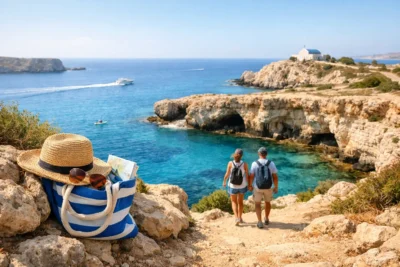

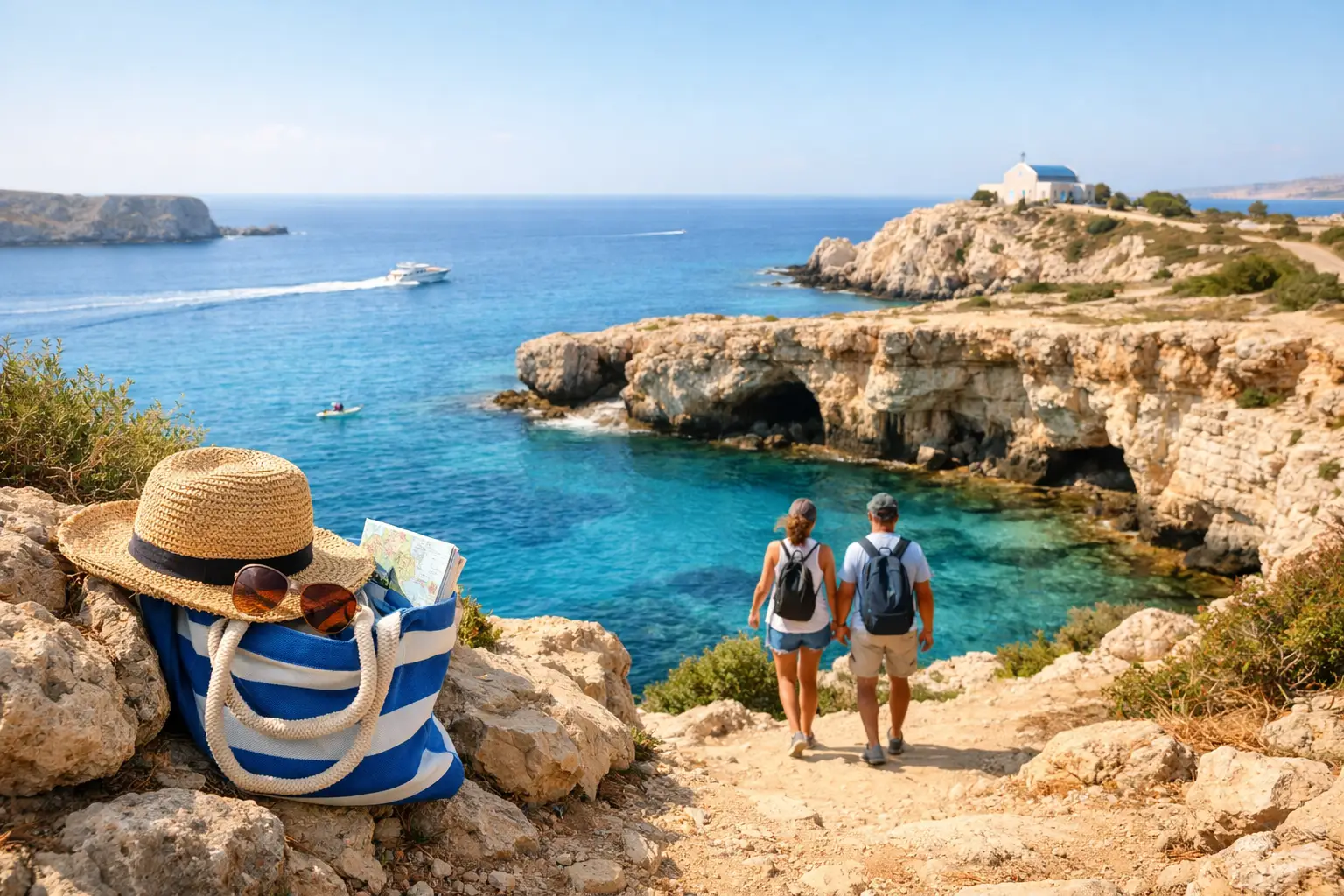
Cape Greco is where the busy beach roads of Ayia Napa and Protaras give way to limestone cliffs, pine trees and clear water that looks almost unreal on a calm morning. If you are wondering how to visit Cape Greco, the simple answer is to give it more than a quick photo stop. With a little planning, you can combine viewpoints, a coastal walk, a swim and a good lunch without spending the whole day in the car.
Cape Greco National Forest Park sits between Ayia Napa and Protaras, making it an easy outing from either resort. It is not a single attraction with one entrance and one ticket desk. It is a broad natural area with several places to stop, so the best way to visit depends on whether you have a car, are travelling with children, or want a proper walk rather than a few scenic pictures.
How to visit Cape Greco by car, bus or bike
A hire car is the easiest option, especially for families, groups and anyone hoping to see several parts of the park in one day. Roads around Cape Greco are generally straightforward, and there are parking areas close to the main viewpoints, the sea caves and Cape Greco Beach. In summer, arrive before 10am if you can. The popular roadside stops fill up quickly, and the middle of the day can be very hot.
Driving gives you the freedom to start at the Ayia Napa sea caves, follow the coast towards the park, then finish near Konnos Bay or Protaras. Do not assume every track on a map is suitable for a normal car, though. Stay on surfaced roads and signed parking areas, particularly after rain or when travelling in a low-clearance vehicle.
Local buses can work well if you are staying in Ayia Napa, Protaras or Pernera, but routes and timetables can change with the season. Choose a service that stops near Cape Greco or Konnos Bay, then be prepared for some walking. This is a good low-stress choice for couples who only want one section of the park, but less convenient if you have young children, beach gear or limited mobility.
Cycling is lovely in the cooler months and early morning, with wide coastal views and quieter roads. In July and August, it is better suited to confident cyclists who are comfortable with heat, hills and very limited shade. Carry more water than you think you need and avoid relying on the park for cafés or shops.
Start with the sea caves, but treat them with care
The sea caves near Ayia Napa are often the first stop on a Cape Greco outing. Wind and waves have shaped openings, shelves and arches in the pale rock, and the water below is a remarkable shade of blue. They are beautiful from the paths above, particularly early in the day when the light is softer and there are fewer people around.
This is also the place to be sensible. The cliffs are uneven, edges can be slippery, and jumping into the sea is risky even when others are doing it. Conditions change with swell and wind, while getting back out of the water can be far harder than it looks from above. Keep children close, wear proper sandals or trainers rather than flip-flops, and enjoy the caves from safe, solid ground.
If your main aim is swimming, choose an established beach instead. Konnos Bay is a particularly good nearby option, with sheltered water, facilities and a gentler entry into the sea. Cape Greco Beach is smaller and more natural, but it can be less practical for families depending on sea conditions.
Make time for the viewpoints and walking trails
Cape Greco is best appreciated on foot. You do not need to tackle a long hike to get the feeling of the place: even a short walk from a parking area reveals open sea, fragrant scrub and the sound of cicadas in warmer weather.
For a classic viewpoint, head towards the Cape Greco headland and the area around the lighthouse. The cliff-top scenery is especially good in the morning or late afternoon, when the sun is lower and photographs are less washed out. Sunset is popular too, but take a torch if you plan to linger, as paths and parking areas are not places to navigate in darkness without one.
The park has nature trails of different lengths, including routes that follow the coast and others that head inland through pine and juniper. Pick your route according to the weather, not just the distance. A modest walk in April can feel easy; the same exposed path at 1pm in August may feel demanding. Download or save your directions before setting off, as mobile signal can be patchy in quieter corners.
Wear trainers for walks, even if you are only planning an hour outside. The rock is sharp in places, and the terrain is not kind to bare feet. A hat, sunscreen and a reusable water bottle are essentials from late spring through early autumn.
A simple half-day Cape Greco itinerary
For most visitors, a half day is enough to see Cape Greco without rushing. Begin at the sea caves around 8.30 or 9am, when parking and photos are easier. Spend 30 to 45 minutes looking around, then drive towards the national park for a viewpoint and a short section of trail.
After that, cool off at Konnos Bay or return towards Protaras for lunch. This rhythm works well because it puts the exposed walking first and leaves the hottest part of the day for swimming, shade or a relaxed meal.
If you have a full day, add a longer trail in the morning and a slow stop at nearby beaches. Families may prefer the opposite approach: one scenic stop, a beach with facilities, then an early dinner back in the resort. Cape Greco does not need to become an endurance test to be memorable.
When is the best time to go?
April, May, October and early November are excellent for walking. The landscape is greener in spring, temperatures are kinder, and you can spend longer outside without chasing shade. Sea swimming is usually more appealing in autumn, after the water has warmed through the summer.
Summer is still a great time to visit, but timing matters. Go early, or visit later in the afternoon once the fiercest heat has passed. The views are no less impressive at those times, and the experience is often calmer. Winter can bring dramatic skies and fresh coastal air, although swimming and boat trips are more dependent on the weather.
Wind is worth checking on any visit. A bright day can still produce rough water around the headland, which affects swimming and makes cliff edges feel less comfortable. If the sea looks unsettled, enjoy the trails and viewpoints and save your swim for a sheltered beach.
Where to stay for an easy Cape Greco day out
Protaras is a practical base if you want sandy beaches, restaurants and a short drive to both Konnos Bay and Cape Greco. Ayia Napa suits visitors who want more dining, nightlife and quick access to the sea caves. For a quieter pace, the Cape Greco and Konnos area offers a more tucked-away feel, although a car is useful for groceries, evenings out and exploring further afield.
Booking a villa or flat directly can make the day easier too, particularly for families and groups who appreciate their own kitchen, outdoor space and room to leave beach bags ready for the next morning. ElloCyprus offers carefully selected homes across these coastal areas, with local support and no unnecessary guest booking fees.
Cape Greco rewards travellers who slow down. Arrive before the crowds, choose one or two stops rather than chasing every pin on the map, and leave space for an unplanned swim or a long look at the horizon. That is usually when this corner of Cyprus feels at its best.