
TL;DR
- Legal & Entry: Dogs entering Cyprus must have a 15-digit microchip, a rabies vaccination, usually at least 21 days before travel, and an EU Pet Passport or Animal Health Certificate. Certain breeds are prohibited, and taking dogs to restricted beaches can result in an €85 fine.
- Heat Safety: Avoid the intense 40°C midday sun by visiting beaches before 9 AM or after 6 PM, and always perform a five-second test to ensure the sand will not burn your dog’s paws.
- Health & Gear: Protect against local threats like Leishmaniasis, which is spread by sandflies, with vet-approved repellents, collars, or treatments. Cooling mats, shade tents, and fresh water can also help prevent heatstroke.
- Top Locations: Stick to official dog-friendly beaches like Spyros Beach in Larnaca or Acheleia Beach in Paphos, and enjoy pet-welcoming places such as Moondog’s Bar and Athalassa National Park.
Do you ever feel like the Cyprus summer is just a bit too much for your furry friend? I know the feeling. We all want to enjoy those crystal blue waters with our dogs, but the heat can be intense.
It is not just about finding a spot to splash around. It is about making sure our pups stay safe and healthy while we are out there. More people than ever are taking their pets on coastal adventures these days.
But before you grab the leash and head to the car, there are a few things you should know. From local laws to health tips, I have got you covered so you can focus on having fun.
Essential Legislation for Travelling with Dogs in Cyprus
Planning a trip to Cyprus with your dog? You will need to follow some strict EU rules to ensure a smooth arrival. Before that rabies shot, make sure your pup has a 15-digit microchip implanted, as this is the primary identification required by customs.
Your dog must be at least 12 weeks old to receive the vaccine, and you will usually need to wait a minimum of 21 days after the jab before flying. Do not forget your Animal Health Certificate or EU Pet Passport. These documents must be checked and prepared correctly before travel to help avoid delays or quarantine issues.
But watch out, certain breeds like the Pit Bull Terrier, Japanese Tosa, Dogo Argentino, and Fila Brasileiro are prohibited from entering the country. It is always a smart move to double-check the latest requirements with the Veterinary Services department to keep your travel plans stress-free.
Finding the Best Dog Friendly Cyprus Beaches
Once you have cleared the paperwork, it is time for the fun part: the sun and sand. However, you cannot just pick any spot on the coastline. In Cyprus, local laws are quite specific, and you will need to head to official dog-friendly zones like Spyros Beach in Larnaca or the rugged Acheleia Beach in Paphos.
Other great legal options include the Kapparis Potamia area or the dedicated dog zone in Pissouri. Keep in mind that Blue Flag beaches, the ones with those pristine facilities, usually prohibit dogs during the peak sunbathing hours to maintain their certification.
Want a local tip? If you are craving a walk on a non-designated beach, you can often enjoy the sand together during the off-season winter months or late at night when the crowds have gone. Just stay alert and keep that leash handy, because ignoring the local signage can result in an €85 fine on the spot.
Safety Tips for Dogs During the Cyprus Summer
While the beach is a blast, the Mediterranean sun is no joke. The heat here often climbs toward 40°C, which can lead to heatstroke in minutes. I would recommend sticking to early morning or late evening outings and keeping a portable shade tent in your car for those long afternoons.
Remember, if the sand is too hot for your bare feet, it is definitely too hot for your pup’s paws. Always do a quick five-second touch test before letting them run. Beyond the heat, you should also be aware of local parasites. Leishmaniasis is a concern in Cyprus, so it is worth speaking to your vet before your trip about the best protection.
To stay safe, use vet-approved repellent collars or treatments and keep your vaccinations up to date. If your dog accidentally drinks too much salt water, encounters a jellyfish, or has a run-in with a blunt-nosed viper, do not panic. Contact a local emergency vet or head to a 24-hour clinic for immediate assistance.
Dog Friendly Accommodation and Dining in Cyprus
After a long day of splashing around, you will need a place to crash. Dog-friendly accommodation in Cyprus has improved massively, with options ranging from rustic mountain villas to sleek city apartments in pet-loving hubs like Nicosia and Limassol.
The rental market can be competitive, with monthly prices for pet-friendly homes varying widely depending on the location and property type. Since many landlords prefer smaller dogs, it is a great idea to create a pet resume highlighting your dog’s training and temperament to help secure that dream rental.
When you get hungry, you do not have to leave your best friend behind. You can grab a burger at Moondog’s Bar and Grill or enjoy outdoor seating at dog-friendly cafes and casual restaurants. For a change of scenery from the beach, the National Forest Park of Athalassa offers beautiful trails, while local dog parks provide a secure environment where your pup can burn off that last bit of energy.
Understanding Cyprus Beach Regulations for Dogs
Speaking of those coastal views, you will need to be a bit selective about where you set up your umbrella. While the island is stunning, Cyprus has very specific laws about where dogs can swim. To avoid a potential €85 fine, it is best to stick to officially designated dog beaches like Spyros Beach in Larnaca or the dedicated stretch in Acheleia.
You might see locals at various Blue Flag shores, but these high-traffic tourist spots are usually off-limits to pets. Always look for official signage at the entrance of the beach to confirm whether it is dog-friendly. These spots are usually quieter, giving your pup more room to run without bothering other sunbathers.
Beyond the legalities, consider the environment. Many of these designated beaches are a bit more rugged, so bring a sturdy leash for the walk from the car. Since these areas are not manicured like the resort beaches, keep an eye out for sea urchins, sharp stones, or rocks that might be hiding under the tide. It is all about making sure the only thing your dog brings home is a wet tail and a happy heart.
Recognising and Preventing Heatstroke in Dogs
While the sea breeze feels great, the Cyprus sun is no joke, especially when temperatures regularly soar toward 40°C in July and August. Since dogs cannot sweat like we do, we have to be their personal cooling systems. A key part of that is timing. Try to get your beach runs in before 9 AM or after the sun starts to dip in the evening. If the sand is too hot for your bare feet, it is definitely too hot for their sensitive paw pads.
Safety Tips for Dogs
- Carry a dedicated bottle or thermos of fresh, cool water, as tap water in Cyprus can get warm quickly in the car.
- Watch for heavy, frantic panting, a bright red tongue, thick saliva, weakness, or confusion, which are early warning signs of distress.
- If you suspect overheating, cool your dog down gradually with lukewarm water. Ice-cold water can cause shock, so avoid sudden extreme cooling.
It is also important to remember that the heat is not the only invisible threat. Local sandflies and mosquitoes can carry Leishmaniasis, a serious condition that affects dogs in Mediterranean regions. Using a vet-approved repellent collar or monthly spot-on treatment is your best line of defence. If your pup seems unusually lethargic after a day in the sun, do not hesitate to contact an emergency vet in Limassol, Nicosia, Larnaca, or Paphos.
Essential Gear for Keeping Your Dog Cool
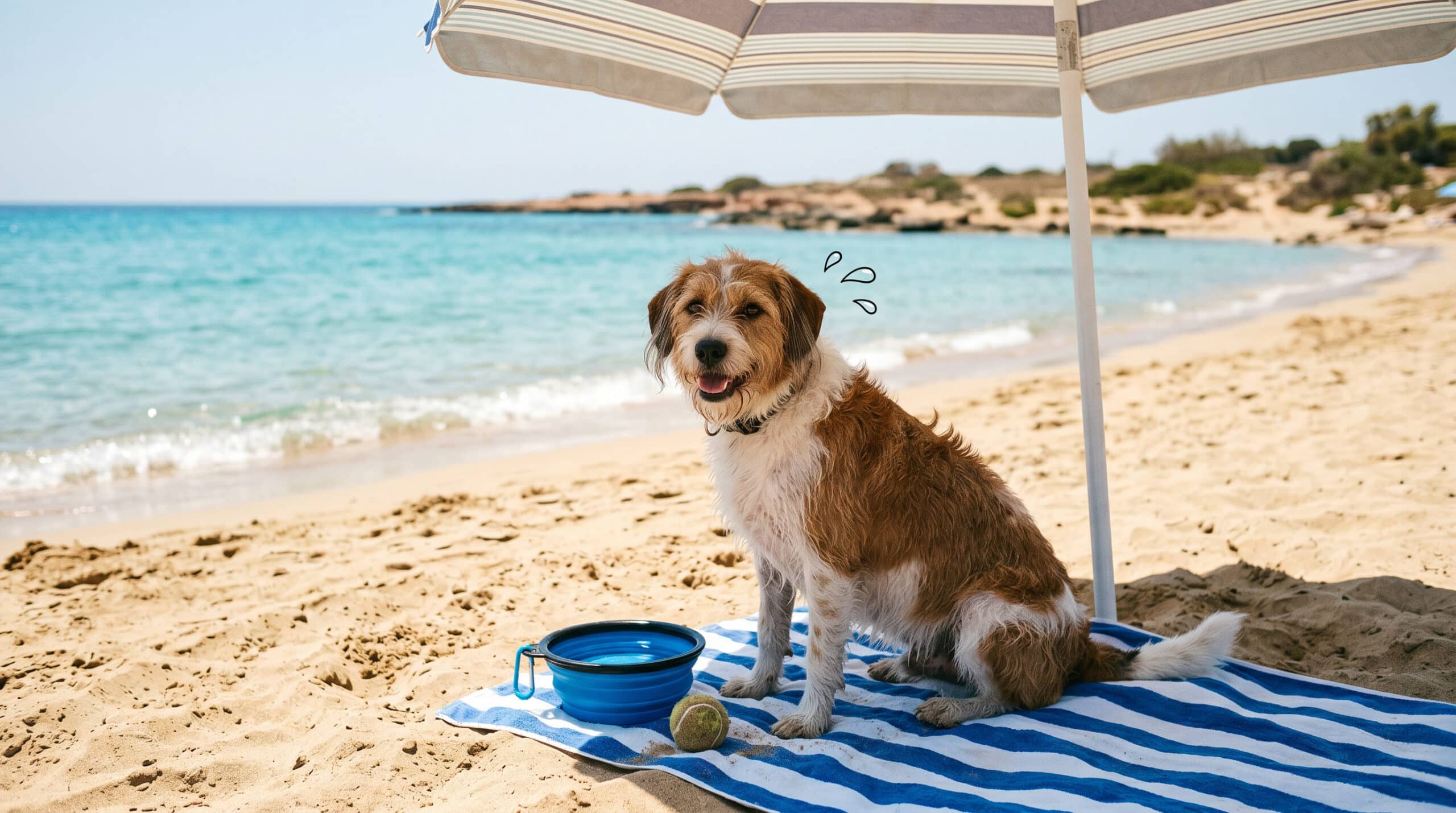
To make those hot afternoons more bearable, having the right kit is a total game-changer. I have found that a little preparation allows you to actually relax and enjoy the Mediterranean vibes rather than constantly worrying about the shade. Think of it as a mobile cool zone that follows you from the car to the shoreline.
- Cooling Mat: A pressure-activated gel mat can help lower your dog’s body temperature and usually folds easily into a backpack.
- Dog Tent: A lightweight pop-up tent provides essential UV protection, especially on open beaches with little natural shade.
- Collapsible Bowl: A portable bowl encourages frequent hydration and can clip directly to your bag or belt.
Stay Cool and Safe
Since many of the designated dog beaches in Cyprus are quite open and lack natural tree cover, a pop-up tent or a heavy-duty beach umbrella is a lifesaver. You might also consider a cooling vest. You just soak it in water, wring it out, and it uses evaporation to keep your dog’s core temperature down while they play. Even with the best gear, if the midday heat feels oppressive, it is always better to head back to the air conditioning for a siesta. After all, there is always the sunset for that second round of Vitamin Sea.
Strategic Timing for Coastal Outings
Since we know how punishing that midday sun can be, timing is everything when planning your route. Those golden hours, specifically before 9 AM or after 6 PM, are your best friend for beating the Cyprus heat. During these times, the sand is more manageable and the UV index is usually lower, helping to protect your dog’s paws and skin.
If you find the coastal humidity is still a bit much even during the evening, why not head inland? The Troodos Mountains offer a fantastic escape with pine-scented breezes and temperatures that are often cooler than the coast. It is a great way to get some exercise without the risk of heat exhaustion that comes with a 2 PM beach run.
Post-Beach Care and Recovery
Once you have finished your sunset stroll, the care routine continues at home. Salt and sand can be really irritating to a dog’s skin, potentially causing hot spots or rashes. I always make sure to give my dog a thorough rinse with fresh water as soon as we get back, paying extra attention to the fur between their toes.
Stay Safe and Legal
While you are drying them off, do a quick paw-to-tail check. Look for small cuts from sharp pebbles or any signs of local pests. In Cyprus, it is particularly important to use a vet-recommended repellent to guard against Leishmaniasis, a disease spread by sandflies that are most active during the warmer months. A quick check now saves a lot of worry later.
Do not forget to stick to designated spots like the beach at Monagroulli. Taking your dog to a No Dogs Allowed Blue Flag beach is not just stressful for the pup. It can also result in a steep €85 fine that will definitely put a dampener on your holiday mood.
Frequently Asked Questions and Pet Travel Essentials
If you are visiting from abroad, navigating the local regulations is the final piece of the puzzle. Beyond finding the right beach, you will need to ensure your paperwork is in order. This includes a health certificate or EU Pet Passport and proof of a rabies vaccination administered at least 21 days before your arrival. Also, double-check that your pet’s microchip is ISO-compliant with a 15-digit code so local scanners can read it easily.
Ready for the beach?
Before you head out, just a heads-up that Cyprus does have restrictions on certain breeds, such as the Pit Bull Terrier or Japanese Tosa, so verify your dog’s eligibility with the Veterinary Services department first. Once that is settled, the island is your oyster. You can enjoy a pet-friendly burger at Moondog’s in Nicosia or simply lounge under a sturdy umbrella at Spyros Beach. As long as you keep an eye on the thermometer and avoid those 40°C peaks, you and your furry best friend are going to have an incredible time exploring the island together.