
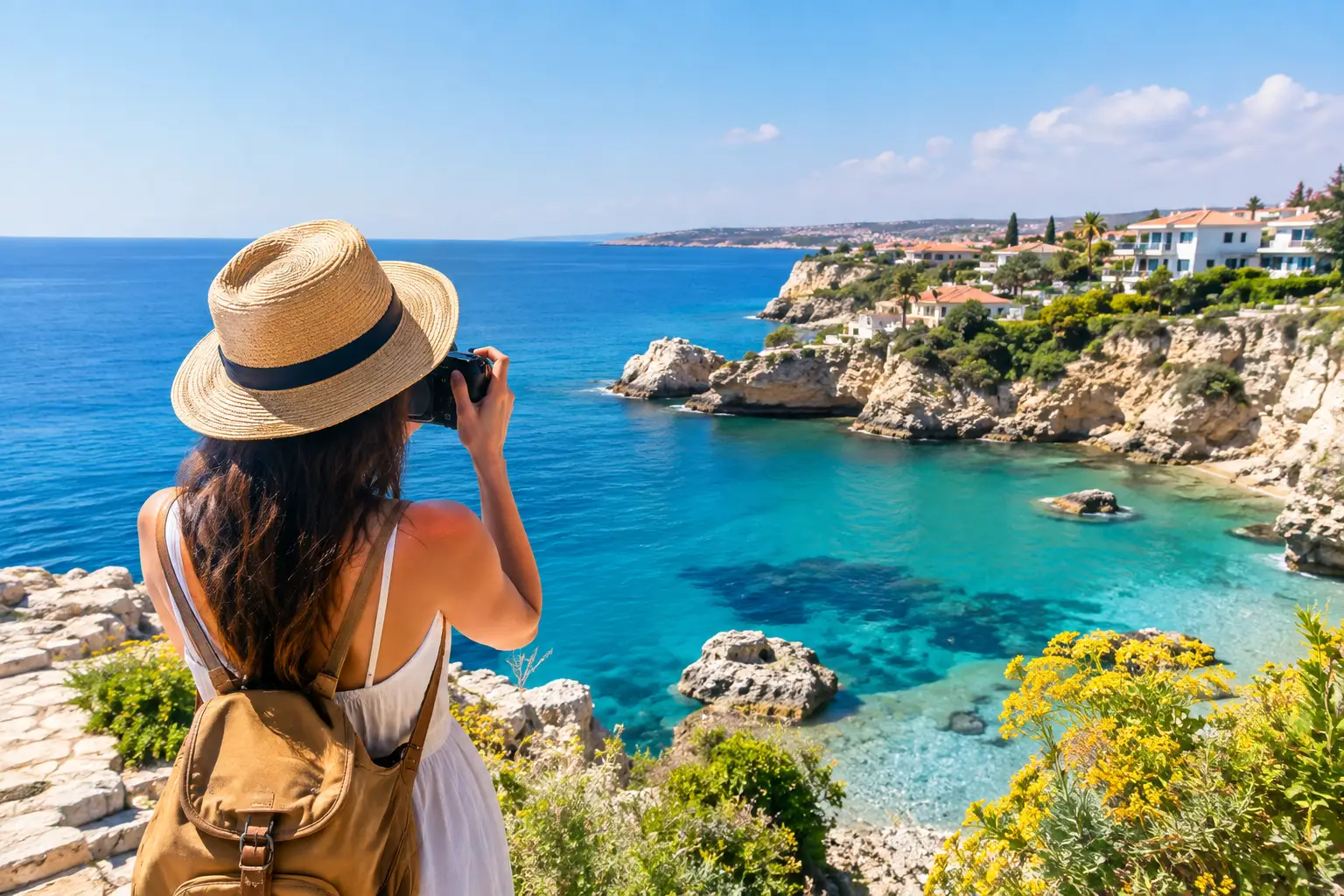
Cyprus photographs best when you give it time. The midday sun can flatten the colour of the sea, while an early walk can turn the same coastline into clear turquoise water, pale rocks and long soft shadows. These are the best photo spots Cyprus visitors can enjoy across the Republic, chosen for their scenery as well as the practical details that make a visit easier.
A few places are close to the main resorts, while others reward a proper day trip. Take water, wear sensible shoes on rocky paths and avoid standing close to cliff edges for a photograph. Cyprus is wonderfully photogenic, but it is even better when everyone comes home with the picture and a good story.
Best photo spots Cyprus: coast, villages and mountains
1. Cape Greco Sea Caves
The sea caves below Cape Greco are among the most recognisable coastal views in the area between Protaras and Ayia Napa. Honey-coloured rock shelves sit above deep blue water, with natural arches, caves and little inlets appearing as you follow the coast.
Morning is often the easiest time to photograph here, before the busiest hours and while the light falls more gently across the rock. There is parking nearby, but the ground is uneven and the cliffs are not fenced in every place. Keep well back from the edge, particularly on windy days, and enjoy the view rather than chasing a risky angle.
2. Konnos Bay
Konnos Bay has that rare combination of clear water, green hillside and a sheltered sweep of sand. From the road above, you can frame the bay with the pine-covered slopes of Cape Greco. Down on the beach, the shallow water gives lovely reflections on calm mornings.
It gets busy in summer, so arrive early if you want a quieter scene. The walk down is steep enough to notice on the way back, although it is manageable for most visitors at an unhurried pace. This is an especially good choice for families who want a photo stop that can easily become a beach day.
3. Fig Tree Bay, Protaras
Fig Tree Bay is known for its bright, transparent water and the small islet just offshore. It works particularly well for simple holiday photographs: swimmers in the shallows, paddles near the beach and the horizon stretching beyond the headland.
For a wider coastal image, walk towards the northern end of the bay and look back across the curve of sand. Sunrise brings softer light and fewer people, while late afternoon can be more flattering for portraits. In peak season, accept that this is a popular beach – the energy is part of the picture.
4. Ayia Triada Harbour
Small and characterful, Ayia Triada Harbour offers a different side of the east coast. Fishing boats, a neat white-and-blue chapel and calm water create a scene that feels more local and less polished than the larger resort beaches.
The harbour is at its best in the first hour after sunrise, when the boats and chapel catch warm light. It is an easy stop for guests staying in Kapparis, Pernera or Protaras, and nearby coves make a pleasant follow-on swim. Please avoid climbing on boats or blocking the working harbour for photos.
5. The Love Bridge in Ayia Napa
The Love Bridge is a natural rock arch on the edge of Ayia Napa, shaped by the sea and framed by open water. It is a popular spot for couples and groups, but it can still look striking if you visit at quieter times.
Photograph it from the path rather than walking out onto the arch. The rock surface can be slippery and the drop below is real, not a backdrop. Late afternoon gives the water a rich blue tone, while sunrise is the better option for a more peaceful visit.
6. Ayia Thekla’s rocky shoreline
Ayia Thekla is a good alternative for those who prefer open coast and smaller coves to busier beaches. The low, pale rock shelves and clear sea make strong natural textures, especially when gentle waves roll over the edge of the shore.
There is no single landmark to queue for, which is exactly its appeal. Wander carefully along the designated access points and look for a composition that includes the rocky foreground and open sea. Sunset can be lovely here, though do not stay on unfamiliar rocks once the light has faded.
7. Larnaca Salt Lake and Hala Sultan Tekke
Larnaca Salt Lake changes character with the season. In winter and early spring, it may hold water and attract flamingos, while the drier months reveal broad salt flats and a quieter, more minimal landscape. Hala Sultan Tekke, beside the lake, adds an elegant architectural focal point.
The best results depend on recent weather, so it is worth treating this as a flexible stop rather than promising yourself a particular view. A long lens is useful for birds, but give them space and do not approach the lake bed. Early morning light often brings a gentle reflection when water levels allow.
8. Choirokoitia’s stone landscape
For photographs with a sense of Cyprus beyond the coast, Choirokoitia is a memorable stop. The reconstructed Neolithic round houses, dry hills and warm earth tones offer a strong contrast to the island’s blue-water scenes.
Go when the sun is lower, as the stone textures are much more visible than at midday. This is a heritage site, so stay on the marked paths and respect any restrictions around the structures. It is ideal for travellers who enjoy history, architecture or more thoughtful travel photography.
9. Lefkara village
Lefkara is made for detail: narrow lanes, limestone houses, colourful doors, bougainvillaea and traditional lacework in small shop windows. It is one of the most rewarding places to photograph slowly, without a fixed checklist.
Visit in the morning before the lanes become warmer and busier. Ask before taking close photographs of shopkeepers, craftspeople or residents. A friendly conversation will usually give you a better experience than trying to capture the village from a distance.
10. Omodos and its vine-covered lanes
Omodos, in the Troodos foothills, has cobbled streets, stone homes and a central square that feels especially inviting in the cooler months. Vines, shutters and small balconies provide plenty of detail for close-up shots, while the surrounding vineyards widen the scene beyond the village.
It suits a relaxed lunch stop as much as a photography outing. Autumn can be particularly appealing for vineyard colour, but spring brings fresh greenery and flowers. As with many traditional villages, some lanes are residential, so keep voices low and do not photograph inside private courtyards.
11. Troodos mountain viewpoints
The Troodos Mountains offer Cyprus at a different scale: pine forest, winding roads, valleys and distant slopes fading into one another. Around the higher villages and forest routes, you can find views that feel a long way from the beach resorts.
Conditions change quickly in the mountains. In summer, bring a layer for cooler evenings; in winter, check road conditions before setting off. Pull over only in proper parking areas, never on bends or narrow roads, and let the driver enjoy the scenery too.
12. Petra tou Romiou near Paphos
Petra tou Romiou, often called Aphrodite’s Rock, is one of the island’s classic coastal scenes. Large sea stacks rise from the water beneath the old coast road, and the beach has a dramatic, untamed feel compared with the sandy bays of the east.
Sunset is popular, but early morning offers more space and can make the sea appear especially clear. The beach is pebbly and the water can be rough, so sturdy footwear is useful and swimming conditions should always be judged on the day. The best image often comes from taking in the whole shoreline, not only the famous rock.
Getting the most from your Cyprus photographs
Light makes a bigger difference than expensive equipment. For beaches and sea caves, aim for early morning or the last couple of hours before sunset. Midday can still work for the vivid blues of shallow water, but portraits are usually kinder in shade or later in the day.
A mobile phone is enough for most visitors, particularly if you clean the lens and avoid zooming too far. If you are travelling with a camera, a polarising filter can help reduce glare on water, though it is not essential. More valuable is leaving room in your plans: the cloud cover, wind and season can change a location completely.
Choose a base that makes the places you most want to see easy to reach. A villa or flat booked directly with ElloCyprus can give you the flexibility to head out before breakfast, return for a swim and take a sunset drive without working around hotel schedules. The east coast is ideal for Cape Greco, Protaras and Ayia Napa, while a longer stay makes room for mountain villages and a west-coast day trip.
The photographs you keep are rarely just the famous view. They are the early coffee in a quiet harbour, the children finding a crab in a rock pool, or the road winding through the pines on the way home. Leave a little space for those moments, because they are usually the ones that bring Cyprus back most clearly.