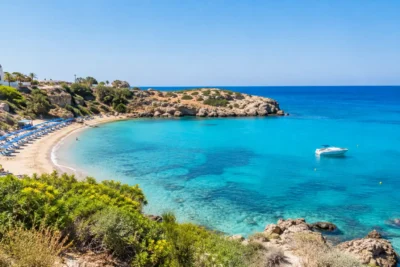

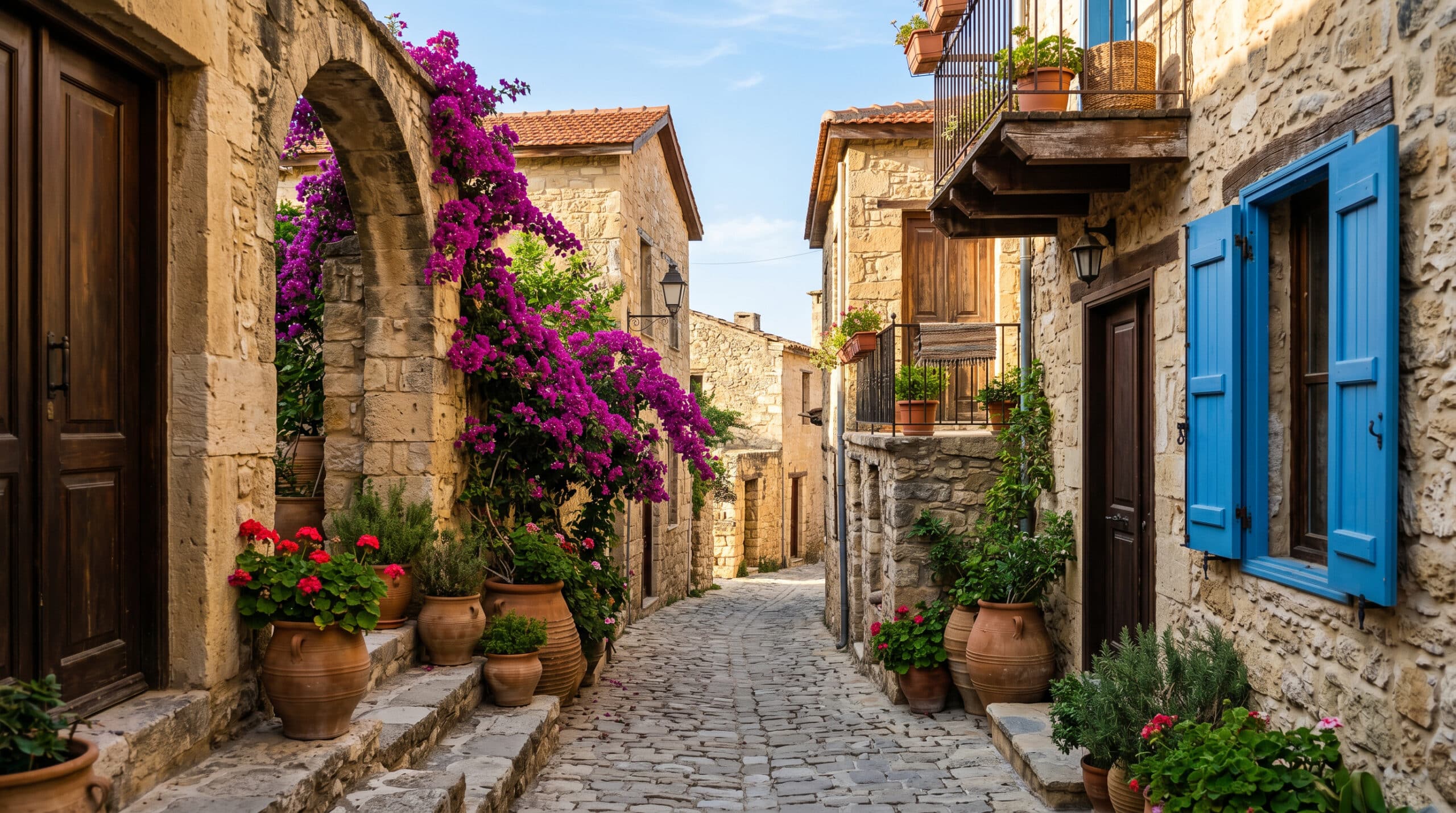
Cyprus is an island where ancient history sits beside golden sand and azure water. Officially part of the European Union and located in the eastern Mediterranean, the Republic of Cyprus offers a mild subtropical climate with very warm summers and mild winters. Rain falls mostly in winter and snow is found only in the high Troodos mountains, so travellers can enjoy outdoor activities for much of the year. This guide outlines why the island is worth visiting, how long to spend, and sample itineraries ranging from a weekend to two weeks.
Why Visit Cyprus?
Cyprus combines clear seas, wooded mountains and UNESCO listed heritage. The Paphos area is home to a World Heritage Site where villas and tombs are decorated with mosaic floors depicting myths and everyday life. In the Troodos mountains, ten rural churches dating from the eleventh to sixteenth centuries are richly painted with Byzantine and post Byzantine frescoes. The Neolithic village of Choirokoitia, another World Heritage Site, preserves circular stone and mud brick dwellings dating back to the seventh millennium BCE. Beyond these, the island offers vineyards, mountain trails, lively coastal towns and traditional villages.
When to Go and Weather
Spring, from April to June, and autumn, from September to October, offer comfortable temperatures and long daylight hours. Coastal areas see average daytime temperatures around 23 to 25 °C in April and 24 to 25 °C in October. July and August can be hot, with temperatures on the coast reaching 30 to 32 °C or more. Winter days are mild at 16 to 18 °C on the coast, though rain is more frequent. Pack sunscreen, a hat and layers. If hiking in the mountains, bring water resistant clothing.
How Many Days Do You Need?
You can get a taste of Cyprus in a long weekend, but a week allows time to explore the coast and mountains, and two weeks let you slow down, discover villages, enjoy beach days and include longer day trips.
3 Days in Cyprus
Best for: A first time city and beach break.
Highlights: Larnaca, Nicosia, Paphos mosaics and a first taste of local Cypriot cuisine.
5 Days in Cyprus
Best for: A short road trip with more variety.
Highlights: Larnaca, Nicosia, Paphos, Troodos villages and Limassol old town.
7 Days in Cyprus, 1 Week
Best for: A balanced Cyprus holiday with culture, beaches and mountains.
Highlights: Paphos, Limassol, Troodos mountains, Larnaca, Nicosia, with optional time in Famagusta or Protaras.
10 Days in Cyprus
Best for: Travellers who want a slower pace and more coastal time.
Highlights: Add the Akamas peninsula, extra beach days, Kyrenia if you decide to cross to the north, and more time to relax.
14 Days in Cyprus, 2 Weeks
Best for: A deeper Cyprus itinerary with villages, hikes, beaches and off the beaten path stops.
Highlights: Everything above, plus extra mountain villages, nature trails, quiet beaches and flexible rest days.
Top Places to Visit
Paphos
The coastal city hosts a UNESCO site where mosaic decorated villas, palaces and rock hewn tombs reveal worship of Aphrodite and other deities.
Painted Churches of Troodos
Ten small mountain churches contain murals that illustrate the development of Byzantine painting.
Choirokoitia
A Neolithic settlement with stone and mud brick circular houses that date back to the seventh millennium BCE.
Troodos Mountains
Home to cool forests, waterfalls and villages such as Omodos. Hike trails like Artemis or Caledonia. The latter passes a waterfall surrounded by lush vegetation.
Nicosia, Lefkosia
The island’s capital offers a walled old town, museums and the Green Line checkpoint. Street cafés, markets and crafts provide an authentic urban experience.
Limassol, Lemesos
Stroll along the seafront promenade, visit Limassol Castle and taste local wine in nearby villages.
Larnaca
Relax on Finikoudes Beach, wander along the palm lined promenade and explore the Salt Lake and Hala Sultan Tekke mosque.
Ayia Napa and Protaras
Famous for white sand beaches, sea caves and nightlife. Families enjoy calm waters at Fig Tree Bay.
Akamas Peninsula
West of Paphos, the peninsula offers hiking, wild beaches and the Baths of Aphrodite. A popular route includes Kolossi Castle, Kourion and Petra tou Romiou, also known as Aphrodite’s Rock, before reaching the baths.
Famagusta and Salamis
On the east coast, explore the ancient city kingdom of Salamis with its gymnasium, theatre and basilicas, then wander the walled city of Famagusta. Note that crossing the Green Line into the north requires a valid passport and insurance. Many car hire firms do not cover this area.
Sample Itineraries
Three Day Itinerary
This schedule suits a long weekend or a cruise stop.
Day 1: Larnaca and Surroundings
Start in Larnaca with coffee on Finikoudes Beach, visit the Church of St Lazarus and stroll the promenade. Later, drive or take an interurban bus to Hala Sultan Tekke by the Salt Lake to see its mosque and migratory birds.
Day 2: Nicosia
Discover Nicosia’s old town within Venetian walls, visit the Cyprus Museum, shop for lace at the Laiki Geitonia district and walk to the Ledra Street crossing. Bring your passport if crossing the Green Line. Sample Cypriot coffee and sweets.
Day 3: Paphos
Drive or join an organised tour to Paphos. En route, stop at Petra tou Romiou to view Aphrodite’s Rock and swim in the turquoise sea. In Paphos, explore the archaeological park’s mosaics, visit the medieval castle and stroll the harbour.
Five Day Itinerary
Add mountains and history to the three day plan.
Day 4: Troodos Mountains
Head inland to villages like Omodos, known for its monastery and cobbled streets. Hike the Caledonia or Artemis trails for waterfalls and alpine vistas. Visit wineries in Omodos or Platres.
Day 5: Limassol
Walk the old town, tour Limassol Castle and the nearby Kolossi Castle. Drive to the Kourion archaeological site to see the Greco Roman theatre and mosaics. Enjoy dinner at a beachfront taverna.
Seven Day Itinerary
A full week allows a balanced mix of culture, nature and relaxation.
Days 1 to 5
Follow the five day plan above.
Day 6: Ayia Napa and Protaras
Drive east to the white sands of Nissi Beach or Fig Tree Bay. Explore sea caves by boat and visit Cape Greco National Park for cliffside views. Families can stop by the water park in Ayia Napa.
Day 7: Akamas Peninsula
Travel to the Akamas peninsula via Latchi harbour. Hike the Aphrodite trail or relax at the Baths of Aphrodite, where legend says the goddess bathed. Swim in crystal clear waters.
Ten Day and Two Week Ideas
If you have more time, extend your trip with a slower pace and more local discoveries.
- Spend extra days in the Troodos region visiting lesser known villages like Kakopetria and Fikardou, both filled with preserved architecture.
- Add a day trip to Famagusta and the archaeological site of Salamis. Learn about the island’s divided history at the ghost town of Varosha.
- Consider crossing into North Cyprus to see Kyrenia, also known as Girne, harbour and St Hilarion Castle. Be aware that the Republic of Cyprus only recognises entry through Larnaca or Paphos airports and the seaports of Limassol, Larnaca and Paphos. Entry via Ercan airport in the north is considered illegal.
- Take a boat trip from Larnaca to neighbouring countries if seasonal cruises are available, or include a side trip by air.
Travelling With Children
Cyprus is family friendly. Choose shallow beaches such as Fig Tree Bay, Nissi Beach or Makronissos. The Paphos Zoo and Camel Park near Larnaca are popular with young travellers. Water parks in Paphos, Ayia Napa and Limassol offer slides and pools. Children under twelve must use appropriate restraints in vehicles, and young children are not allowed in the front passenger seat.
Exploring Without a Car
You can enjoy Cyprus without driving. Cyprus does not have train or subway lines, but buses and taxis reach most towns. There are several types of bus service, including airport transfer buses linking towns to the airports, interurban buses between major towns, urban buses within towns and rural buses to villages.
Intercity buses connect Nicosia, Limassol, Larnaca, Paphos, Ayia Napa and Protaras with regular schedules. Urban buses run frequently in the daytime and sometimes into the evening. Rural buses may operate only a few times a day, so check timetables in advance. Ferries do not currently operate regular passenger services between Cyprus’s ports and Greece or Israel, but seasonal cruises are sometimes offered.
Entry, Exit and Visa Information
The Republic of Cyprus is part of the European Union but outside the Schengen area. Visitors from many countries, including the United Kingdom, United States and EU member states, may enter without a visa for up to ninety days. Passports should have at least six months’ validity and two blank pages. Travellers must arrive and depart via the Republic’s recognised airports, Larnaca or Paphos, or seaports, Limassol, Larnaca or Paphos. Entering or leaving via Ercan airport in the north or any northern seaport is not considered legal and may affect future entry. Proof of funds and a return ticket may be required.
Driving in Cyprus
Hiring a car is an excellent way to explore at your own pace. You drive on the left, as in the United Kingdom, and overtake on the right. A valid full driving licence and motor insurance certificate are required, along with the V5 registration document or rental papers. Vehicles from the United Kingdom must display a UK sticker. Since August 2021, a green card is no longer needed for UK visitors.
Speed limits are 50 km per hour in built up areas, 65 km per hour on country roads and 80 km per hour on national roads. Motorways have a maximum of 100 km per hour and a minimum of 65 km per hour. Seat belts are compulsory in all seats and drink drive laws are strictly enforced. Note that many hire companies prohibit taking vehicles into the Turkish Cypriot administered area. If you plan to cross, purchase additional insurance at the checkpoint.
Practical Tips and Tools
- Carry euros. Cards are widely accepted, but small towns may prefer cash.
- Use the Public Transport Cyprus app or visit the official bus website to check schedules and purchase tickets.
- Download offline maps for driving or hiking. Signage can be sparse in rural areas.
- Travel insurance is recommended, especially for medical care, cancellations and car hire issues.
- Respect the local culture. Modest dress is required at monasteries and churches.
- Avoid photographing military installations and do not enter the UN buffer zone except at official crossing points.
- Tipping is appreciated but not obligatory. Round up your bill or leave about ten per cent at restaurants.
- Drinking tap water is generally safe in towns, but bottled water is inexpensive if you prefer.
Conclusion
Cyprus rewards curious travellers with layers of history, sun drenched beaches, mountain trails and warm hospitality. Whether you have a weekend or two weeks, plan your itinerary around a mix of coast, culture and countryside. Use reliable transport services, follow entry requirements and road rules, and take time to linger in villages and tavernas. With thoughtful planning, your Cyprus journey in 2026 will blend relaxation and discovery.
Frequently Asked Questions
Yes, Cyprus is definitely worth visiting if you want a holiday that combines beaches, culture, history, food, nature and easy travel. You can spend the morning exploring ancient ruins, the afternoon swimming in clear blue water and the evening eating meze in a village taverna. It is also a great choice for families, couples, road trips and relaxed beach holidays.
For a first trip, 5 to 7 days in Cyprus is ideal. A 3 day Cyprus itinerary gives you a quick taste of the island, while 7 days allows you to see beaches, cities, mountain villages and historic sites without rushing. If you have 10 days or 2 weeks, you can enjoy a slower trip with more time in Paphos, Troodos, Protaras, Ayia Napa and the Akamas peninsula.
A good Cyprus itinerary for one week should include a mix of coast, culture and countryside. Spend time in Larnaca or Nicosia, visit Paphos and Aphrodite’s Rock, explore Limassol and Kourion, take a day in the Troodos mountains and finish with beaches in Ayia Napa, Protaras or the Akamas peninsula.
If you only have 3 days in Cyprus, focus on the highlights. Spend one day in Larnaca and Nicosia, one day exploring Paphos and Aphrodite’s Rock, and one day relaxing by the sea in Ayia Napa, Protaras or Limassol. This gives you a simple mix of history, city life and beach time.
Yes, a Cyprus itinerary for 5 days is enough for a short but varied holiday. You can visit Larnaca, Nicosia, Paphos, Limassol and the Troodos mountains. You will not see everything, but you will get a very good introduction to the island.
The best Cyprus itinerary for 7 days includes Paphos, Limassol, Troodos, Larnaca, Nicosia and either Protaras or Ayia Napa. This gives you enough time to enjoy archaeological sites, mountain villages, beaches, local food and scenic drives.
Yes, but you need to keep it simple. For a Cyprus itinerary in 2 days, choose one side of the island instead of trying to see everything. From Larnaca, you can visit Nicosia on one day and Ayia Napa or Protaras on the next. From Paphos, you can visit the archaeological park, Aphrodite’s Rock and nearby beaches.
For Cyprus in 4 days, spend one day in Larnaca and Nicosia, one day in Paphos, one day in Limassol and Kourion, and one day at the beach in Ayia Napa, Protaras or the Akamas area. It is a short trip, so choose your base carefully to avoid too much driving.
A Cyprus 8 days itinerary gives you a little more breathing space than one week. You can follow a 7 day Cyprus itinerary and add an extra beach day, a second mountain village day or more time in Paphos and the Akamas peninsula.
For Cyprus for 10 days, combine the main coastal towns with inland villages and nature. A good route is Larnaca, Nicosia, Paphos, Akamas, Limassol, Troodos, Ayia Napa and Protaras. This gives you time for beaches, sightseeing, food, hiking and rest days.
No, a Cyprus itinerary for 2 weeks is not too long if you enjoy slow travel. Two weeks in Cyprus lets you visit the main cities, spend time at different beaches, explore Troodos villages, enjoy local restaurants and take day trips without feeling rushed.
Yes, you can visit Cyprus without a car, especially if you stay in a central area and use buses, taxis or organised tours. A Cyprus itinerary without car works best if you base yourself in places like Larnaca, Limassol, Paphos, Ayia Napa or Protaras. For mountain villages and remote beaches, a car or guided tour is more convenient.
You can drive across the main southern part of Cyprus in a few hours, but driving around Cyprus properly takes longer because you will want to stop at beaches, villages, viewpoints and archaeological sites. For example, Larnaca to Paphos usually takes around 1 hour 30 minutes to 2 hours by car, while Larnaca to Protaras is usually around 45 minutes to 1 hour.
Yes, Cyprus is very good with kids. Families can enjoy shallow beaches, water parks, boat trips, easy restaurants and plenty of self catering accommodation. A Cyprus with kids itinerary should include beaches such as Fig Tree Bay, Nissi Beach, Makronissos and Coral Bay, plus family friendly attractions like water parks, animal parks and short nature walks.
The documents you need to travel to Cyprus depend on your nationality. Most travellers need a valid passport, and some may need a visa. EU citizens can usually travel with a national identity card or passport, while visitors from the United Kingdom and many other countries can usually enter for short stays without a visa. Always check the latest official entry requirements before travelling.
If you plan to drive in Cyprus, bring your full driving licence, passport, car hire documents and insurance details. If you are renting a car, check whether the rental company allows travel across the Green Line, as many car hire companies do not cover the northern part of the island.
A good 1 day itinerary in Paphos starts at the Paphos Archaeological Park, followed by the harbour, Paphos Castle and lunch by the sea. In the afternoon, visit the Tombs of the Kings or drive to Aphrodite’s Rock for sunset.
A trip to Italy from Cyprus is possible by air, usually with a flight from Larnaca or Paphos. It is better as a separate add on trip rather than part of a short Cyprus itinerary, because you will lose time at airports. For a 10 day or 2 week holiday, you could combine Cyprus with Italy if you plan the flights carefully.
Tours from Cyprus to Italy are not as common as local Cyprus tours, but some travel companies may offer seasonal packages or flight based trips. If you want to visit Italy from Cyprus, it is usually easier to book flights and accommodation separately.
Yes, a Cyprus itinerary map is very useful when planning your route. The island looks small, but travel times can add up if you move between Paphos, Troodos, Nicosia, Larnaca, Ayia Napa and Protaras in the same trip. Plan your route by region to avoid unnecessary driving.
Rain in Cyprus is mostly a winter thing, especially from November to March. Summer is usually very dry, particularly in coastal areas. Spring and autumn can have occasional rain, but they are still excellent seasons for sightseeing, hiking and beach days.
A Cyprus passport allows travel to many countries, including EU countries, but visa rules depend on the destination. If you hold a Cyprus passport and want to plan international travel, always check the latest visa and entry rules for the country you want to visit.
Reddit can be useful for personal opinions, recent travel experiences and honest comments from other travellers. However, a Cyprus itinerary from Reddit should be used together with official travel information, local advice and updated transport details, because personal experiences can be subjective or outdated.