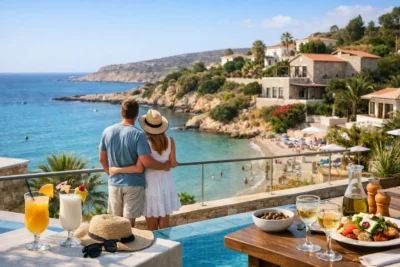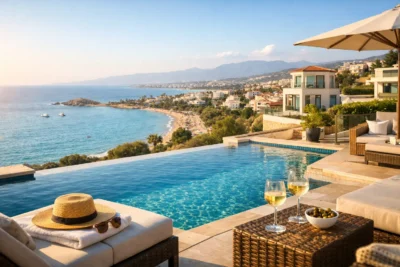

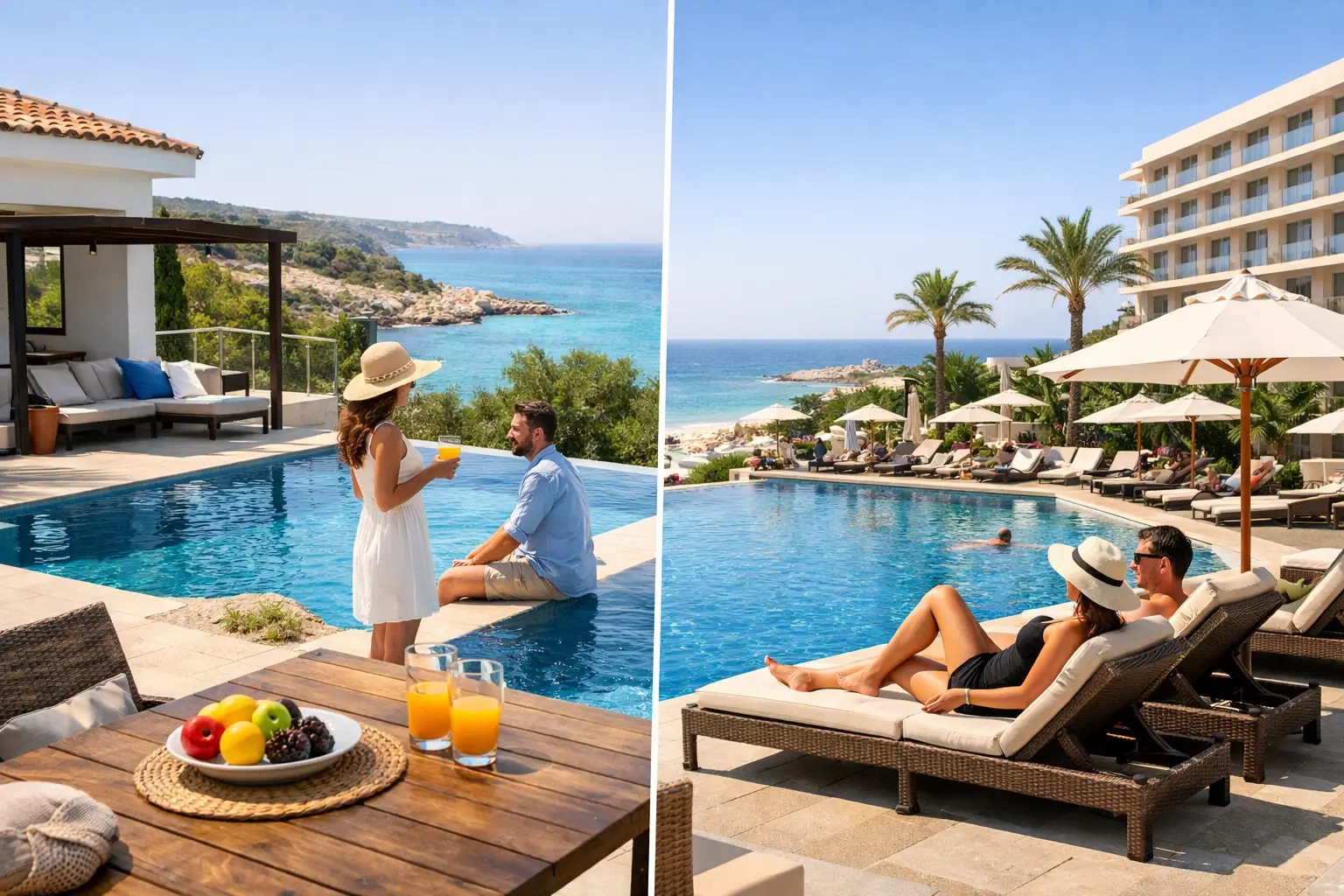
A family of six wants a pool, outdoor dining and space for children to sleep early while the adults stay up. A couple wants daily housekeeping, breakfast downstairs and no need to think about anything. That is the real starting point for villa stay versus hotel stay – not which option is better in general, but which one better fits the guest and, for property owners, which model creates stronger demand, better returns and less day to day friction.
For owners in Cyprus, this comparison matters because guest expectations have shifted. Many travellers are no longer choosing on price alone. They are weighing privacy, flexibility, location, amenities and the overall feel of a stay. That changes how villas compete with hotels, and it affects how owners should position and manage their property.
Villa stay versus hotel stay from a guest’s point of view
A hotel offers structure. Guests know what they are getting – reception, standardised rooms, regular cleaning and often on-site food and drink. For shorter breaks, business trips or couples who want a simple base, that consistency is a strong advantage. There is less planning involved, and the service model is easy to understand.
A villa offers something different. It gives guests control over their space, their schedule and the way they spend time together. For families, larger groups and longer stays, that often matters more than having a reception desk. A private kitchen, separate bedrooms, outdoor space and a pool can turn a stay from practical to memorable.
That difference is especially clear in leisure destinations. In coastal areas of Cyprus, guests often want to settle in rather than simply sleep somewhere between outings. They want to cook some meals at home, relax by the pool, and enjoy evenings on a terrace without the background noise of a busy hotel.
Still, privacy is not the only factor. Some guests genuinely prefer the convenience of a hotel. If they are arriving late, staying two nights or planning to spend most of the day out, they may value easy check-in, daily servicing and central facilities over extra space. This is why broad statements rarely help. Demand exists for both. The key is understanding which guest type your property serves best.
Why villas attract a different kind of booking
Villa bookings are often more intentional. Guests choosing a villa tend to be planning a full holiday experience, not just arranging accommodation. That usually means longer lead times, higher booking values and stronger interest in property features such as pool quality, outdoor living, sleeping layout and proximity to beaches or family-friendly areas.
For owners, this creates opportunity, but only if the property is presented and managed properly. A villa is not competing with a hotel room on the same terms. It is competing on space, lifestyle and convenience for groups. Weak photography, unclear sleeping arrangements or poor communication can quickly reduce that advantage.
Hotels benefit from brand familiarity and fixed operational systems. Villas rely much more on trust. Guests need to feel confident that the home will be clean, well maintained, accurately described and supported by a local team if anything goes wrong. That is where professional management becomes important. A villa can outperform a hotel option for the right guest, but only if the owner delivers a reliable experience from enquiry to check-out.
The owner view: revenue potential versus operational effort
From an owner’s perspective, villa stay versus hotel stay is really a question of market positioning. Most private owners are not choosing between running a hotel or a villa. They are deciding whether their holiday home can meet the standard that modern guests expect, and whether short term rental management will be worth the effort.
A well-located villa with the right amenities can command strong rates because it serves a clear need that hotels do not always meet well. Families and groups often compare the total cost of several hotel rooms against one private villa. When the villa offers shared living space, a pool and good outdoor areas, the value can be obvious.
But villas are not passive assets. They require active pricing, responsive guest communication, cleaning coordination, regular maintenance and careful calendar management. A beautiful property can still underperform if rates are not adjusted to demand, if reviews are not handled properly or if guest issues are dealt with slowly.
Hotels spread those operational demands across teams and systems. A villa owner feels them directly unless management is in place. That is one of the biggest differences behind the scenes. The income potential may be attractive, but the workload can become a burden for owners trying to do everything themselves, especially if they live overseas or only use the property seasonally.
Where hotels still have the edge
It is easy to focus on the appeal of villas and ignore where hotels remain stronger. Hotels are often better suited to one or two-night stays, solo travellers and guests who want central facilities with little effort. They also tend to perform well where guests care less about living space and more about location, breakfast and predictable service.
For some owners, that is a useful reminder. Not every property should be marketed as an exclusive private retreat. If a home is compact, has limited outdoor space or is in an area dominated by short city breaks, the villa model may need a more realistic positioning. A property does not need to beat a hotel on every front. It needs to offer clear reasons for the right guest to book.
This is where local market knowledge matters. In East Coast Cyprus, for example, a family villa near the beach may appeal strongly in peak season, while shoulder-season demand may depend more on monthly pricing, remote working suitability or value for multi-generational stays. Those details shape performance more than broad travel trends.
Making a villa feel like the better choice
If guests are weighing a villa stay versus hotel stay, the owner’s job is to reduce uncertainty. Guests need to see that the villa gives them more freedom without adding stress. Clear arrival information, prompt responses, transparent pricing and dependable standards all help bridge that gap.
The presentation of the property matters as much as the property itself. Photos should show how people will use the space, not just empty rooms. Descriptions should answer practical questions before they are asked. How many can dine comfortably outside? Is the pool child friendly? Are there enough bathrooms for two families? Is parking simple? These are the details that move a guest from browsing to booking.
After that, operations carry the real weight. Cleanliness, maintenance and communication are not background tasks. They are the product. Guests comparing a villa with a hotel are often asking one silent question: will this feel easy when we arrive? Owners who can answer that with a consistently smooth experience are far more likely to earn repeat bookings and better reviews.
That is why many owners choose hands-off management rather than trying to coordinate every cleaner, maintenance visit and guest message themselves. A local team with proper systems can protect both the guest experience and the owner’s time. For owners who want better performance without daily involvement, that support is often the difference between a stressful side project and a well-run asset.
What this means for owners in Cyprus
Cyprus remains well suited to villa demand because many guests come for sunshine, outdoor living and longer family stays. In areas where private pools, terraces and beach access are part of the appeal, villas can stand out clearly from standard hotel accommodation. But stronger demand does not remove the need for discipline.
Owners need accurate pricing, broad booking exposure, fast communication and full visibility over performance. They also need honest reporting and confidence that the property is being looked after properly between stays. These are not extras. They are the basics of running a holiday home professionally.
That is the practical lesson in villa stay versus hotel stay. Guests are not only choosing between two accommodation types. They are choosing between two kinds of experience – one built around standardised convenience, the other around private space and flexibility. For owners, the opportunity lies in making the second option feel just as dependable as the first.
When that happens, a villa does not need to imitate a hotel to compete well. It simply needs to deliver what hotels cannot, backed by the kind of management that gives guests confidence and gives owners room to step back. That is where a well-managed holiday home starts to work harder for the people who own it.